





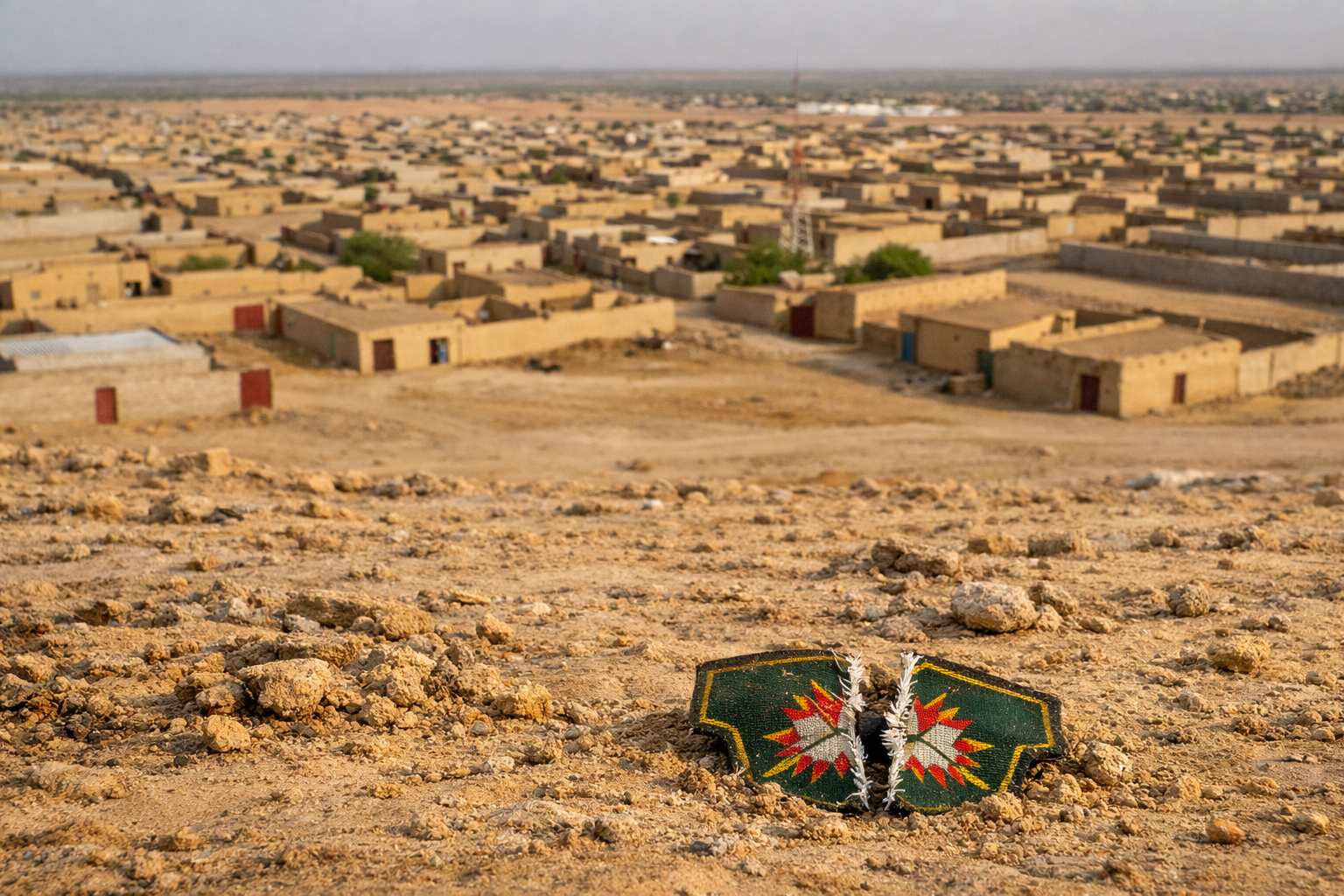

The first days of May 2026 confirm a sharp inflection point in the Malian conflict. Following the coordinated offensive launched in late April by the Jama’a Nusrat ul-Islam wa al-Muslimin (JNIM) affiliated to Al-Qaeda and the Tuareg Azawad Liberation Front (FLA), the situation has stabilized, but only superficially. The shock was compounded by the assassination of Malian Defence Minister Sadio Camara during an attack near Kati on April 26. The Malian state has not collapsed, yet it has clearly lost the operational initiative.
The most symbolic development remains the confirmed loss of Kidal, a long-contested stronghold in northern Mali. Russian personnel from the Russian Ministry of Defence (MoD) backed Private Military Company (PMC) Africa Corps withdrew in an organized manner, avoiding encirclement but effectively conceding the area. Since May 1st, no credible evidence points to a large-scale Russian counteroffensive. Instead, activity has shifted to disperse airstrikes, localized raids, and defensive operations conducted jointly with the Malian Armed Forces (FAMa). These actions suggest a transition from territorial control to regime protection.
A Limited Russian Force: Africa Corps Capabilities and Constraints
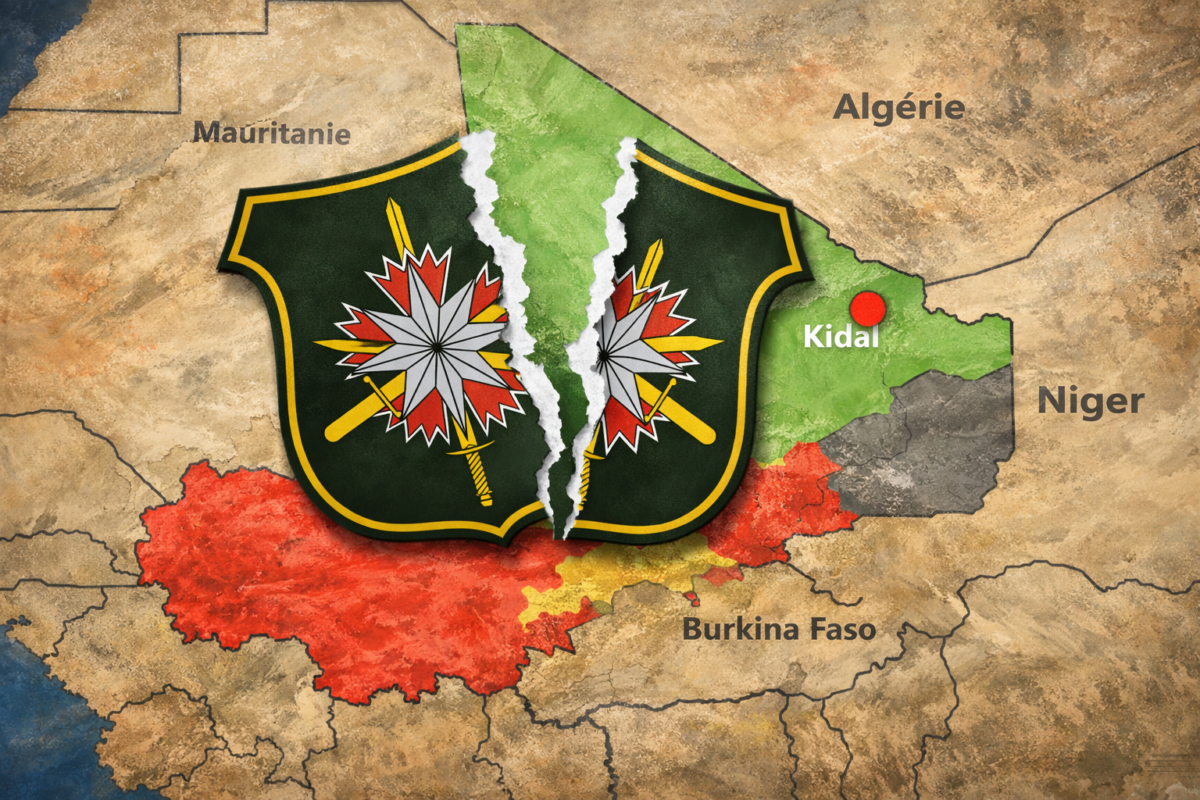
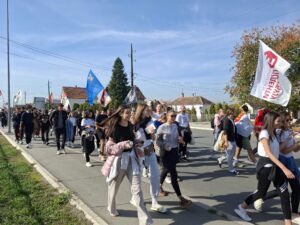
Photo Generated using Microsoft Copilot
The Russian presence in Mali, now structured under the Africa Corps following the dismantling of Wagner, remains modest in scale. Estimates indicate approximately 1,500 to 2,000 personnel deployed across a 1,24 million square km, twice bigger than France.
Equipment deliveries observed via Open-Source Intelligence (OSINT) throughout 2025 and early 2026 point to a force built around force protection rather than heavy expeditionary structure aiming to take back the Northern region.
More precisely, the core inventory of the estimated 100 to 200 vehicles spotted includes, a limited number, likely under 10 T-72 Main Battle Tanks (MBT), as well as several dozen armoured personnel carriers (APC) BTR-82A and infantry fighting vehicles (IFV) BMP-3 supported by limited artillery units, mostly D-30 howitzers and drone capabilities. The majority of the park comprises light protected vehicles (LPV) Tigr-type and logistics trucks as well as approximately 10 to 15 helicopters including Mi-8/17 transport and Mi-24/35 attack variants.
The Africa Corps, with its small but heavy posture, is thus struggling against the combined forces of JNIM and FMA. Militarily, JNIM has evolved into a highly experienced insurgent force after years of confrontation with French-led counterinsurgency operations, developing extensive expertise in improvised explosive devices (IEDs), complex ambushes, suicide attacks, and decentralized manoeuvre warfare across difficult terrain. Meanwhile, the FLA has increasingly integrated commercially available drone technologies, including FPV (First Person View) strike drones, previously observed in Ukraine. During the fighting around Kidal, available footages from FPV drone strikes reportedly contributed to pinning down Africa Corps personnel inside defensive positions, limiting mobility and complicating organized resistance.
Although JNIM and the FLA remain distinct and often competing actors with different long-term objectives, recent operations have demonstrated a high degree of tactical coordination. Their late-April offensive combined dispersed movements using motorcycles and pickup trucks, rapid concentration immediately before assaults, and equally rapid dispersal afterward, complicating detection and response by Malian and Russian forces.
A “Syrian” Model in the Sahel?
Despite the early communication on social media, attributed to the Russian MoD, portraying successful strikes leading to the destruction of 200 enemy vehicles, the loss of Kidal has been later acknowledged by Moscow. Moreover, a deeper investigation highlights that last weekend setbacks occurred without opposition from the Russian PMC, negotiating its safe exit from Mali Northern strategic city.
The pattern is not surprising, as operational behaviour since late April reinforces demonstrates that Africa Corps units have avoided decisive engagements under unfavourable conditions, prioritized force preservation, and concentrated on securing key nodes in the country, mostly the capital city Bamako as well as main logistics corridors, and major urban centres.
Russia’s current posture in Mali increasingly leads to a strategy of regime survival similar to the Kremlin’s operation to support Assad’s regime. Following an extended information campaign that helped position Moscow as an alternative to Western partners, the Kremlin’s objective now appears less focused on restoring full territorial control than on ensuring the continuity of the Malian regime at a sustainable cost.
This strategy implies a security consolidation around the political center of gravity of Bamako, the acceptance of fragmented territorial control, selective use of airpower and advisors as well as possible tacit arrangements with local armed actors. Under this model, northern Mali may remain outside effective government control for the foreseeable future. The objective is not reconquest, but containment and influence.
Serval and Barkhane: A Stark Military Contrast
Recent Russian setbacks in northern Mali have prompted renewed comparisons with Opération Serval, launched in January 2013 to halt coordinated jihadist & northern rebel groups advances toward Bamako and retake the north.
At its peak, Serval deployed approximately 4,500 to 5,100 personnel and over 1,400 vehicles. Crucially, it benefited from full air superiority, including from Rafale jet-fighter aircrafts, ATL2 ISR platforms, and around 17 transports and attacks. Within weeks, French forces demonstrated high operational mobility, integrated command structures, and real-time intelligence capabilities, enabling the rapid recapture of Gao, Timbuktu, and Kidal at a limited human-cost.
While Serval did not eliminate insurgent groups, it succeeded in dismantling their territorial control within a matter of months. Its successor, Opération Barkhane, however, illustrated the limits of military success in the absence of a durable political framework.
The comparison highlights the structural constraints of the current Russian deployment. Unlike Serval, Africa Corps lacks sufficient troop and vehicles density for sustained operational reach in remote desert regions, deep-strike intelligence capabilities as well as effective coordination with local armed forces.
Even under more favorable conditions, a Serval-style reconquest would be difficult to replicate today. At current force levels, it is effectively out of reach for the Africa Corps.
The Ethnic and Social Landscape: The Real Center of Gravity
Any purely military analysis remains incomplete without factoring in Mali’s deeply layered social structure. As Serval was successful in the purely military perspective, operation Barkhane has been unable despite 5000 troops on the ground to provide a lasting solution in Mali.
Malian society can be broadly described as structured along geographic and socio-economic lines:
- Southern populations, particularly Bambara groups, dominate state institutions and the military
- Northern Tuareg communities underpin separatist movements such as the FLA
- Fulani (Peul) populations, especially in central regions, are significantly represented within jihadist networks like JNIM
- Songhai and other sedentary northern groups often align with Bamako in opposition to Tuareg separatism
This configuration produces not a binary conflict, but an overlapping system of insurgency, communal tensions, and political marginalization. Armed groups are multiethnic, alliances are fluid, and local grievances frequently outweigh ideological affiliations.
Aimed for providing a political accommodation between Bamako and northern armed groups, the failure of the 2015 Algiers Accord progressively eroded the framework for finding a political solution. While the agreement aimed to decentralize power and integrate former rebels into state structures, implementation remained partial, inconsistent, and deeply contested by all sides. Over time, mistrust between the capital and northern actors widened further, creating the conditions for renewed insurgency and the re-emergence of armed coalitions.
Crucially, jihadist groups have successfully embedded themselves within local conflict dynamics, land disputes, security vacuums, and intercommunal violence.
However, ideological dimension of the conflict should also be approached carefully. JNIM does not operate according to the same model associated with the Islamic State at its peak in Iraq and Syria. In central and northern Mali, Islamist rhetoric often functions as a common mobilizing framework layered onto deeply local grievances: corruption, lack of access to impartial justice, abuses by security forces, land disputes, and the absence of effective state governance.
Jihadist groups have gained influence less through ideological radicalization than through their ability to provide swift dispute resolution, protection, and parallel governance structures where the state has largely disappeared. It highlights that any military operation can succeed into a comprehensive political strategy aiming at targeting the political, social and economical roots of the Malian conflict.
Conclusion: Tactical Presence, Strategic Impasse
As of May 5, 2026, Russia remains a central political actor in Mali, but a constrained military one.
Africa Corps retains the ability to protect the regime in Bamako and key infrastructures, conduct targeted strikes in support of Malian forces and maintain a visible security presence.
However, it lacks the capacity to reassert control over northern Mali, achieve a decisive military victory and address the underlying drivers of the conflict
Ultimately, the limitation is not solely military, it is political. With Moscow’s strategic focus largely absorbed by the war in Ukraine, its engagement in Mali appears calibrated for sustainability of a light footprint force rather than resolution of the conflict in favour of Bamako. Whilst the French press has drawn parallels between the recent Russian debacle and the Soviet Union’s quagmire in Afghanistan, a degree of caution is warranted. Russia’s limited presence in the Sahel reflects, above all, an opportunistic strategy with a minimal ground presence, a far cry from the Red Army’s decade-long campaign.
However, recent setbacks raise questions about the Malian state’s ability to maintain its hold over the Bambara and Songhai regions, raising the spectre of another coup. For Russia, the fall of Kidal is a blip in Moscow’s narrative as a global security partner for the Global South.