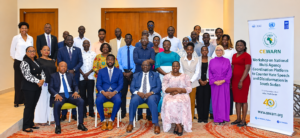







DAKAR — Ousmane Sonko left little room for diplomatic niceties on April 9 when he took the stage at the Museum of Black Civilizations in Dakar. Speaking at an international conference titled “Autonomy, Patriotism and a Multipolar World: Africa’s Conquest of Its Sovereignty,” alongside French geopolitical analyst Pascal Boniface, the Prime Minister delivered a frontal assault on the Trump administration’s foreign policy record. Citing what he described as a long list of military failures — from Vietnam to Afghanistan, through Iraq, Libya and Somalia — he argued that Western interventions had produced nothing but chaos and disorder, without ever achieving their stated objectives. His conclusion was unsparing: “None of the objectives have been achieved, and yet the world has been plunged into a chaos that nothing can justify. Mr. Trump is not a man of peace, he is a man of destabilization of the world.” The remarks spread immediately, drawing reactions both inside Senegal and abroad.
The declaration stands in sharp contrast to the posture the Senegalese government had otherwise tried to maintain on the Middle East conflict. When U.S. and Israeli forces launched joint military strikes against Iran on February 28, Sonko himself had condemned Washington’s action as a violation of the United Nations Charter. President Bassirou Diomaye Faye, meanwhile, chose a different interlocutor: he called Saudi Crown Prince Mohammed bin Salman to express Senegal’s solidarity with Riyadh, which had been struck by Iranian retaliatory fire. The divergence illustrated Dakar’s attempt to walk a narrow diplomatic line. Iran’s ambassador to Senegal, Hassan Asgari, publicly thanked President Faye for his condolences following the death of Supreme Leader Ali Khamenei and for what he described as Dakar’s swift condemnation of the strikes as a violation of international law. Senegal, a country with no direct stake in the conflict, had until now worked to preserve its credentials as a principled neutral — a posture now complicated by the unusually combative language of its own Prime Minister.

The episode has reignited scrutiny of the relationship between Sonko and the man he helped bring to power. In March 2024, Sonko — then imprisoned and barred from running for president himself — threw the full weight of his political capital behind his close ally Bassirou Diomaye Faye, who went on to win the presidential election in a single round. The two men have governed together since, but their public statements have increasingly pointed in different directions. On the Middle East, on relations with France, and now on the Trump administration, Sonko has staked out positions far more combative than those his president has been willing to endorse officially. The remarks drew pushback even from within government circles: Baye Mayoro Diop, Director of Decentralized Cooperation, publicly criticized the Prime Minister’s comments as being “of unusual gravity,” arguing that Sonko had overstepped his prerogatives and risked undermining Senegal’s diplomatic standing. The recurring pattern raises a persistent question in Dakar’s political circles: who, exactly, speaks for Senegal’s foreign policy?
The timing of Sonko’s outburst raises questions that go beyond ideological conviction. Just nine months ago, President Faye was seated at the White House alongside four other African heads of state for a working lunch with Donald Trump, pitching Senegal as a stable, investment-ready destination for American capital. Faye presented two flagship projects to the American president: a major initiative tied to Senegal’s emerging oil and gas sector, and a 40-hectare digital zone on the Dakar waterfront designed to attract U.S. technology companies. He went so far as to praise Trump’s leadership style and float a joint golf course project on Senegal’s Petite-Côte — a stretch of Atlantic coastline, he noted, only six hours from New York. The diplomatic courtship was unmistakable. Against that backdrop, Sonko’s rhetorical assault on Trump reads as something more than a statement of principle. Whether it reflects a genuine fracture within the executive, an internal negotiation over the Prime Minister’s own political future, or a deliberate attempt to consolidate his nationalist base ahead of the 2027 local elections, the effect is the same: Senegal is now sending two very different messages to Washington, and the contradiction will not be easily explained away.