





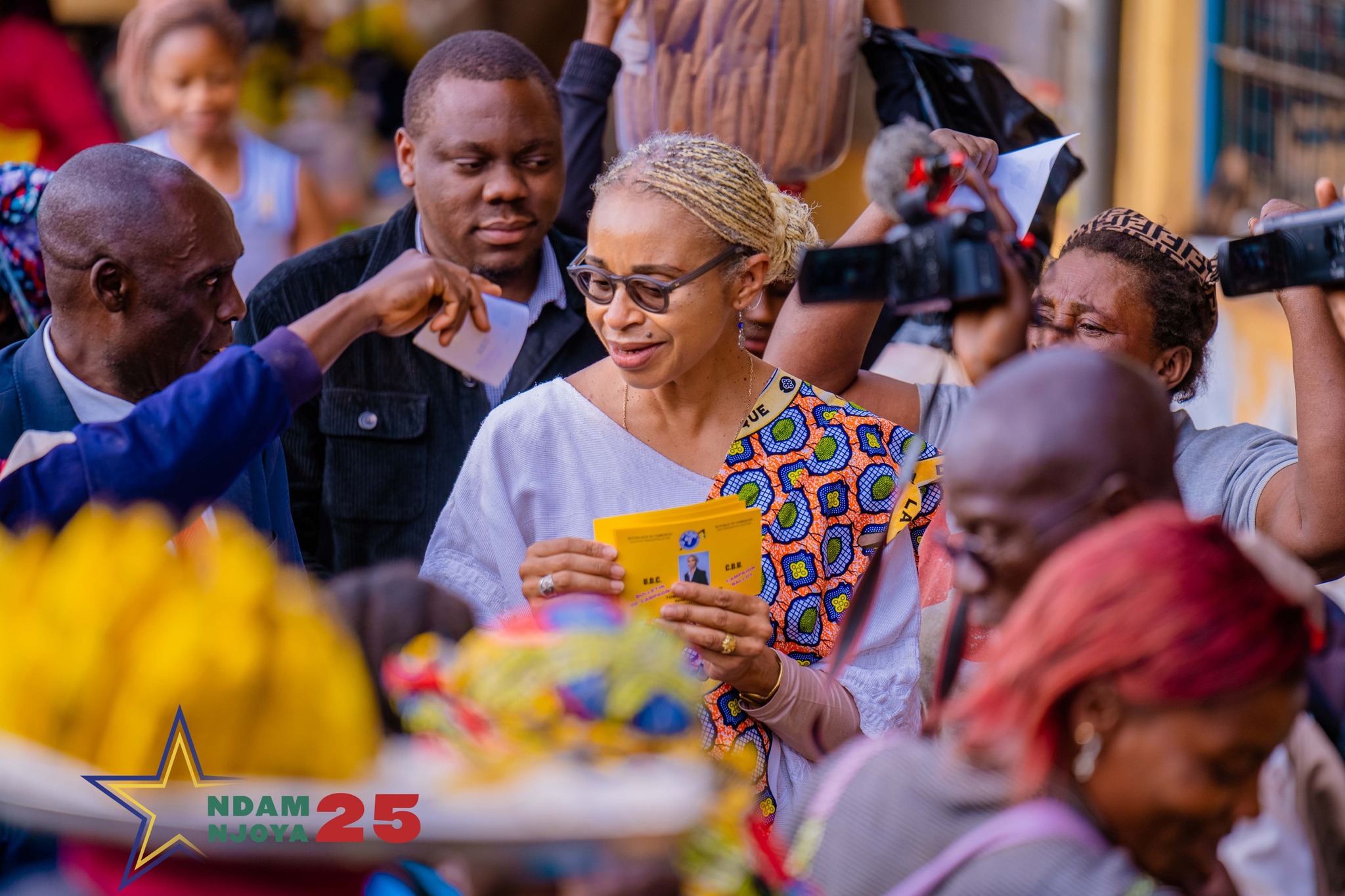

Women’s participation in political life in Cameroon has increased, with 33.9% of MPs in 2020 compared to 31.1% in 2013. Yet socio‑cultural perceptions continue to relegate women to the domestic sphere, and discrimination persists within institutions. The case of Hermine Patricia Tomaino Ndam Njoya, candidate in the 2025 presidential election, illustrates how gendered disinformation has become a tool in political competition.
Ahead of the election on 12 October 2025, seven women submitted candidacies. According to the official list published by Elections Cameroon (ELECAM), only one woman was validated: Ms Ndam Njoya, lawyer, entrepreneur, author, Mayor of Foumban, and national president of the Democratic Union of Cameroon (UDC). Several pieces of misinformation circulated about her candidacy, including allegations of embezzlement, claims she lacked political competence, and insinuations about her private life. Local authorities denied the embezzlement allegations, and opponents often declined to comment publicly on the rumours, leaving them to spread largely unchecked online.
This case highlights systemic challenges. Cameroon’s legal framework punishes fake news under the Penal Code and addresses cybercrime under the 2010 law, but it does not explicitly cover gender‑based digital violence. International commitments, such as the UN Convention on the Elimination of All Forms of Discrimination against Women and the Maputo Protocol, call for equal participation, yet implementation remains limited.
The spread of disinformation during elections is not unique to one candidate. Emotional and scandal‑driven content thrives on platforms like WhatsApp and Facebook, affecting public trust in the electoral process. Whether targeting women or men, such campaigns weaken institutions, distort voter perceptions, and undermine democratic debate.
Ms Ndam Njoya’s experience demonstrates both the vulnerability of female politicians and the broader need for reforms in digital governance. Addressing disinformation requires coordinated responses between states, platforms, civil society, and citizens to safeguard electoral integrity and ensure equal participation. Following the circulation of allegations of embezzlement, local authorities publicly denied the claims, stating that no evidence had been produced to substantiate them. In addition, some political opponents declined to comment on the rumours, a silence that allowed the narratives to spread widely online without direct rebuttal. The official electoral body, ELECAM, validated Ms. Ndam Njoya’s candidacy, confirming her eligibility despite the disinformation campaigns.