





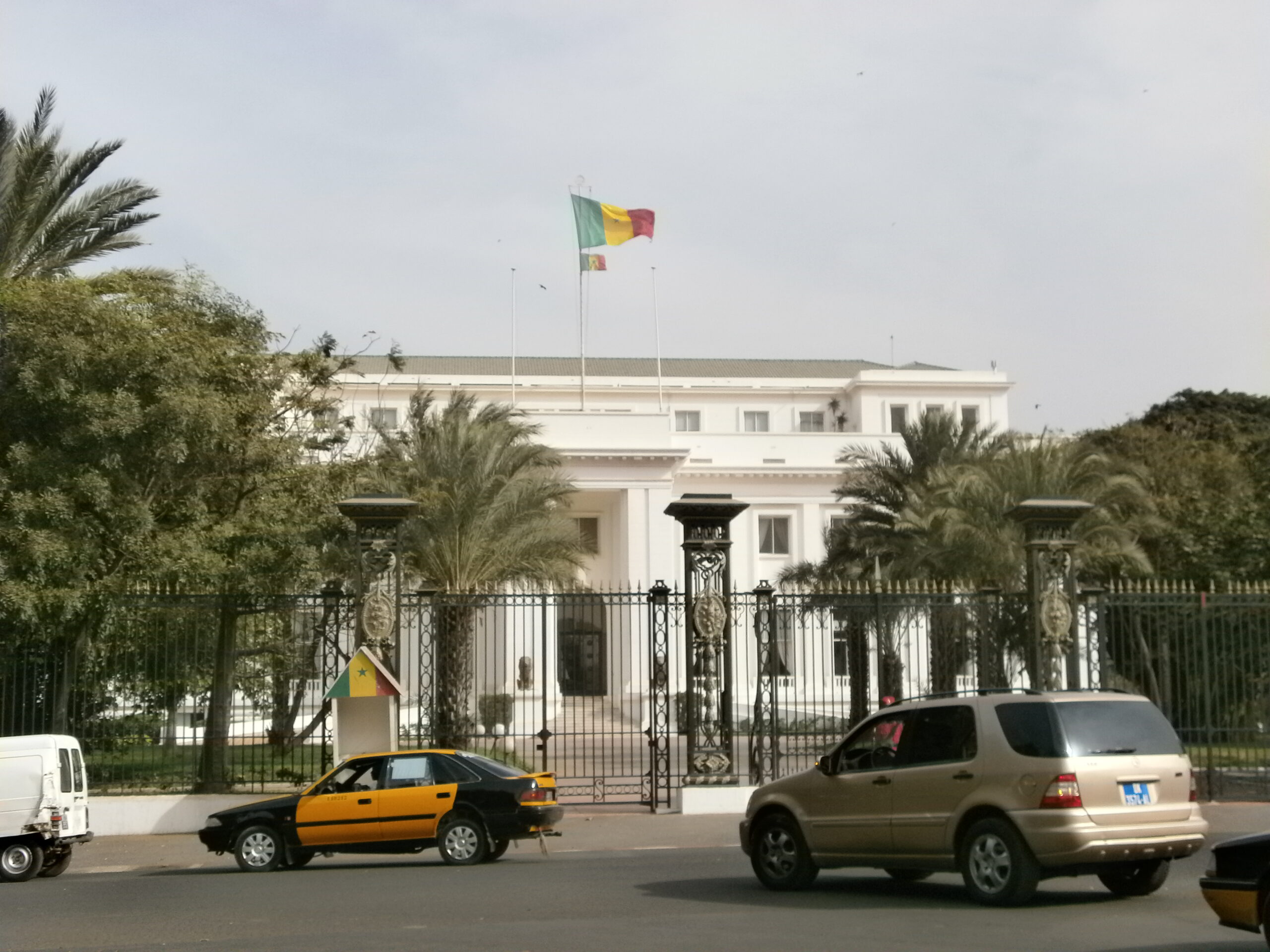

Senegalese President Bassirou Diomaye Faye on Friday, May 22, 2026, dismissed Prime Minister Ousmane Sonko and dissolved the entire government. The announcement, made through a presidential decree read on national television, marks the end of an alliance that had shaped the most consequential political transition in Senegal’s recent history.
Presidential Secretary-General Oumar Samba Ba read Decree No. 2026-1128 on state broadcaster RTS, confirming that outgoing ministers and secretaries of state would remain in a caretaker capacity pending the formation of a new government. The split between the two men brings to an abrupt close a partnership that, in recent months, had steadily transformed into a rivalry.
To grasp the magnitude of the rupture, one must return to the origins of a relationship with few parallels in the region. Ousmane Sonko, a charismatic opposition figure and fierce critic of former President Macky Sall, was barred from the 2024 presidential race by a criminal defamation conviction. He threw his full weight behind Bassirou Diomaye Faye, the secretary-general of his party, PASTEF (African Patriots of Senegal for Work, Ethics and Fraternity), under the campaign slogan “Diomaye mooy Sonko,” meaning “Diomaye is Sonko.” On March 24, 2024, Faye won in the first round, and Sonko was appointed Prime Minister three days after the inauguration. What history will also record, however, is that Bassirou Diomaye Faye was no mere stand-in. Regarded by his peers as the intellectual backbone of PASTEF, he had been the party’s chief organizational architect. He had even served nine months in detention for publicly denouncing what he described as the judicial persecution of Sonko under the Sall administration. Two former tax officials, two political prisoners, one declared mission: to transform Senegal.
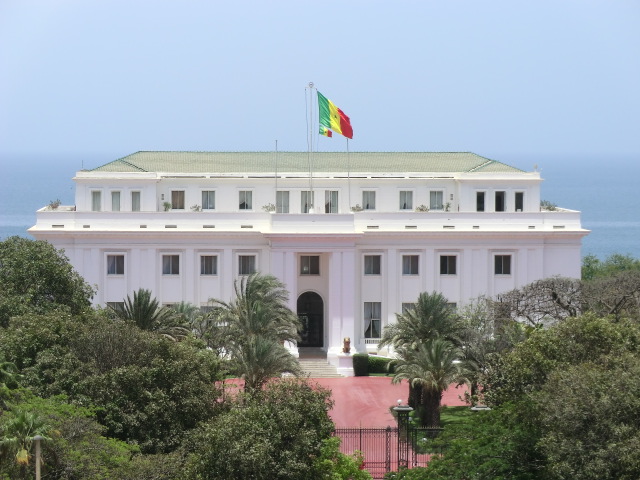
The rift surfaced within the first weeks of actual governance. Sonko was determined to make accountability, meaning the criminal prosecution of figures from the former regime, an absolute government priority. Faye did not endorse that course. This refusal to turn the judiciary into an instrument of political settlement marked the first act of divergence between the two men. In July 2025, Sonko publicly denounced what he called a “problem of authority,” and even an “absence of authority,” a pointed attack directed squarely at his president. In November, Faye appointed Aminata Touré, a former Prime Minister under Macky Sall, to head the presidential coalition, overriding Sonko’s explicit objections. By early May 2026, Faye was accusing Sonko of an “excessive personalization” of power within PASTEF, issuing this thinly veiled warning: “He remains Prime Minister only because he has my confidence.” Sonko, for his part, had already declared his candidacy for the 2029 presidential election, raising the prospect of two irreconcilable ambitions operating under the same roof. On the very morning of his dismissal, Sonko was still challenging the government before the National Assembly over the transparency of discretionary political funds.
His removal now opens a constitutional sequence of uncertain outcome. Sonko had stated unambiguously that he would not resign and that, if dismissed, he would return to sit in the National Assembly, where PASTEF holds an absolute majority and over which he retains decisive political influence. Senegal’s constitution provides for two opposing responses: the National Assembly may initiate impeachment proceedings against the president, while the president may dissolve parliament and govern by executive order. Which of these two instruments will be triggered first, and by whom, remains an open question.
The political earthquake is striking at a particularly vulnerable moment for Senegal’s economy. The International Monetary Fund suspended a 1.8-billion-dollar lending program after the discovery of hidden debts carried over from the Sall era, pushing the country’s debt level to 132 percent of gross domestic product. Finance Minister Cheikh Diba told parliament on the very day of Sonko’s dismissal that talks with the IMF were expected to resume during the week of June 8, with the goal of reaching agreement on key points by June 30. He also warned that the fuel subsidy bill could exceed the 2026 budget allocation by as much as 1.15 trillion CFA francs, the equivalent of roughly two billion dollars, and noted that Sonko had blocked his request to raise fuel prices. The outgoing Prime Minister had also firmly opposed any restructuring of Senegal’s estimated 13-billion-dollar debt burden, which the IMF was reported to be advocating. What impact this political upheaval will have on already fragile financial negotiations, at a time when Senegal is also preparing to host the Dakar Youth Olympic Games, remains to be seen.