







Africa Day, observed on May 25, was this year marked by a virtual Conference of Heads of State of the African Union. The discussions held during that meeting remain central to Africa’s current challenges, particularly the call for ‘more pragmatism’ in achieving the continent’s goals.
During the event, one of the African Union’s heads of state and former president of the organization advocated for the need for “more pragmatism,” emphasizing that this factor is essential for Africa to overcome the challenges it faces and achieve its proposed goals.
Prominent among these goals is the ambitious implementation of the African Continental Free Trade Area (AfCFTA), the agreement for which was signed on March 21, 2018, in Kigali, Rwanda.
The agreement establishes as its core objectives the creation of a single market for goods and services, facilitated by the movement of people, aiming to deepen the economic integration of the African continent. This aligns with the Pan-African Vision of “an Integrated, Prosperous and Peaceful Africa,” enshrined in Agenda 2063.
It also projects the progressive liberalization of trade in goods and services through successive rounds of negotiations, as well as the promotion of industrial development based on economic diversification, the strengthening of regional value chains, agricultural development, and food security.
Despite the ambition and relevance of these goals, the truth is that, eight years after the agreement was signed, the African Continental Free Trade Area has still not gotten off the ground. As Dr. Sidi Ould Tah, President of the African Development Bank Group, stated: “intra-African trade represents only 16%, compared to nearly 60% in Asia and 70% in Europe.” Among the various challenges identified, the issue of regional peace and security stands out in particular.
A World Bank report, titled The African Continental Free Trade Area: Economic and Distributional Effects, mentions the term “war” only once, associating it with the trade war between the United States and China in 2018—the same year the AfCFTA agreement it self was signed. Even so, the document highlights the agreement’s potential, estimating that the free trade area could lift around 30 million people out of extreme poverty and boost the incomes of another 68 million individuals living on less than $5.50 a day.
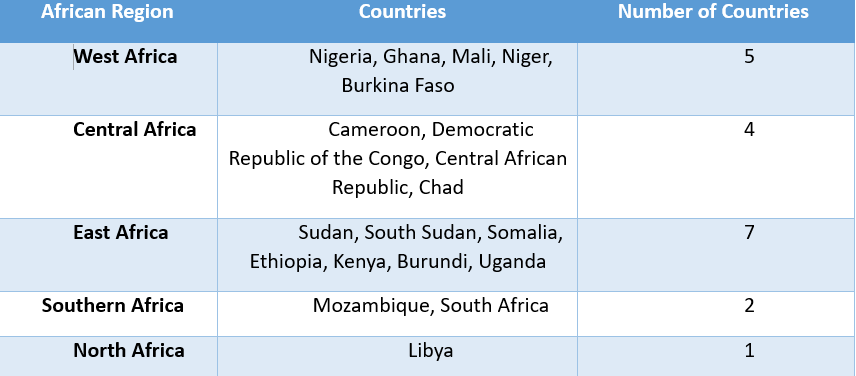
However, the reality on the ground is more complex. “About half of the world’s fragile and conflict-affected states (FCS) are located in Sub-Saharan Africa, where weak institutions, low social cohesion, governance failures, and economic instability keep millions of people in poverty (IMF, 2025, p. 4, author’s translation). “Data from ACLED (Armed Conflict Location & Event Data), an independent organization that collects and analyzes information on conflicts and protests globally. The ACLED Conflict Index assesses conflict intensity based on criteria such as lethality, danger, geographic diffusion, and armed group fragmentation, ranking countries from low/inactive conflict to extreme level conflict.

Unfortunately several African countries fall into the turbulent, high, and extreme categories, with the highest concentration in East Africa, followed by West Africa and Central Africa (see the table below).
Trade can be a tool to promote peace, but there is no sustainable trade without peace. Concrete examples illustrate this point. In Mozambique, the insurgency in Cabo Delgado affected structural projects in the natural gas sector, causing a loss of investment and delays in liquefied natural gas (LNG) exports.
In the Democratic Republic of the Congo, conflicts in the eastern part of the country involving armed groups like the M23 resulted in the disruption of mining operations, insecurity along trade routes, and a reduction in mineral exports.
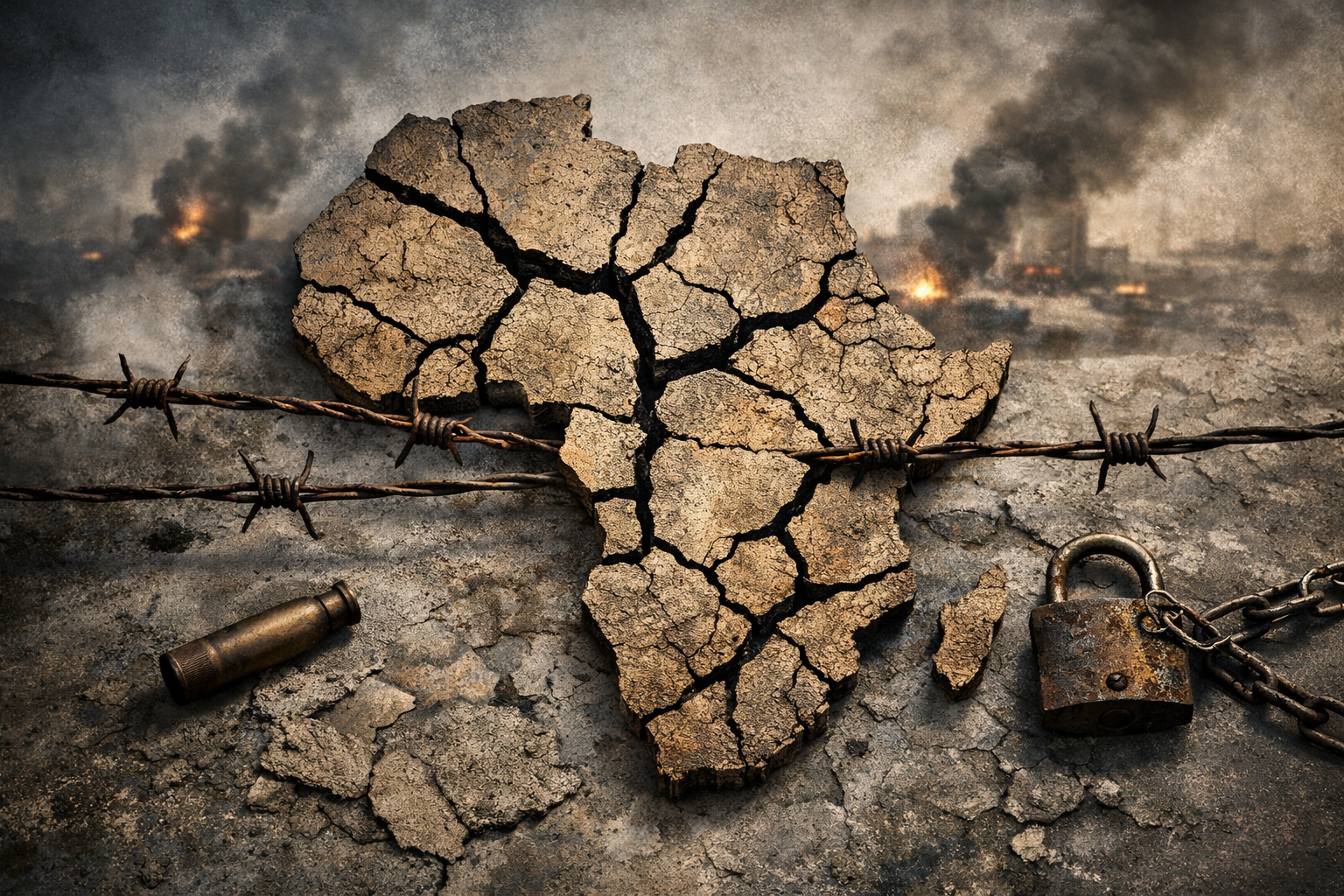
These cases are not isolated. In general, armed conflicts have significant economic impacts, namely through the destruction of infrastructure such as roads, ports, and railways; increased transport and insurance costs; supply chain disruptions; reduced foreign investment; border closures for security reasons; and population displacement, resulting in a loss of labor.
The verdict is clear: without peace, there can be no sustainable trade between countries.
Building peace requires dialogue, accountability, and seriousness from African political elites, as well as fighting corruption and social exclusion, defending democracy, respecting human rights, and, above all, greater pragmatism in political action.
Without this pragmatism, it will be difficult for Africa to achieve the stability necessary to create a favorable business environment for the full implementation of the African Continental Free Trade Area. As long as armed conflicts, political instability, and institutional weaknesses persist in several regions of the continent, the AfCFTA will continue to face significant limitations in achieving its goals, in other words will be a virtual reality, like the format of this years Conference of Heads of State of the African Union.