








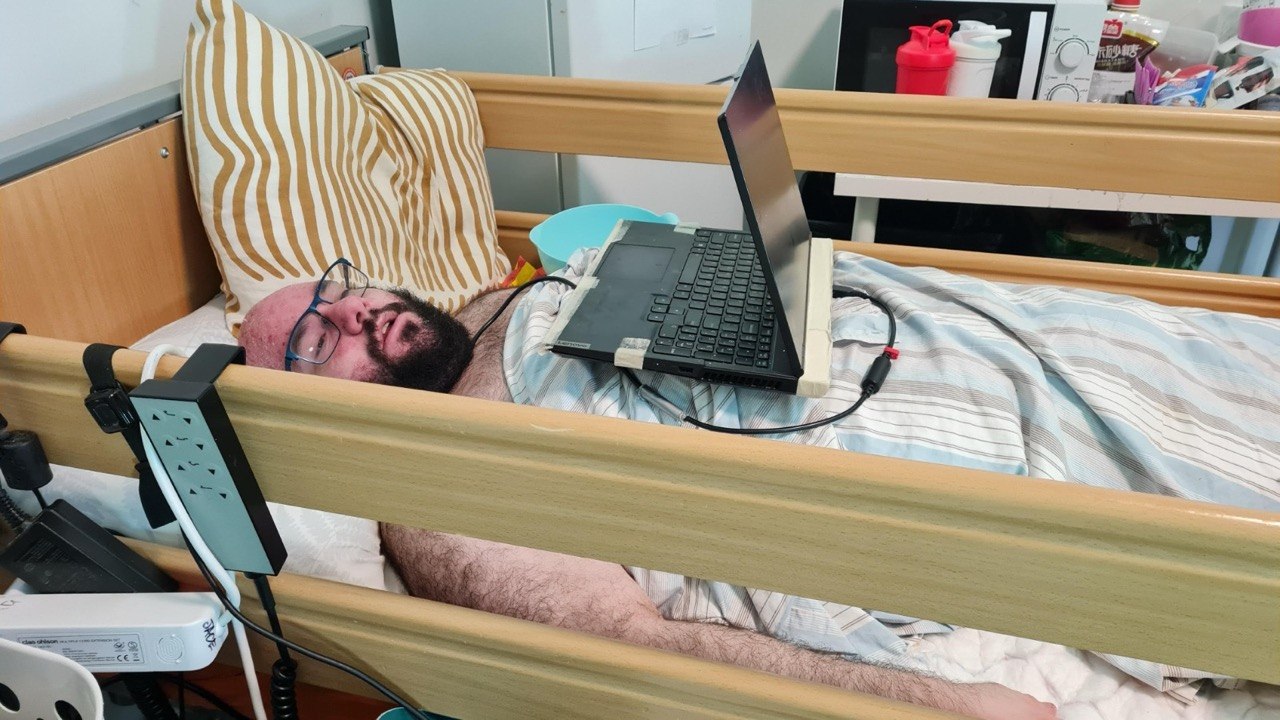

Jace Eon Ilias, 32, an American citizen with terminal Huntington’s disease, had to be carried from his care-home bed in Tuusula, Finland, into a chartered medical jet on Tuesday morning. The Finnish state spent upwards of €100,000 flying a bedridden patient some 4,000 miles across the Atlantic — not to a hospital of his choosing, but out of the country, because officials judged a man who cannot move unaided to be “a threat to the order and security of society.”
If a sentence requires several readings, it usually conceals something. This one conceals quite a lot.
The facts, before the outrage
Ilias applied for asylum in Finland in 2023, citing discrimination against sexual and gender minorities in the United States. The Finnish Immigration Service (Migri) rejected the application; the Supreme Administrative Court dismissed his final appeal in March 2025. Meanwhile Huntington’s disease — a hereditary, incurable neurodegenerative condition — overtook him with unusual speed. He now lives, or lived until Tuesday, as a bedridden patient in a private care home in Tuusula, unable to move independently.
After the asylum process ended he married his Finnish partner and applied for a residence permit on the basis of family ties. That application was refused. Crucially, the matter was still before the courts when the state put him on the plane. Finland did not wait for a judge; it removed the man whose case a judge was still reading.
Note the legal category, because it matters and has been widely muddled, including in an earlier version of this article. This was not a deportation of a permit-holder (karkottaminen) but a refusal of entry and removal (käännyttäminen) — the instrument Migri normally applies when a first residence permit is refused, and which can also be used when a foreign national is suspected of an offence.
The administrative pivot came with an incident at Helsinki-Vantaa Airport in November 2024. Accounts diverge and the facts are not established: authorities say Ilias was threatening; he and his family say his illness produced involuntary movements and behavioural disturbance, triggered by learning he was to be taken to the Metsälä reception centre rather than back to his previous accommodation. A criminal investigation into endangering public order and safety remains open and unadjudicated to this day — which did not stop the suspicion from functioning, in practice, as the basis of a security assessment. Migri itself has said that a suspicion of this kind could not alone have justified refusing a family-ties permit, since the law requires an overall assessment. That overall assessment, whatever it contained, ended with a terminal patient classified as a danger to Finnish society.
Follow the money — and the stretcher
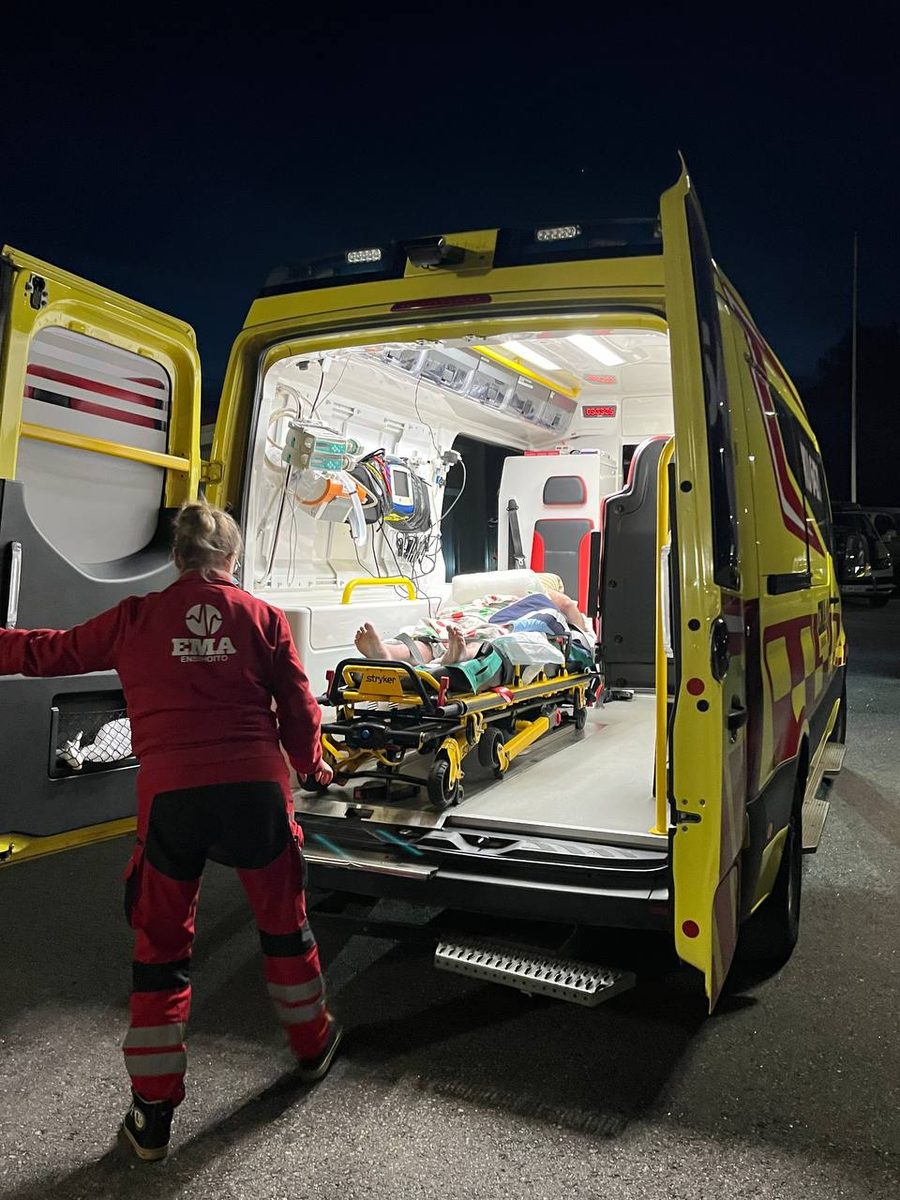
The logistics deserve their own column. Ilias was collected by ambulance from the care home before dawn and driven to the airport, where a Jetflite air ambulance waited. On board: two Finnish nurses, a doctor, a representative of the Non-Discrimination Ombudsman, and four employees of the Border Guard and the police. The aircraft left on Tuesday morning and was due to land the same Finnish afternoon at Teterboro Airport in New Jersey. The Helsinki police put the cost at at least €100,000, the charter flight forming the bulk of it; the final figure, with allowances and preparatory work, was still being calculated. The bill goes to the Helsinki police, which holds its own appropriation for removals. So the arithmetic runs as follows: palliative care for a 32-year-old Huntington’s patient was treated as a public-order liability; a six-figure charter flight was sound policy. Governments rarely reveal their priorities more candidly than in their invoices.
Is Finland becoming ICE with better paperwork? No — and that is almost the point
The inevitable comparison is with America’s Immigration and Customs Enforcement, currently busy reinventing detention as armed theatre: masked agents in unmarked cars, fast-track removals, and a mass no-bond detention policy that nine federal appeals courts have now found unlawful — the ninth, the Fourth Circuit on 10 September, comparing it to the wartime internment of Japanese Americans.
Measured against that, Finland still looks civilised, and the contrast should be stated honestly. Decisions pass through a named agency, appeals reach the administrative courts, the case file exists, and an ombudsman boarded the plane. Finland’s June 2026 amendments to the Aliens Act did strip deportation appeals of automatic suspensive effect — but they concern karkottaminen, not the procedure used here, and they were not what made this removal possible. An earlier version of this article called the flight the new machinery’s baptism run. It was not. It was something less reassuring: an extreme outcome produced by powers Finland already had.
What is newer is the vocabulary. When an EU member state describes a bedridden, terminally ill man as “a danger to the order and security of society”, the words stop functioning as description and start functioning as permission. Once permission is granted, the rest is logistics.
Questions the Finnish state has not answered
A political journalist’s job is to be tiresome on behalf of people who cannot be. So, tiresomely:
What made him dangerous? The only concrete allegation is an incident under investigation and never tried, which his family attributes to neurological disease. Migri concedes such a suspicion could not alone have carried the permit decision. What, then, did — and if suspicion suffices to remove the terminally ill, what would exculpate a suspect?
Was a duty of care ever arranged? On arrival at Teterboro, Finnish officers telephoned the US authorities, after which an ambulance collected him. That is a handover, not a care plan. His family spent close to 48 hours unable to reach him; they learned only in the early hours of 17 September that he believed himself to be in Jamaica, Queens. He has since been located in a hospital in Queens, New York. His spouse, Lehto, was directed by the US Embassy in Finland to the Department of Health and Human Services; requests for a direct care contact went unanswered. Jace was found only after a two-minute call, made before his phone stopped working. Hospital staff reportedly asked him to “just stand up”. Did Finland secure a chain of care before severing a chain of residence?
Why not wait for the court? The family-ties case was live. What urgency justified enforcement while the judiciary was still seized of the matter, and who decided that the answer could not wait?
Where does the precedent stop? Finland’s removal machinery is defended, rhetorically, with reference to alleged Wagner fighters and violent offenders. If the threat threshold now accommodates a man who cannot get out of bed, it accommodates anyone. That is not a slippery-slope argument; it is an observation about where the slope already ended.
Chief Inspector Jarmo Heinonen of the Helsinki Police says there is no certain information about Ilias’s continued treatment. “The role of the police is to take care of the return and to get the person handed over to the authorities of the other country. It is impossible to see what happens once the person has been handed over.” He goes on: “One can question how good the care each person receives is, but does it mean that the treatment is inhumane if the other country has a system in which you have to obtain health insurance yourself?” He answers himself: the United States is, “by general understanding, a civilised state that does not treat its citizens inhumanely.” Then, revealingly: “But there may be many opinions about that.”
There may indeed.
Sidebar: What Huntington’s actually does to behaviour
Huntington’s disease is an autosomal-dominant neurodegenerative condition caused by an expanded CAG repeat in the huntingtin (HTT) gene on chromosome 4; each child of a carrier faces a 50 per cent risk of inheriting it. Symptoms typically begin between the ages of 30 and 50, with a mean onset around 45. The disease presents as a classic triad: motor symptoms (chorea — irregular, dance-like involuntary movements — with rigidity and swallowing difficulty later); cognitive decline (impaired executive function, attention and cognitive flexibility); and psychiatric and behavioural symptoms. Apathy is regarded as a core feature and the one that tracks disease progression most closely.
It is the behavioural track that matters here. Irritability and aggression are recognised clinical features, not character flaws: Finnish clinical literature groups irritability, behavioural inflexibility, loss of temper, verbal outbursts and physical aggression as one of the disease’s classic symptom clusters, and international reviews put the prevalence of irritability at roughly 38 to 73 per cent of patients, frequently manifesting as abrupt and unpredictable outbursts of anger. These symptoms are consistent with frontal-lobe dysfunction and attributed to frontostriatal degeneration, and they often appear before motor symptoms do.
The clinical literature also records what follows from this. Irritability and aggression in Huntington’s are documented as leading to legal problems and, in some cases, incarceration. Patient guidance notes that behavioural symptoms become more pronounced in unfamiliar environments and situations demanding concentration, that communication difficulties are frustrating for the patient, and that the disease can impair a person’s awareness of their own condition. Median survival after symptom onset is generally given as 15 to 20 years. There is no cure. Whether Finland removed a dangerous man or a sick one depends heavily on which chapter of the neurology textbook the decision-maker had read.
The larger discomfort
Europeans enjoy believing that cruelty in migration policy is an American genre — all raid footage and internment comparisons. The truth Finland has just demonstrated is more uncomfortable: procedural civility and substantive harshness are perfectly compatible. Nobody was masked on the tarmac at Helsinki-Vantaa. Forms were completed. An ombudsman watched. And at the end of the paperwork stood a state that had decided one life was administratively inconvenient, and an aircraft waiting to carry it away. The definition of a liberal democracy is not that it lacks the power to remove a dying man. It is that it chooses not to. Finland had every lawful opportunity to make the other choice. It chose the plane.
Corrections
An earlier version of this article contained the following errors, which have been corrected above.
1. Legal category. The article described the measure as a deportation and attributed it to amendments to the Aliens Act that took effect on 12 June 2026. Finnish sources consistently describe it as a käännyttäminen — refusal of entry and removal. The June 2026 amendments concern karkottaminen and entry bans, and were not a precondition for this removal, which could have proceeded under pre-existing powers. The claim that the flight was a trial run of new legislation has been withdrawn.
2. Means of support. The article stated that Migri refused the family-ties permit partly because the Finnish spouse could not demonstrate sufficient means to support Ilias, and described that spouse’s occupation. Finnish law does not generally impose a means-of-support requirement on family members of Finnish citizens, and the reporting does not support either claim. Both have been removed.
3. Metsälä. Metsälä was described as an immigration detention centre and the November 2024 airport meeting as an interview preparatory to detention. Sources refer to the Metsälä reception centre, and do not establish who summoned Ilias to the airport or for what purpose. The passage has been rewritten.
4. Status of the permit case. The article stated that the family-ties question had been decided. Reporting indicates the matter was still before the courts at the time of removal. The corrected text reflects this, and it is now among the central questions put to the authorities.
5. Aircraft and cost comparison. References to a Bombardier Challenger 604, refuelling stops in Keflavík and Goose Bay, and a €20,000-per-flight-hour Norwegian benchmark were not supported by the reporting, and the hourly comparison was arithmetically inconsistent with the stated cost. All have been removed; the €100,000 minimum figure and its source stand.
6. US court rulings. The article referred to two separate rulings where there was one: the Fourth Circuit decision of 10 September 2026, the ninth appellate ruling against the no-bond detention policy, is also the ruling that invoked Japanese-American internment.
7. Asylum grounds. The stated ground was discrimination against sexual and gender minorities in the United States, which is broader than the earlier paraphrase.
8. Medical sidebar. Life expectancy from symptom onset was given as “around 15 years”; clinical sources put median survival at 15 to 20 years. The term “pathological inertia” has been replaced with apathy, the feature clinical sources actually identify as core. Two claims in the earlier sidebar — that outbursts are “frequently provoked by stress, misunderstanding and emotional overload” and “notoriously prone to being misread by untrained observers as wilful hostility” — are not supported in that form by the clinical literature and have been replaced with what the sources do establish, including documented legal consequences and the effect of unfamiliar environments.
9. “Helsinki”. Used in the original as standard political metonymy for the Finnish state, it was read by some readers as the City of Helsinki, which has no role in the case. The text now names the Finnish state, Migri and the police directly.
Sources
• Helsingin Sanomat, 15 September 2026: Terminally ill bedridden patient Jace Eon Ilias removed to the United States
• Helsingin Sanomat: The aircraft used, and the cost of the removal
• Helsingin Sanomat: What happened to Ilias after landing
• Ilta-Sanomat: HS and KU: Finland removed a terminally ill bedridden patient
• Finnish Immigration Service: Aliens Act amendments of 12 June 2026
• Government bill HE 51/2026: scope of the deportation-enforcement reform
• Non-Discrimination Ombudsman: statement opposing the enforcement change
• ACLU, 10 September 2026: Fourth Circuit becomes ninth appeals court to find the detention policy unlawful
• Politico, 10 September 2026: Appeals court rejects ICE detention policy
• Newsweek: Federal judges liken ICE detention to WWII internment
Medical sources
• StatPearls / NIH: Huntington Disease — clinical features, onset, frontostriatal degeneration
• Beglinger et al. review, PMC: Irritability in Huntington’s Disease — prevalence and consequences
• Duodecim 2019;135:249–56: Huntingtonin tauti (Finnish clinical review)
• Suomen Parkinson-liitto / liikehäiriöt: Huntington patient and family guide
• GeneReviews / NIH: median survival after onset 15–18 years, mean onset ~45
• Cleveland Clinic: Huntington’s disease life expectancy 15–20 years