







One man crossed borders while seriously ill. Days later, Kenya was confronting its first confirmed case of Bundibugyo Ebola virus disease, a death in Nairobi and a growing list of people whose movements had to be traced. Then came another development: billions of shillings in anticipated emergency financing and renewed scrutiny of a controversial isolation facility at a military airbase in Laikipia.
For a country accustomed to debates over public debt, questionable procurement and the management of public resources, the timing raised uncomfortable questions. Why were such enormous sums being discussed? How much money would actually reach Kenya? Who would control it, and what safeguards would prevent waste?
On social media, the debate quickly acquired a provocative question: is Kenya facing a genuine public health emergency, or is the crisis becoming an opportunity for a multibillion-shilling financial arrangement?
The distinction matters. Kenya’s Ebola case was confirmed by laboratory testing, and the regional outbreak is real. But the legitimacy of the health emergency does not exempt the government, its international partners or the agencies handling public money from scrutiny.
The real investigation begins where public health meets public accountability.
One death, a regional emergency
On October 6, 2026, Kenya’s Ministry of Health announced its first imported case of Bundibugyo Ebola virus disease. The patient was a Kenyan citizen who had lived in the Democratic Republic of Congo (DRC) for seven years.
According to the ministry, he became ill about a month before returning to Kenya and received treatment at several hospitals in the DRC. He travelled by road to Kampala, Uganda, before boarding Jambo Jet flight 8523 to Nairobi on October 3.
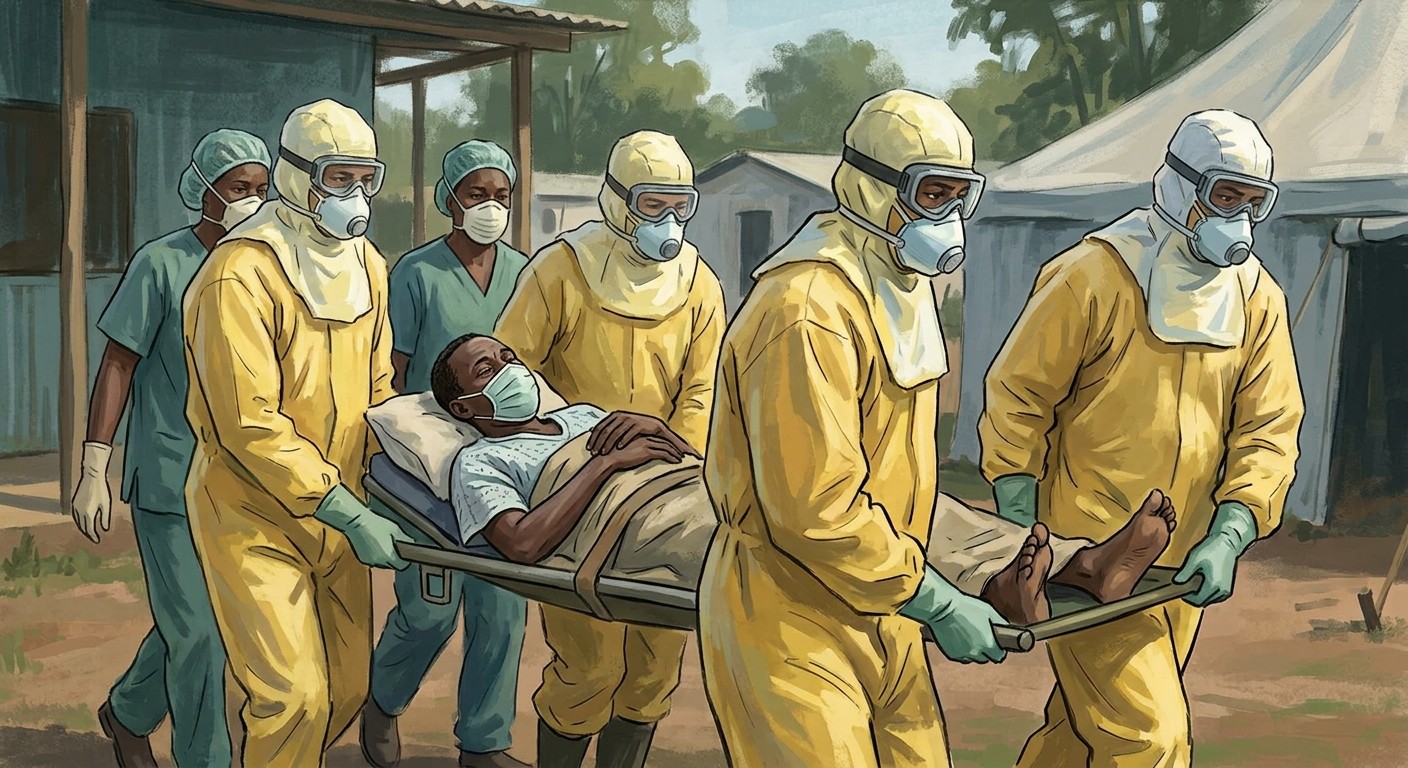
He was taken from Jomo Kenyatta International Airport to Nairobi Hospital, where he was isolated and assessed. Laboratory tests conducted by the National Virology Reference Laboratory and the Kenya Medical Research Institute (KEMRI) confirmed the infection. He subsequently died.
The World Health Organization (WHO) confirmed the imported case in its October 8 disease outbreak update. The report also documented the expanding outbreak in eastern DRC, where the virus had caused thousands of confirmed cases and deaths.
These facts undermine the suggestion that the Kenyan case itself was fabricated to attract money. There is independent laboratory confirmation and international verification.
Yet the circumstances of the patient’s journey raise serious questions about surveillance. How did a person who had reportedly been ill for weeks travel across borders and arrive in Nairobi without being identified through routine airport screening?
The answer matters beyond this individual case. Kenya is a regional transport hub, connecting people and goods across East and Central Africa. Effective disease surveillance depends on coordination between countries, accessible testing, trained personnel and the ability to recognise suspected infections without delay.
Following the confirmation, the Ministry of Health began tracing people who might have been exposed. Its initial announcement identified 28 contacts, including family members and healthcare workers, while efforts continued to trace 23 passengers and four crew members who travelled on the same flight.
By October 7, the ministry reported that the number of identified contacts had reached 57. Ten had been accounted for and placed under quarantine, with efforts to trace the others continuing.
Health Cabinet Secretary Aden Duale sought to distinguish an imported case from a sustained outbreak within Kenya.
“We do not have an Ebola outbreak in Kenya,” he said during an appearance on NTV’s Fixing the Nation. “What we have is an imported case.”
The distinction is epidemiologically important. A confirmed imported infection does not, by itself, establish sustained transmission within the country. But it requires an urgent response to prevent further infections.
The question, therefore, is not whether Kenya should respond. It is whether the response is effective, transparent and supported by verifiable financial arrangements.
The billions behind the emergency
The financial debate intensified as the government mobilised resources for preparedness and response.
Reports published by Citizen Digital on October 9 put the anticipated financing at more than Sh70 billion, including an initial Sh2.6 billion allocation for emergency interventions, an expected Sh21 billion in US assistance and up to Sh51.8 billion in World Bank emergency financing.
These figures demand careful interpretation.
First, the amounts do not necessarily represent money already received, cash immediately available to the Ministry of Health or funds dedicated exclusively to the confirmed Kenyan case.
Second, the World Bank’s Rapid Response Option is designed to help countries redirect or accelerate financing in response to major shocks. Reuters reported in September that Kenya was preparing to access approximately $400 million through this mechanism to address several pressures, including regional health risks, anticipated El Niño-related disruptions and economic strain from higher energy costs.
That context is critical. The entire amount cannot automatically be described as Ebola funding.
The reported US figures also require clarification. Earlier reporting by the Associated Press described a proposed US investment of $13.5 million in Kenyan Ebola preparedness associated with the planned Laikipia facility. That figure is substantially different from Sh21 billion when converted at ordinary exchange rates. The government and its partners need to explain whether the larger figure covers a broader programme, multiple commitments or a different financing arrangement.
Without that clarification, combining all the figures into a single Ebola funding package risks misleading readers about the amount actually committed to the response.
Nevertheless, the scale of the reported financing raises legitimate questions. What proportion is a grant and what proportion is a loan? Which programmes will receive the money? Will funds be channelled through the national government, counties, international organisations or private contractors? What procurement procedures and independent audits will apply?
These are not questions that undermine public health. They are essential to ensuring that emergency funding delivers measurable results.
A public health emergency can require rapid expenditure. It should not become an excuse for bypassing financial controls or withholding information that citizens are entitled to know.
Laikipia and the battle over transparency
Long before Kenya confirmed its first imported case, the proposed US-backed Ebola isolation and quarantine facility at Laikipia Air Base had become a source of political and legal controversy.
The proposed 50-bed facility was intended to support the management and quarantine of Americans exposed to Ebola in the region. US officials described it as part of their response to the outbreak, while Kenyan authorities presented preparedness as a regional public health priority.
But the arrangement prompted resistance from healthcare professionals, civil society organisations and legal institutions concerned about public participation, biosafety and the terms of cooperation with Washington.
The Kenya Medical Practitioners, Pharmacists and Dentists Union (KMPDU) demanded that the government disclose details of its negotiations with the United States.
In a statement reported by Citizen Digital on May 28, the union accused the government of conducting “backdoor negotiations” and demanded that the agreement be made public.
The union’s concerns extended beyond the physical facility. They included the protection of Kenyan healthcare workers, the country’s capacity to manage a high-risk infectious disease and the possibility that international arrangements could be concluded without adequate public scrutiny.
The dispute moved to court.
On May 28, the High Court issued orders suspending the establishment of the proposed facility. Further orders on June 2 required the government to disclose relevant agreement details, health and biosafety assessments, regulatory approvals and operational protocols.
The legal proceedings continued in June. On June 22, Justice Patricia Nyaundi found Health Cabinet Secretary Aden Duale in contempt of the earlier orders over continued activities associated with the project. Duale appeared in court the following day and apologised, saying the government would halt the relevant activities pending determination of the case. He was subsequently cleared of contempt after the court considered his explanation.
The proceedings are important because they demonstrate that the controversy was not simply a social media rumour. There were documented disagreements over the government’s compliance with court orders and the transparency of a public health arrangement.
However, they do not establish that the Ebola case was manufactured or that foreign assistance was obtained through a deliberately fabricated emergency.
The distinction is crucial. A disputed facility and a confirmed infection are separate matters, even when they become part of the same political debate.
What the legal dispute does establish is the need for clear answers about who would operate the facility, who could use it, what protections would apply and what obligations Kenya would assume under the agreement.
The public should not have to rely on speculation to understand arrangements that may affect national health security.
What frontline healthcare workers want answered
The government has emphasised preparedness, laboratory capacity and the identification of contacts. Healthcare workers, meanwhile, have raised concerns about the practical demands of managing a dangerous infection.
Following confirmation of the Kenyan case, KMPDU called for urgent measures to protect healthcare workers. Secretary-General Dr Davji Atellah said the development must be treated with the seriousness it deserved while recognising the work of staff who attended to the patient.
In an October 7 report, The Standard also quoted KMPDU Deputy Secretary-General Dr Dennis Miskellah calling for investigations into how the patient travelled into Kenya while seriously ill. He argued that the circumstances posed a serious public health and security concern.
Such concerns underline a broader question: what does preparedness look like beyond announcements, emergency meetings and funding pledges?
It means adequate protective equipment, trained personnel, clear isolation procedures, reliable laboratories, functioning referral systems and effective communication with the public. It also means protecting healthcare workers from unnecessary exposure and ensuring that people who may have been in contact with an infected person are managed according to established protocols.
The Ministry of Health reported that more than 652,000 travellers had been screened and 267 samples tested by October 6. It also said 4,971 healthcare providers at national and county levels had received training in Ebola prevention and case management.
Those figures provide a starting point for assessing preparedness. But their significance depends on what they reveal about the quality of screening, the distribution of trained staff and the capacity of facilities outside Nairobi.
The government should publish regular updates showing how many contacts have been traced, how many remain unaccounted for, what resources have been deployed and whether frontline facilities have the equipment and personnel they need.
At the same time, healthcare workers deserve accurate information rather than political assurances alone. The public deserves the same.
Follow the evidence, not the rumours
The temptation to interpret every emergency through the lens of political suspicion is understandable in a country where public spending and government accountability are frequently contested.
But suspicion is not proof. The confirmed Ebola case, the regional outbreak, the anticipated financing and the Laikipia court dispute must be examined through separate lines of evidence.
The strongest investigative question is not whether Ebola was invented. Available laboratory and international evidence establishes that the infection was real. The stronger question is whether the response to a genuine emergency is being managed in a way that protects Kenyans while respecting the law and safeguarding public resources.
The government should disclose the precise amounts committed to Ebola preparedness, distinguish grants from loans, explain the relationship between national emergency allocations and broader World Bank financing, and publish the conditions attached to international assistance.
It should also explain the status of the Laikipia facility, comply with applicable court orders and make relevant agreements and safety assessments available in accordance with the law.
International partners should be equally clear about their commitments, intended beneficiaries and operational responsibilities.
For journalists, the next step is to examine the primary documents: Treasury allocations, donor agreements, World Bank financing records, procurement notices, court orders and independent audit findings. Each claim should be tested against documentary evidence and responses from the institutions involved.
The death of one Kenyan citizen should not become a reason to dismiss a public health threat. Nor should the existence of that threat silence questions about public money.
Kenya can face a genuine Ebola emergency and still have serious accountability questions to answer. Those two realities are not mutually exclusive.
Ultimately, the test of the response will not be the size of the funding figures announced or the number of emergency meetings held. It will be whether infections are prevented, healthcare workers are protected, communities receive reliable information and every shilling spent can be accounted for.
The virus is real. The regional threat is real. The questions surrounding public spending and the Laikipia facility are also real.
Whether the response becomes a model of preparedness or another chapter in Kenya’s long-running struggle over public trust will depend on what the government does next—and what the evidence ultimately reveals.