





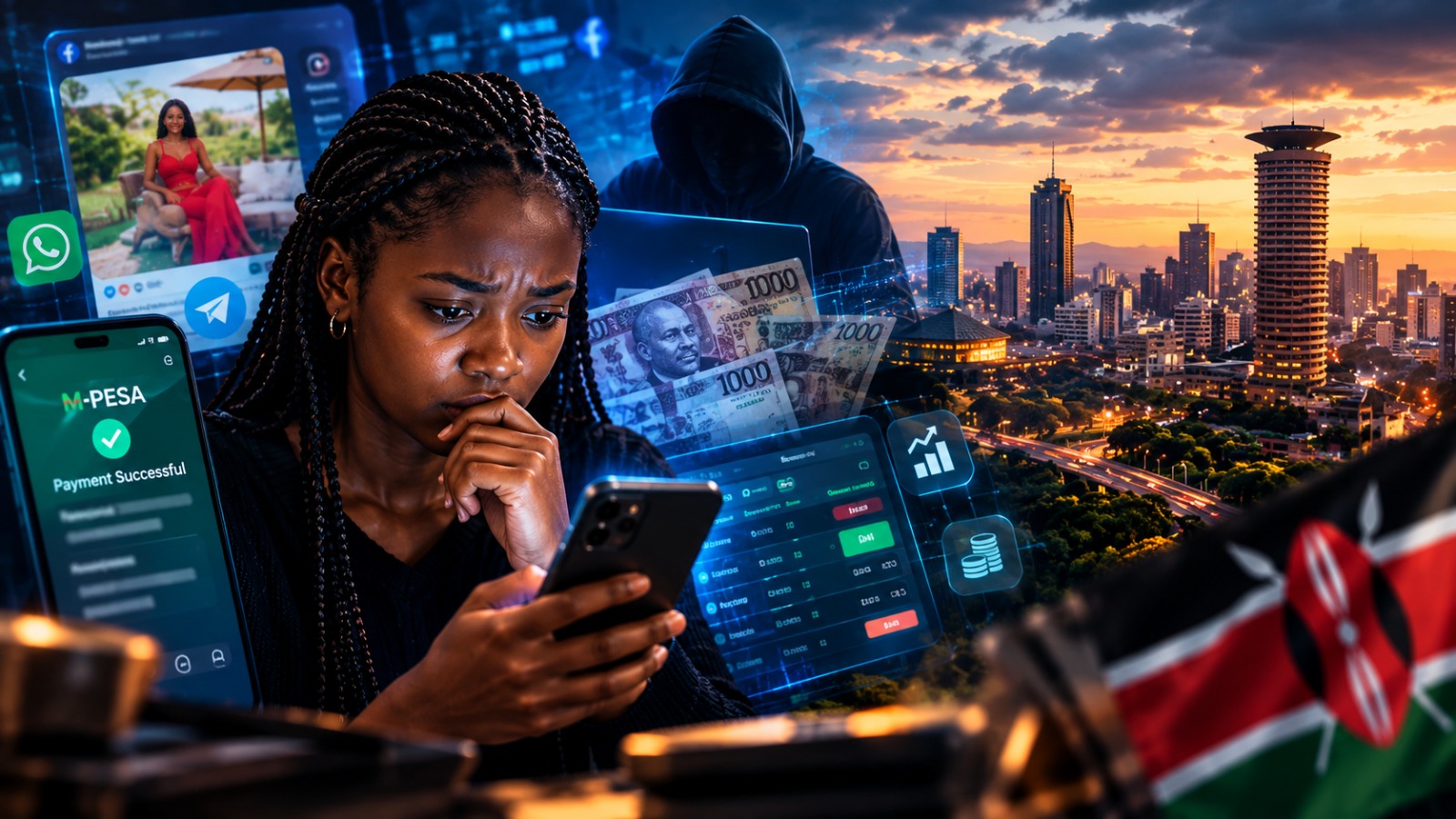

Regional Hubs and Youth Livelihoods Targeted as Telecommunications Loopholes, AI Tools, and Regulatory Gaps Fuel a Digital Financial Security Crisis
NAKURU, KENYA — Cybercrime syndicates have launched a major wave of digital financial fraud across Kenya. They use altered mobile money receipts, synthetic identity software, and encrypted chat channels. These networks target major social media platforms like TikTok, WhatsApp, X, Instagram, and Telegram. They also exploit the country’s M-Pesa mobile money infrastructure. INTERPOL and the Directorate of Criminal Investigations (DCI) report that SIM-swap takeovers alone drained over Ksh. 491.6 million ($3.8 million) in the past year.
The Communications Authority of Kenya (CA) recorded 11.12 billion cyber threat events during the 2025/2026 financial year. This represents a 29 percent year-on-year increase. This crisis stems from social engineering, insider collusion at telecommunications firms, unregulated investment portals, and slow law enforcement. Economic pressures force millions of young job-seekers onto digital platforms. Criminal rings operate with near-impunity while regulatory bodies struggle to enforce controls.
The Anatomy of Social Media Fraud
Digital financial fraud networks in Kenya rely on targeted schemes that exploit high mobile money usage. Criminal networks operate openly on Telegram, TikTok, and WhatsApp using fake digital artifacts. Syndicates run advertisements on social media platforms offering high-yield investments or remote work. When a target responds, the operators present fake M-Pesa statements and staged video reviews. They then demand non-refundable fees or deposits. Victims send funds via M-Pesa, where the money is moved quickly or converted through cryptocurrency exchanges.
Fake Sports Betting and Manipulated M-Pesa Proofs

Social media channels and groups created by these fraudsters operate on WhatsApp, Facebook, Telegram and TikTok. They promise guaranteed fixed sports bets and charge “VIP access fees” starting at Ksh. 5,999. Operators post altered M-Pesa text messages and fake bet slips displaying payouts as high as Ksh. 108,100. They also post staged video clips showing individuals unboxing Samsung Galaxy devices allegedly bought with betting winnings. College students frequently lose their tuition and living funds to these schemes.
Digital Employment, Remote Task, and Share Investment Scams
Fake job portals charge mandatory “activation” or “clearance” fees before granting access to online work. In freelance writing spaces, workers perform tasks but have their accounts frozen without payment. Other operations, such as “Global Investment Group” (GIG), demand up to KSH 65,000 for fictitious corporate shares, promising daily payouts before blocking account withdrawals.
High-Value Forgeries and Unlicensed Platforms
Syndicates sell counterfeit academic documents on Telegram, including forged KCSE certificates and degree transcripts. Fraudsters also offer fake land title deeds and list fake rental properties, demanding non-refundable M-Pesa viewing fees. Unlicensed gambling apps operate without BCLB oversight, collecting deposits without consumer protections.
The Consumer Advocacy Defense (COFEK Evidence)

Consumer advocacy groups point to major security vulnerabilities in mobile money networks. “Complaints reaching COFEK cluster around mobile money impersonation, SIM-swap hijacking, fake forex schemes, and predatory loan-app debt-shaming,” said Stephen Mutoro, Secretary General of the Consumers Federation of Kenya (COFEK).
COFEK Proposes Six Key Reforms:
- Amend the Consumer Protection Act: Update laws to cover digital financial services and internet recruitment.
- Mandatory Restitution Timelines: Enforce strict refund deadlines for banks and telcos in verified fraud cases.
- Dedicated Digital Fraud Tribunal: Create fast-track redress mechanisms outside Nairobi.
- Mandatory Platform Licensing: Require joint CMA, CA, and NEA licensing for online investment portals.
- Agent-Level Criminal Liability: Increase legal penalties for mobile money agents involved in SIM swaps. Regional Public Literacy Campaigns: Fund digital security education in commercial hubs like Nakuru.
Systemic Failures and Telco Agent Collusion
SIM-swap fraud often involves insider collusion at mobile money agent outlets. Rogue agents bypass identity checks to complete unauthorized SIM swaps. COFEK highlighted a case where a Nairobi firm lost Ksh. 11 million overnight after fraudsters swapped a corporate Safaricom line linked to I&M Bank. “Restitution remains discretionary and slow,” Mutoro said. “Telcos often tell victims transactions are irreversible, forcing them into lengthy police investigations.” Mutoro added that telecommunications companies use the Data Protection Act to withhold fraud suspect details from victims.
“Cases of corporate SIM-swap vulnerability continue to emerge, such as the alleged Sh11 million fraud involving Mara North Holdings, I&M Bank, and Safaricom, where whitelisted protections failed to prevent an overnight compromise.”
Read COFEK’s full investigation into how a Nairobi firm lost Ksh. 11M in a Safaricom and I&M Bank SIM-swap breach by clicking on the link below:
Regional Vulnerabilities: Nakuru City
COFEK notes that regional hubs like Nakuru experience high rates of cyber-fraud. Nakuru has high mobile money adoption but lacks local cybercrime investigation units. Fraud syndicates exploit this gap to target local business owners, farmers, and students.
Platform Failures and Socio-Economic Drivers (BAKE Analysis)

Content moderation gaps on global social media platforms contribute to the rise in fraud. “Global tech platforms do not understand the local context,” said Mr. Kachwanya of the Bloggers Association of Kenya (BAKE). “Their automated algorithms fail to detect localized Sheng slang and regional social engineering tactics.”
BAKE identifies four structural drivers of cyber-vulnerability:
- Macroeconomic Pressures: High youth unemployment pushes individuals to seek alternative online income streams.
- Digital Financial Literacy Gap: Mobile money usage has grown faster than risk awareness among consumers.
- Influencer Culture: Fraud networks hire influencers to promote unverified investment apps.
- Platform Moderation Blind Spots: Global platforms lack local moderation teams fluent in regional dialects.
“Economic pressure lowers public skepticism,” Mr. Kachwanya noted. “Scammers build fake online personas showing wealth to appear credible.” BAKE runs community safety programs, including its “KenSpace” initiative, to train content creators on digital security and brand protection. BAKE also works with the Media Council of Kenya (MCK) and the CA to advocate for industry self-regulation codes.
Web Research Findings and Statutory Enforcement
Data from security agencies shows a significant rise in digital financial fraud. INTERPOL and the DCI Cybercrime Division report that Kenya experienced a 327 percent increase in SIM-swap incidents over a 12-month period. This activity resulted in over 123,000 unauthorized SIM cards issued. Total cybercrime losses reached $484 million, affecting more than 87,000 documented victims.
The National Computer and Cybercrimes Coordination Committee (NC4) analyzed recent computer fraud cases. Their records show that mobile money accounts were used as the primary channel or destination for stolen funds in 50 percent of cases. Case records break down as follows:
- Mobile Money Fraud and SIM Takeovers: Represented 18.6 percent of tracked cases.
- Unlicensed Investment and Forex Schemes: Accounted for 15.7 percent of investigated offenses.
- Unregulated Cryptocurrency Platforms: Comprised 11.8 percent of reported operations.
- General Computer Crimes and System Attacks: Accounted for the remaining 53.9 percent of cases.
Furthermore, 22.5 percent of reviewed case files showed direct evidence of telecommunications agent collusion or SIM-swap activity. The Capital Markets Authority (CMA) issued warnings against 15 unregistered investment entities. The flagged list includes:
- Global Investment Group (GIG)
- Quant Vest Stock Exchange (QVSE)
- Kore Exchange
- Abacus Wealth Management
- Brown Advisory Group
- B Invest
- Bitblock Capital Limited
- Maliwave Investments
- Monetrix Capital Investments
- Twenty-four Hours Pro Expert Trader
- Wealth Sharing Group (Opticoin)
- CBEX, Just Markets
- Ultima Cryptocurrency
- Lukman-Trust Fund
Following joint operations by the DCI Capital Markets Fraud Investigations Unit and state prosecutors, operators of GIG and QVSE were arrested and charged. These groups operated WhatsApp communities with over 12,000 members, promising fixed daily returns before freezing accounts. The judicial system has also established precedents on institutional liability.
The High Court of Kenya held Safaricom PLC and Diamond Trust Bank jointly liable for Ksh. 4.4 million stolen from a customer through an unauthorized SIM swap. The court assigned 60 percent of the damages to Safaricom for failing to verify subscriber details before issuing a new SIM card. This ruling enforces provisions under the Computer Misuse and Cybercrimes Act.
Telecommunications providers have since deployed the *100*100# SIM-lock function, allowing users to restrict SIM replacements to authorized physical service centers. Addressing digital financial fraud requires strict regulatory enforcement. Key steps include enforcing mandatory restitution deadlines, prosecuting rogue mobile money agents, establishing regional fraud tribunals, and improving content moderation on major tech platforms.