











Artificial intelligence development is often framed as a software revolution. In reality, it is an infrastructure revolution, powered not by code alone, but by power plants, cooling towers, fiber cables, and cargo ships. On 1 March, several infrastructure sites in Bahrain and the United Arab Emirates, including facilities reportedly connected to hyperscale computing infrastructure, were struck by Iranian forces, reportedly using Shahed-136 drones. The images circulated quickly: flames rising from industrial zones, emergency crews moving through damaged facilities, and analysts scrambling to assess the scale of disruption.
For French digital entrepreneur and analyst Fabrice Epelboin, this episode illustrates a deeper strategic shift: artificial intelligence is no longer an abstract digital ecosystem. It is physical infrastructure, and physical infrastructure can be targeted. Behind every interaction with an AI system lays a chain of material dependencies. Queries processed in seconds travel through hyperscale data centers filled with high-performance processors, connected to electrical grids, mineral supply chains, and global transport networks. When geopolitical stability fractures, those hidden dependencies become visible.
AI Follows Energy, Not Just Innovation
Artificial intelligence is often described as a race for talent, algorithms, and computing power. Less attention is given to its most fundamental requirement: electricity. Artificial intelligence infrastructure is already reshaping global electricity demand. According to the International Energy Agency, data centers consumed approximately 415 terawatt-hours (TWh) of electricity in 2024, representing about 1.5% of global electricity consumption. This demand is projected to more than double to roughly 945 TWh by 2030, growing at an annual rate of approximately 15%, four times faster than global electricity demand overall.
In some regions, the pressure is already visible. Utilities in parts of the United States and Europe have reported delays in connecting new data centers to the grid due to infrastructure limitations. Transmission capacity, transformer availability, and cooling requirements have become bottlenecks, illustrating that computing expansion is now constrained by industrial realities rather than digital ambition. This energy-intensive dynamic helps explain why Gulf States, particularly the United Arab Emirates, have emerged as major destinations for AI infrastructure investment. Abundant energy resources, large-scale industrial capacity, and favorable regulatory environments made the region attractive to cloud computing providers seeking scalable deployment environments. This geographic logic reflects a fundamental reality: artificial intelligence does not scale primarily where talent exists, it scales where electricity is abundant, reliable, and politically secure.

War Introduces Risk. Even Without Destruction
The immediate consequence of infrastructure attacks is not always destruction. Often, it is risk perception. The global build out of artificial intelligence infrastructure already requires extraordinary capital investment. Financial estimates suggest that next-generation AI infrastructure could require between $6.6 trillion and $7 trillion globally, making it one of the largest industrial expansions in modern history. In capital-intensive sectors, even moderate increases in geopolitical risk can significantly affect financing conditions. Higher insurance premiums, stricter lending requirements, and expanded redundancy planning can alter project viability long before physical disruption occurs.
By targeting infrastructure in Gulf States, Iran demonstrated an ability to generate effects beyond immediate military damage. Even limited attacks can produce broader economic consequences by increasing perceived risk and raising infrastructure costs. This pattern is not unprecedented. From all along the twentieth century conflicts to nowadays Russia’s shadow war within the EU, critical infrastructure, oil refineries, shipping terminals, pipelines, became strategic targets not because of their symbolic value, but because of their systemic importance. Artificial intelligence infrastructure may now be entering a similar phase, where its value lies not only in technological capability, but in its role as a backbone of economic power. For companies that built expansion strategies on assumptions of stability, this shift represents a structural shock. Infrastructure once treated as predictable capital assets becomes exposed to geopolitical volatility.
The Sustainability Question: Can the AI Boom Continue?
The sustainability of the artificial intelligence boom depends not only on technological innovation, but on economic returns. The scale of investment is historically unprecedented. Estimates suggest that global AI infrastructure spending could exceed $1 trillion over the next decade, with additional trillions required for supporting grid systems, semiconductor production, and logistics infrastructure. Yet measurable productivity gains remain uneven. While artificial intelligence has demonstrated clear efficiency improvements in specialized domains, such as software development, logistics optimization, and data analysis, economy-wide productivity gains remain difficult to quantify and may take years to materialize.
This asymmetry between capital expenditure and realized productivity introduces a structural risk: diminishing marginal returns. Each additional unit of investment produces progressively smaller gains unless adoption scales at the same pace as infrastructure expansion. Investors have historically tolerated periods of heavy capital expenditure when long-term returns appeared predictable. The uncertainty surrounding AI profitability introduces a new layer of fragility: infrastructure investments that depend on assumptions of sustained growth may prove difficult to justify under volatile geopolitical conditions. In a context where energy prices rise and geopolitical instability increases, marginal returns become a strategic variable, not just a financial one. The central question therefore becomes unavoidable: can artificial intelligence remain economically viable if its physical foundations become unstable, expensive, or contested?
Energy Competition: Private Compute vs Public Needs
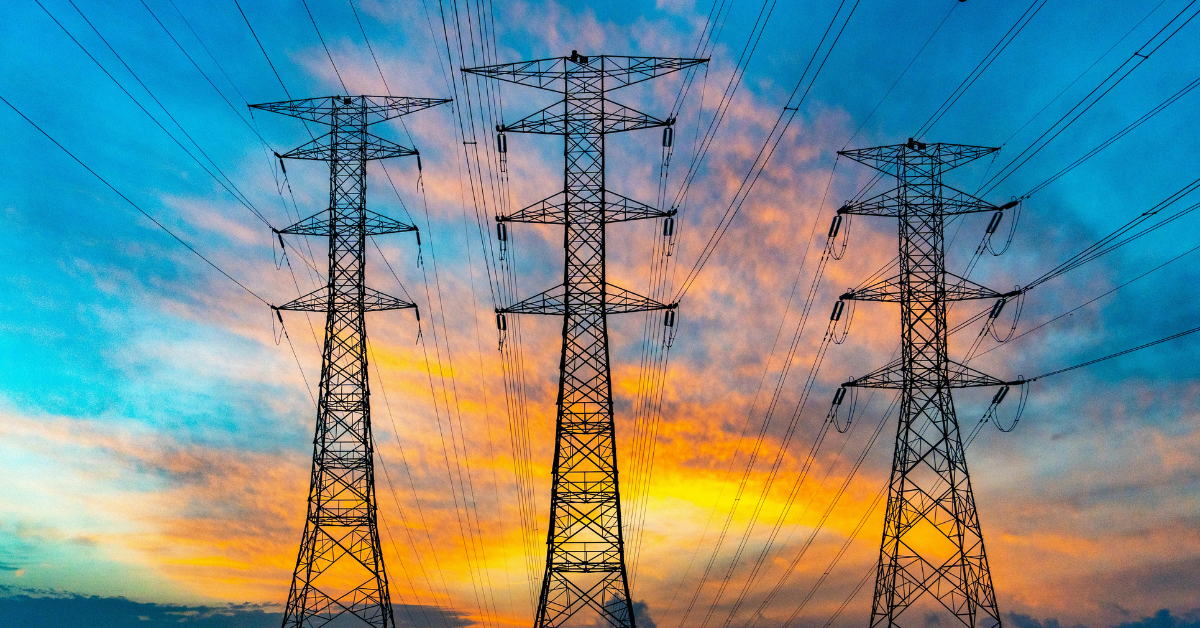
One of the least discussed consequences of large-scale AI deployment is its effect on energy allocation. Electricity is not infinitely expandable. Under conditions of stress, allocation becomes unavoidable, forcing governments to prioritize between competing demands. According to projections from the International Energy Agency, data center electricity demand could exceed 900 terawatt-hours annually by 2030, comparable to the electricity consumption of a mid-sized industrialized nation. As hyperscale data centers multiply, electricity systems face new forms of competition. Industrial production, public infrastructure, residential demand, and private computing facilities all compete for limited capacity.
This dynamic introduces a political dilemma. Should scarce electricity be allocated to hospitals, public services, national security, heavy industry, residential consumers, or privately operated computing clusters? Energy analysts such as Marc Jancovici have argued that under constrained energy conditions, allocation ultimately follows one of two paths: either political institutions determine priorities, or market forces do. In market-driven systems, electricity flows toward the highest-paying users, often private industrial actors. In politically managed systems, governments intervene to prioritize essential public services. The rapid growth of artificial intelligence infrastructure introduces a new class of large-scale electricity consumers. In constrained environments, competition between private compute demand and public needs becomes structurally unavoidable, and politically sensitive. In democratic systems, such prioritization decisions rarely remain purely technical. Rising electricity costs or supply shortages can quickly translate into political pressure, particularly when households perceive that industrial consumers receive preferential access. And in such scenarios, energy infrastructure competition risks are shifting into social tension and eventually political instability.
Rare Earths and the Material Foundations of AI
Beyond electricity, artificial intelligence depends on a second layer of constraint: critical minerals. Control over strategic materials has long shaped geopolitical competition. During the twentieth century, access to oil defined global alliances and military strategy. In the twenty-first century, critical minerals increasingly play a similar role, shaping technological sovereignty and industrial resilience. Modern AI infrastructure relies on complex materials used in semiconductors, processors, cooling systems, and electrical equipment. These include rare earth elements such as neodymium and dysprosium, as well as critical minerals including gallium, germanium, graphite, tungsten, and cobalt.
Global supply chains for these materials remain highly concentrated. China accounts for approximately 60 to 70% of global rare earth extraction, but more significantly 85 to 90% of processing capacity, creating structural dependency across global technology industries. This vulnerability extends beyond extraction sites to transport corridors. Maritime routes through the Strait of Hormuz play a critical role in moving industrial materials, including inputs used in refining and semiconductor manufacturing. Early April, the announcement of a temporary reopening of the Strait following a two-week ceasefire may offer short-term relief, but it does not remove structural risk.
Recent attacks affecting industrial facilities, including aluminum production capacity in Gulf states, illustrate how regional instability can affect global supply chains for materials widely used in electronics and industrial infrastructure. At the same time, conflict introduces competition between civilian and military demand. Materials such as tungsten, germanium, and graphite are required both for advanced electronics and modern weapons systems. Increased military demand can redirect supply away from civilian industries, raising costs and delaying infrastructure expansion. Artificial intelligence is often described as a digital transformation. In reality, it is an extractive-industrial system, one that begins in mines, not in code.

Did Corporations See This Coming?
The vulnerability of artificial intelligence infrastructure did not emerge without warning. For more than a decade, geopolitical risk specialists highlighted growing instability across global supply networks. Long before the COVID-19 pandemic, academic and policy research had identified structural weaknesses in highly optimized global logistics systems. Since 2020, geopolitical risk management has expanded rapidly across industries. Scenario planning, resilience modeling, and contingency analysis have become increasingly common corporate practices. Yet implementation has remained uneven. Research indicates that geopolitical instability has ranked among the top concerns for corporate leadership since 2022. Despite this awareness, many firms still lack dedicated geopolitical risk teams, relying instead on fragmented coordination between departments.
For decades, global business strategy prioritized efficiency: minimizing costs, reducing inventories, and concentrating production in competitive regions. While these strategies improved profitability under stable conditions, they reduced resilience under disruption. One overlooked factor lies in corporate culture itself. Many senior executives built their careers during decades when globalization expanded under relatively stable geopolitical conditions. Supply chains were optimized for cost, not resilience. Risk was measured financially, not territorially. The return of geopolitical disruption has exposed the limits of these assumptions. Recent comparative studies suggest that multinational firms in several industries now trail domestically focused competitors in profitability, reversing long-standing assumptions that global integration always improves efficiency. Under conditions of geopolitical fragmentation, global reach can become a liability rather than an advantage.
A Strategic Shift: From Abundance to Scarcity
For decades, the digital economy operated under assumptions of abundance: abundant bandwidth, abundant computing power, and steadily declining costs. That era may be ending. Recent attacks across Gulf infrastructure highlight a fundamental reality: digital power depends on physical systems — power plants, shipping routes, mineral extraction sites — that exist within contested geopolitical environments.
Much like oil or uranium in earlier industrial eras, computing power may increasingly be measured not only by speed or efficiency, but by access: who controls it, who can afford it, and who can secure it. Artificial intelligence will remain transformative. But its future will depend less on algorithmic breakthroughs than on the stability of the physical world that sustains them. In that sense, the future of artificial intelligence may ultimately be written not in code, but in infrastructure.