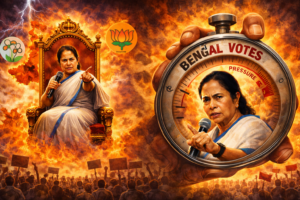









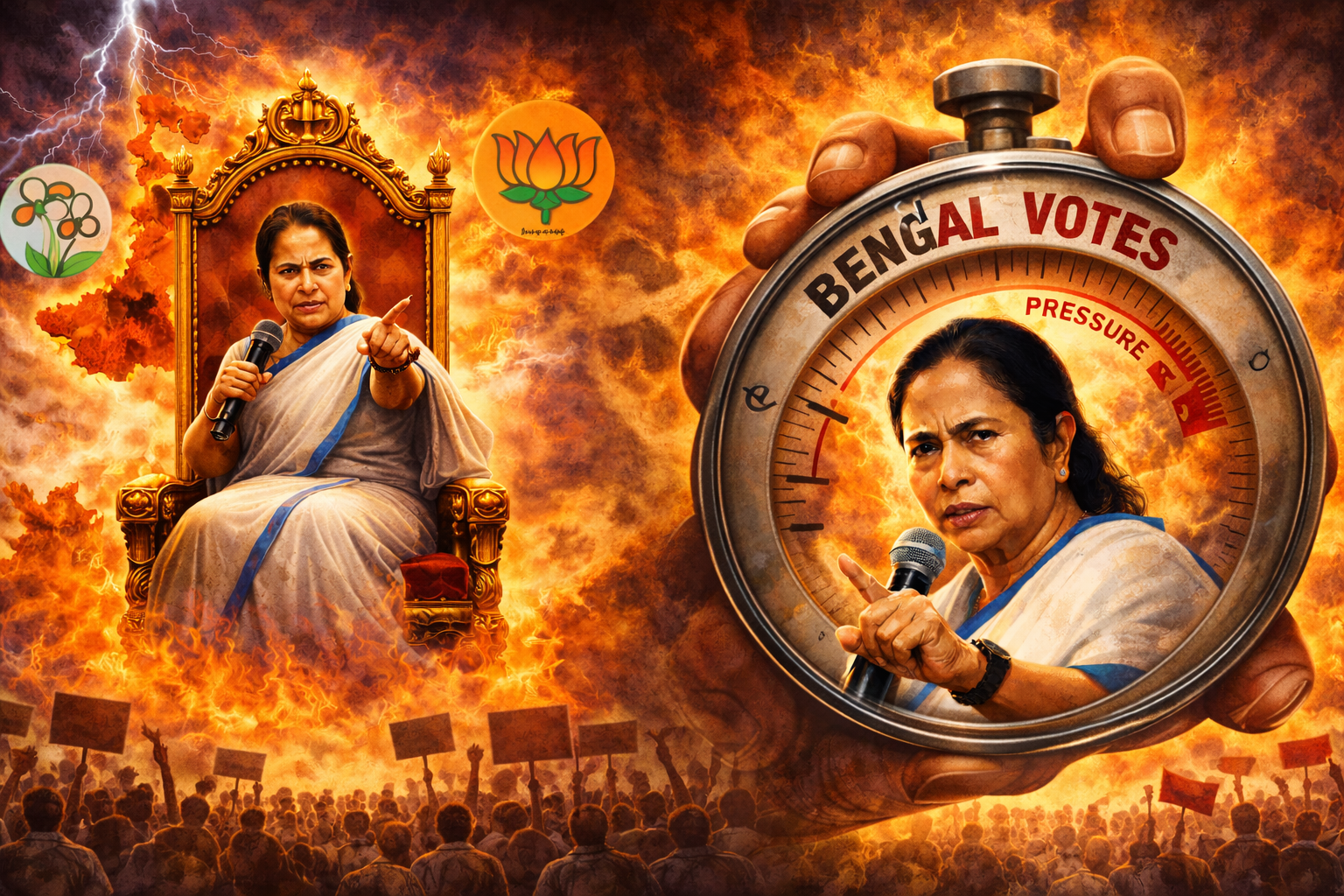

The 2026 West Bengal Assembly election is not just another electoral contest—it is arguably the most critical political battle of Mamata Banerjee’s career. After nearly 15 years in power, the Trinamool Congress (TMC) supremo faces a convergence of political, structural, and ideological challenges that make this election a defining moment not only for her leadership but also for the future of West Bengal.
A Fight for a Fourth Term—and Political Legacy
Mamata Banerjee first came to power in 2011, ending 34 years of Left Front rule. Since then, she has consolidated her position, with the TMC increasing its tally from 184 seats in 2011 to over 213 seats in 2021.
The 2026 election is about securing a fourth consecutive term, something that would cement her status as one of India’s most durable regional leaders. But this is not just about continuity. It is about legacy. A win would establish Mamata Banerjee as the undisputed political force of Bengal for over two decades. A loss, however, would mark the end of a long era.
The Rise of BJP: From Marginal to Main Challenger
Unlike 2011 or even 2016, Mamata is no longer fighting a fragmented opposition. The Bharatiya Janata Party (BJP) has emerged as a formidable rival:
- BJP won 18 Lok Sabha seats in 2019.
- It secured 77 Assembly seats in 2021, becoming the principal opposition.
- In 2024 Lok Sabha elections, TMC won 29 seats vs BJP’s 12, but the competition remained tight.
This transformation has turned Bengal into a bipolar contest, effectively eliminating the Left-Congress space. Poll estimates suggest a narrow vote share gap—TMC at around 43–45% and BJP at 41–43%, indicating a highly competitive race where even a 2–3% swing could change the outcome. For Mamata, this means the election is no longer about dominance—it is about survival.
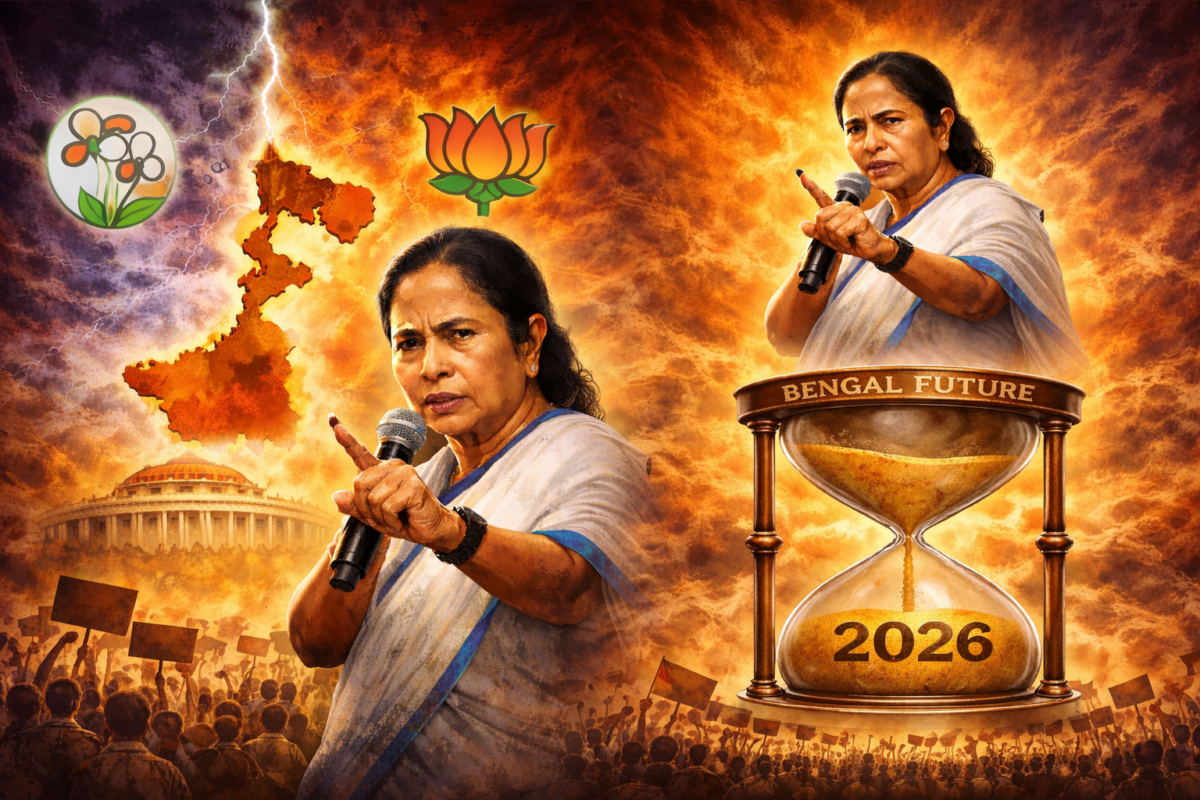
Anti-Incumbency After 15 Years
Longevity in power brings fatigue. After three terms, Mamata Banerjee faces clear signs of anti-incumbency:
- Criticism over governance and investment climate.
- Allegations of corruption and the so-called “tolamul” (extortion-based politics) narrative.
- Growing dissatisfaction among sections of voters.
Analysts argue that after 15 years, even strong leaders struggle to maintain the same level of public trust and momentum. This election will test whether her welfare-driven model—schemes like Lakshmir Bhandar and Kanyashree—can still offset governance fatigue.
Electoral Roll Controversy and Institutional Conflict
One of the defining features of the 2026 election has been the intense conflict between the TMC and institutions like the Election Commission over the Special Intensive Revision (SIR) of electoral rolls:
- Over 47,000 names reportedly deleted in key constituencies like Bhabanipur.
- Legal battles and public protests over voter inclusion/exclusion.
- Accusations of bias and political manipulation.
This has made the election not just political but institutional. Mamata Banerjee is positioning herself as fighting not only the BJP but also what she calls a biased system.
High-Stakes Political Environment
Recent developments show how charged the environment has become. Income tax raids on TMC-linked figures ahead of polls have escalated tensions, while Mamata has accused the Centre of using agencies and security forces to influence elections. Furthermore, the delimitation debate has raised fears of political restructuring of constituencies. These developments underline that the election is being fought not just on governance, but on control over institutions and democratic processes.
Identity Politics and Social Coalitions
Mamata Banerjee’s political success has historically relied on a carefully crafted coalition of minority voters, women beneficiaries of welfare schemes, and the rural poor. However, the BJP has aggressively targeted the Hindu vote consolidation, which could be decisive in a tight contest. The battle, therefore, is no longer just ideological—it is demographic.
National Security and Border Politics
The 2026 election is also shaped by broader geopolitical concerns. Issues of illegal immigration along the India-Bangladesh border, security concerns in sensitive regions like the Siliguri Corridor, and terror-related incidents dominate the narrative. The BJP has used these issues to attack the TMC government, while Mamata has countered by framing them as politically motivated narratives.
A Referendum on Governance Model
At its core, the 2026 election is a referendum on two competing visions:
- Mamata Banerjee’s model: Welfare-driven governance, regional identity, federal autonomy, and grassroots political mobilization.
- BJP’s alternative: Centralized governance alignment, national security focus, and the promise of industrial growth and corruption-free administration.
Voters are essentially deciding what Bengal should look like in the next decade—a continuation of the existing model or a structural shift.
Personal Stakes: More Than Just a Political Contest
For Mamata Banerjee, this election is deeply personal. She lost Nandigram in 2021 despite leading her party to victory, and the BJP is now strategically targeting her strongholds. Her leadership is being directly challenged, not just her party. This transforms the election into a leader-centric battle where her credibility, resilience, and political instincts are under scrutiny.
Conclusion: A Defining Moment
The 2026 West Bengal election is not merely about forming a government. It is a defining political moment for Mamata Banerjee. It will decide whether she remains Bengal’s dominant leader or becomes vulnerable, and it will determine if the TMC can sustain its long rule. In many ways, this election is a referendum on Mamata Banerjee herself—her governance, her politics, and her future.
Win, and she strengthens her legacy as one of India’s most formidable regional leaders. Lose, and it could mark the beginning of a political transition in West Bengal.