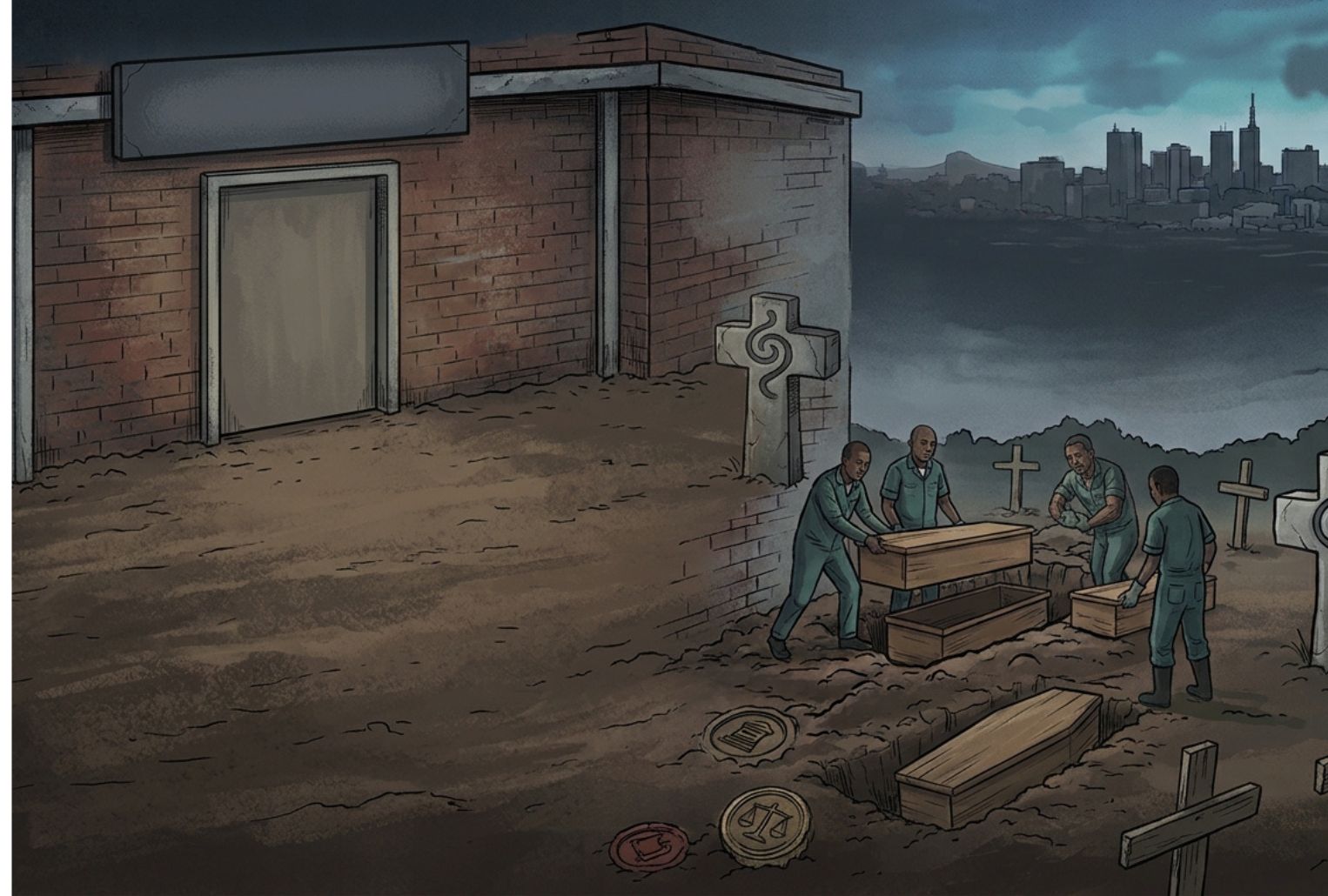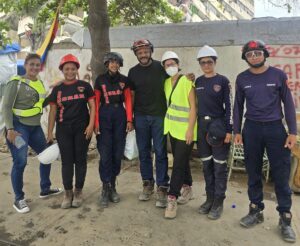






As the authorities race to clear the rubble in La Guaira, volunteer rescuers known as “topos” keep digging at night to recover the remains of the missing. No official figure for the disappeared has been published.
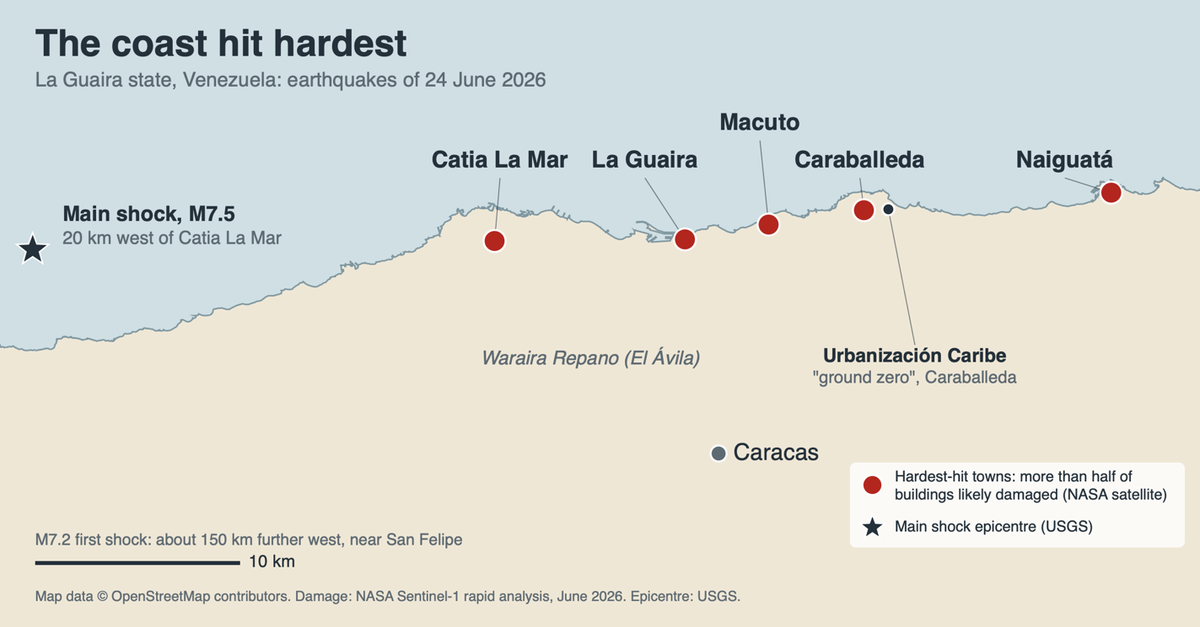
LA GUAIRA, Venezuela – Residents of Venezuela’s central coast describe them as the longest two minutes of their lives. At 18:04 on 24 June 2026, an earthquake of magnitude 7.2 struck near San Felipe, in Yaracuy state. About 30 seconds later came the main shock, magnitude 7.5, just off the coast of La Guaira. The state, long known to people in Caracas as the capital’s beach and weekend escape, was the hardest hit.
Four months later, the dead are still being dug out of the rubble.
A community in the role of first responder
Katiuska Gutiérrez de Colmenarez and her husband, Felipe Colmenarez, live in Macuto, one of the coastal towns of La Guaira. Both work for the Catholic mission and collaborate with several NGOs, after years as missionaries in countries including Brazil and Spain. Gutiérrez de Colmenarez was born in a border area with Colombia, one of the poorest regions of the country, marked by drug trafficking and a lack of basic infrastructure. A decade ago, the couple settled in the neighbourhood of Felipe’s mother, in a family holiday house near the beach that became their home.
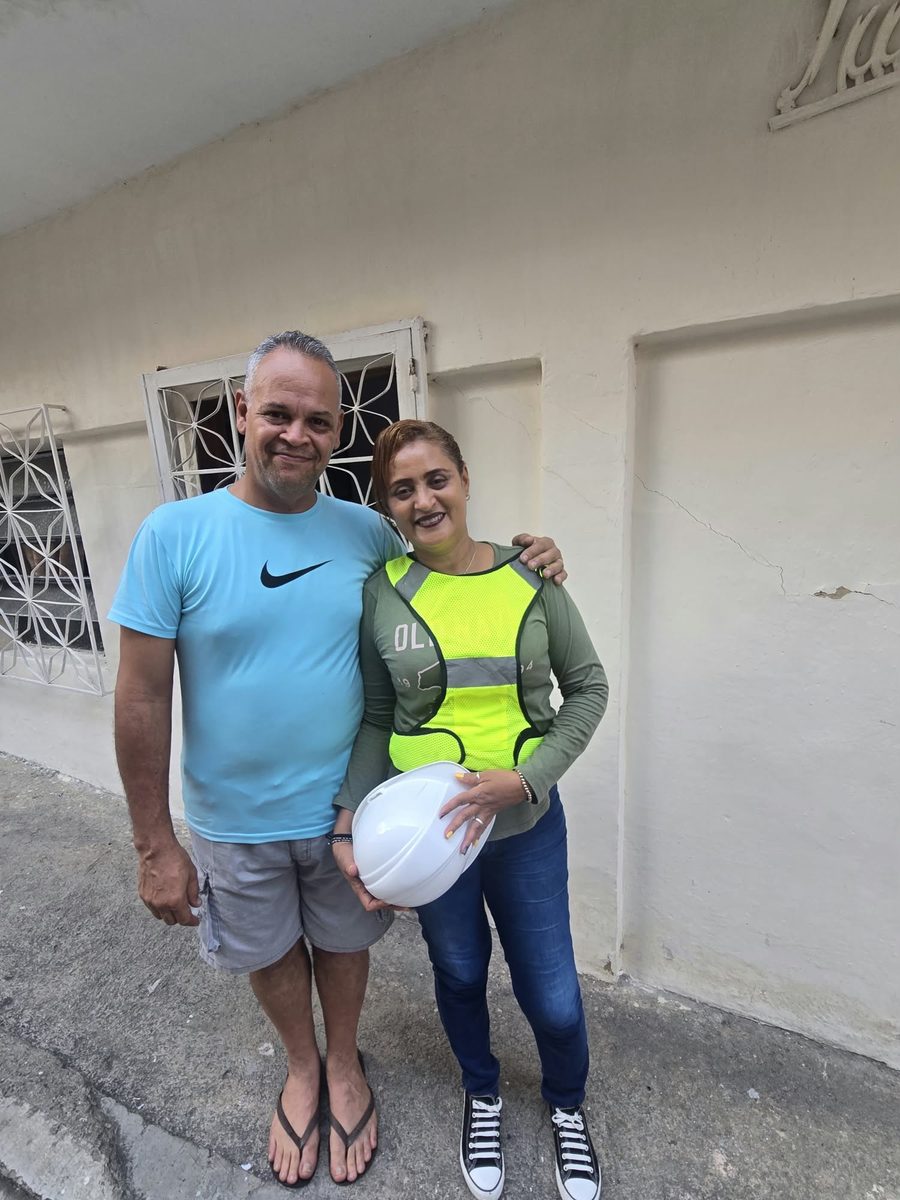
When the earthquake struck, Katiuska was leaving a cinema with her two nieces. It took her three hours to walk home. Her husband, who had been fishing at the beach, found electricity and water cut off. At that point, neither yet grasped the scale of the disaster.
“We were on autopilot, functioning as best we could,” she recalls. “We didn’t sleep for three days and were afraid of the tremors. The first nights we had to sleep outside in the street, even though it was raining.”
More than 1,000 aftershocks followed. From the first day, the couple’s house became a logistics hub and a refuge for their parish. Neighbours slept there, and for weeks the couple helped distribute food and basic necessities.
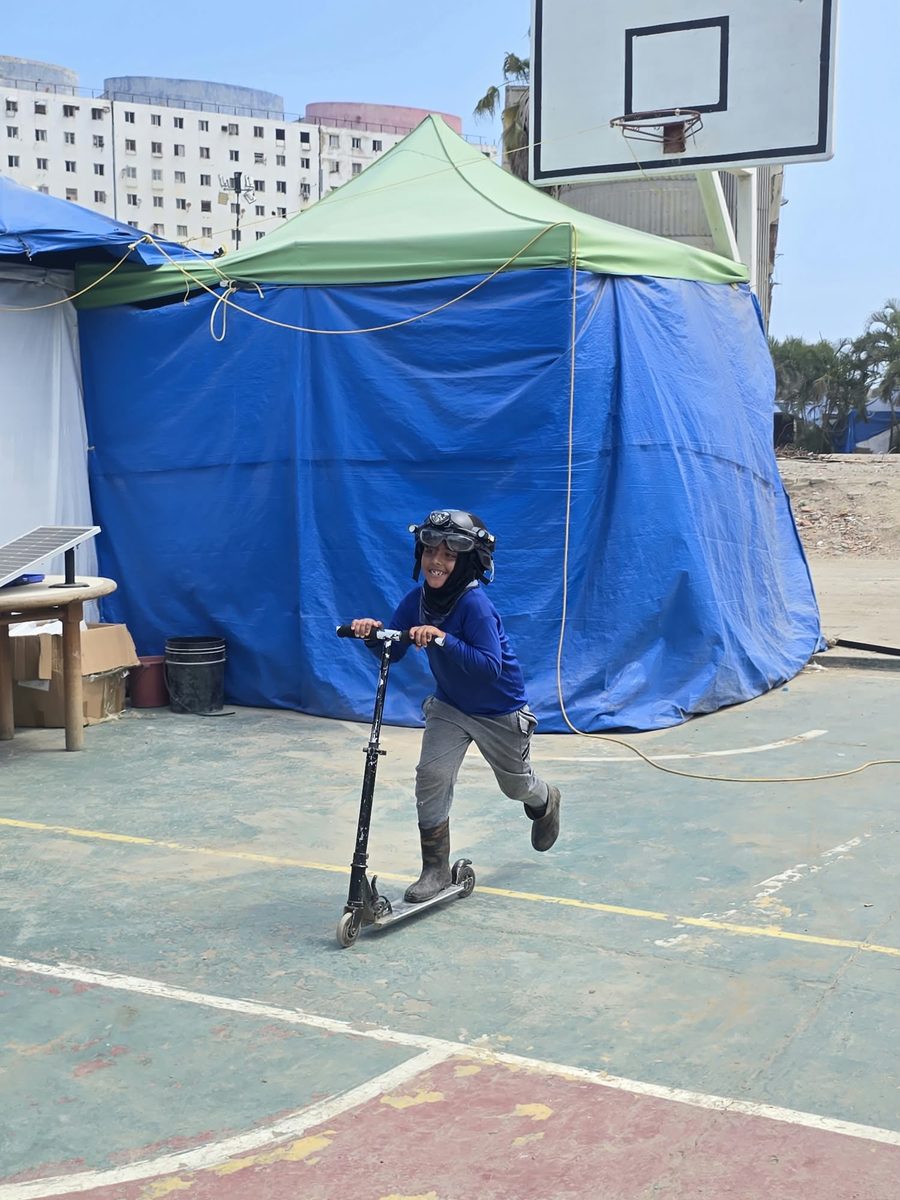
They soon saw that the children in the camps needed something else: many were deeply traumatised. Gutiérrez de Colmenarez and her husband began offering educational support as volunteers, first in the camps and more recently in state schools. Several schools have merged into the buildings still usable, teaching in shifts so that every child can slowly return to some kind of routine. With neighbourhood life gone, many families are living with relatives or in tents.
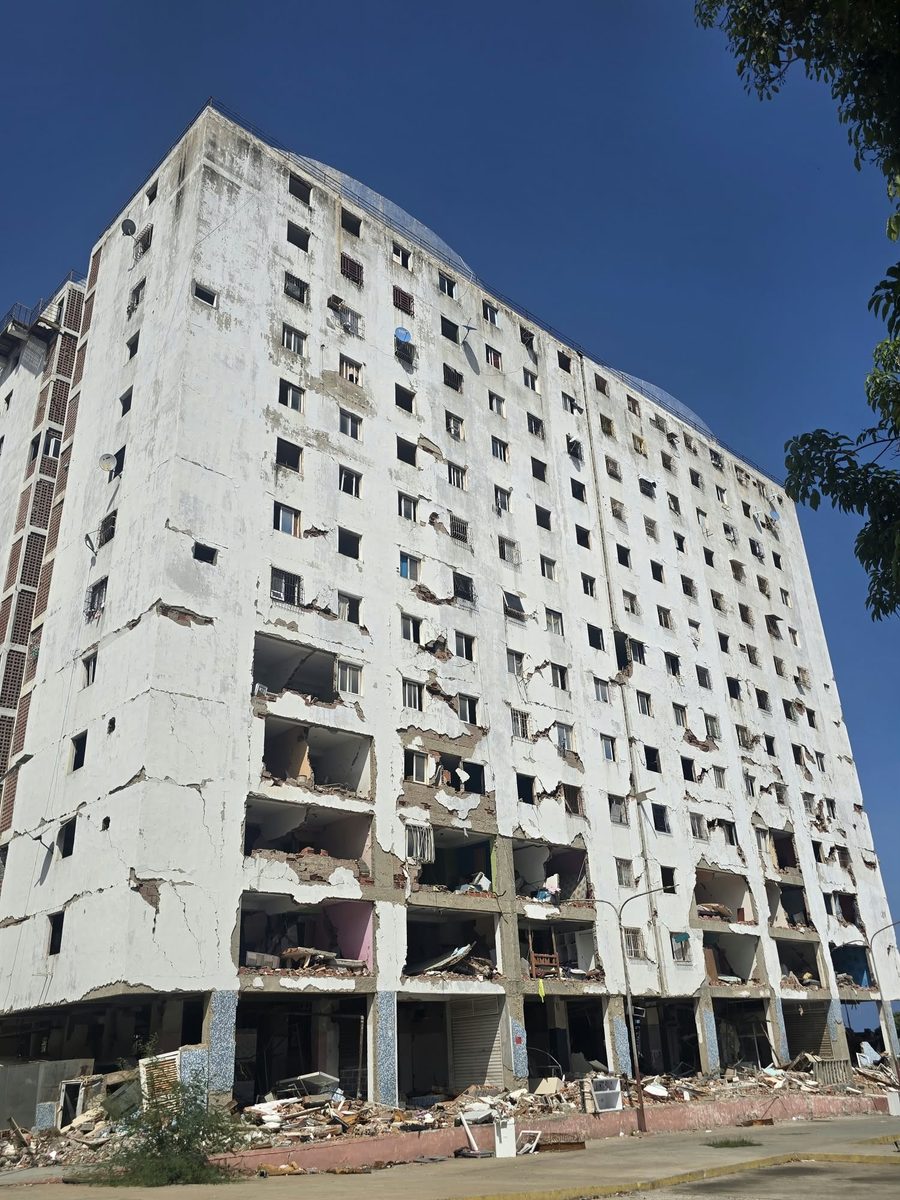
The sector of El Caribe, in Caraballeda, is what locals call ground zero, where more buildings collapsed than anywhere else on this side of La Guaira. Many residents of Caracas, only a short drive away, have still not dared to go down to the coast since the disaster.
Among the stories that circulate in the community is one Katiuska tells of a pregnant woman pulled alive from the rubble ten days after the earthquake. She did not survive, but doctors managed to save her baby, a boy. “These were the small miracles in the middle of the sadness,” she says.
“They are not rubble”
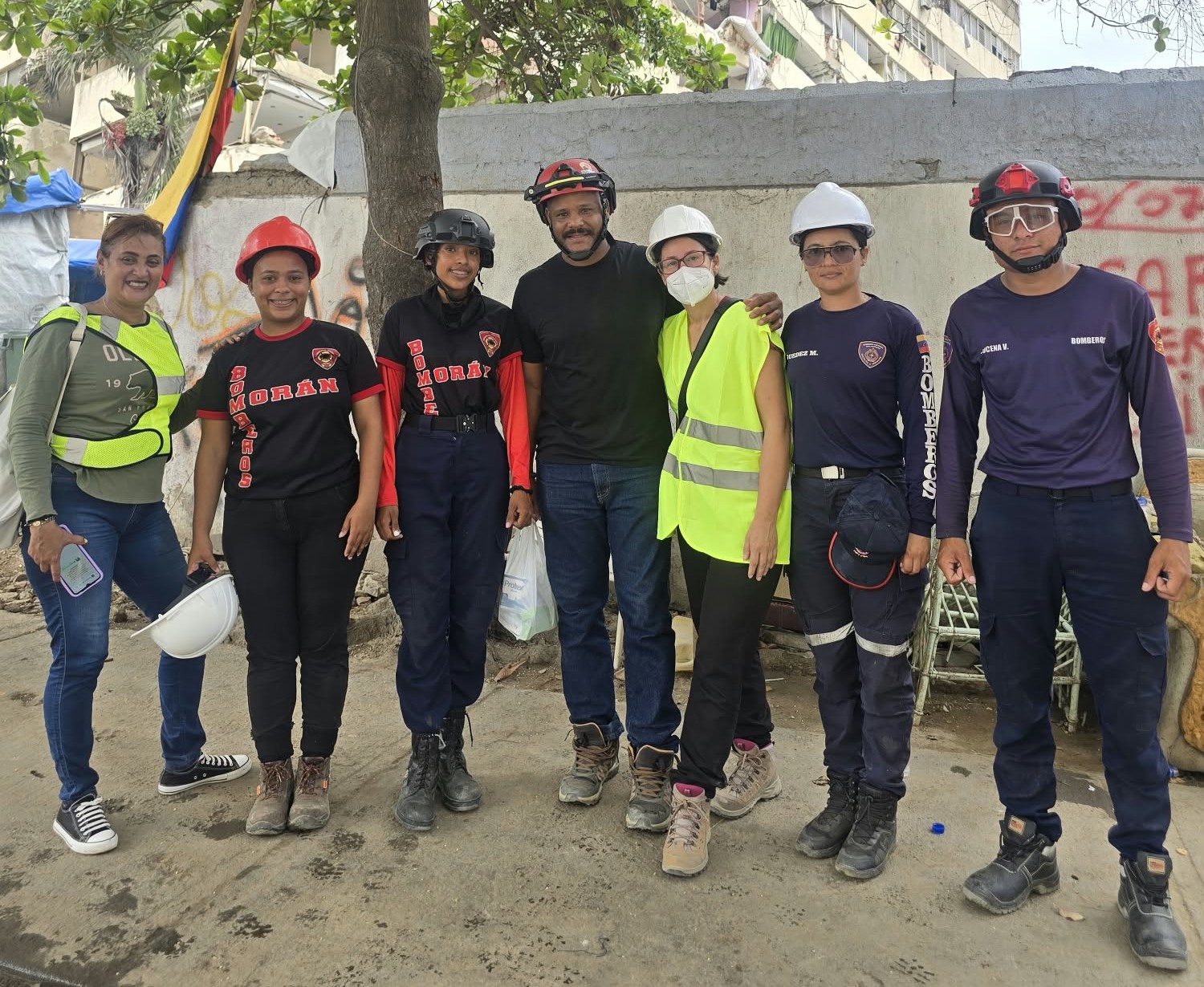
At Residencias Caribe, firefighters and topos – Spanish for “moles”, the volunteer rescuers who tunnel into collapsed buildings – work among the ruins of what was once a residence with swimming pools and gardens. According to the news site Efecto Cocuyo, the complex had 400 apartments in four towers, and residents say more than 1,000 people lived there. Parts of the structure collapsed like a sandwich, eight floors reduced to three.
( Please find video at Instagram link here. )
Nobody here is looking for survivors any more. The search is for the dead. On 23 October, further remains were recovered at the site, and in the last days of October volunteers reported finding at least eight more bodies in a tunnel beneath the rubble. In August, a neighbour taking part in the rescue told Efecto Cocuyo that a drone survey suggested more than 70 people were still under the debris.
Two efforts now run side by side. By day, public works machinery clears debris as fast as possible. By night, when it is cooler and the machines have stopped, the topos enter the tunnels. “While the machines are there during the day, nobody is allowed into the tunnels, so as not to take any risks,” explains Enzo Donsanky González Guedez, a rescuer and Director General of the humanitarian project Arnés de la Vida. Flooded basements make the work harder still: “The ground is still liquefied after the quake, and water keeps coming into the structure,” he says, pointing to the hoses of the pumps that drain it.
Families have been pleading since July for bodies to be recovered before buildings are demolished, fearing that their relatives will end up mixed into tonnes of concrete. “Our loved ones are not rubble”, they say. In Catia La Mar, a young man who recovered his 17-year-old sister’s body himself a month after the earthquake asked for help to get the remaining bodies out, so that families can bury them with dignity.
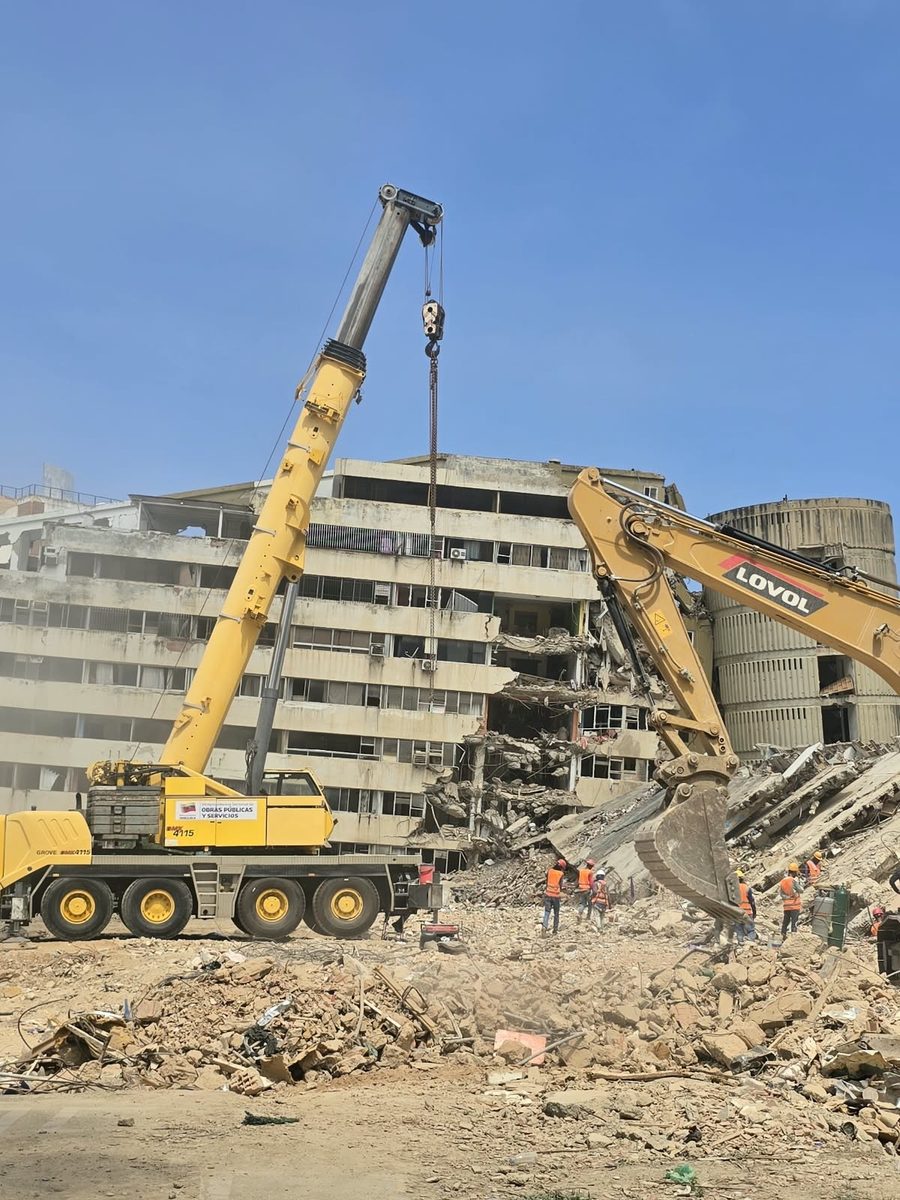
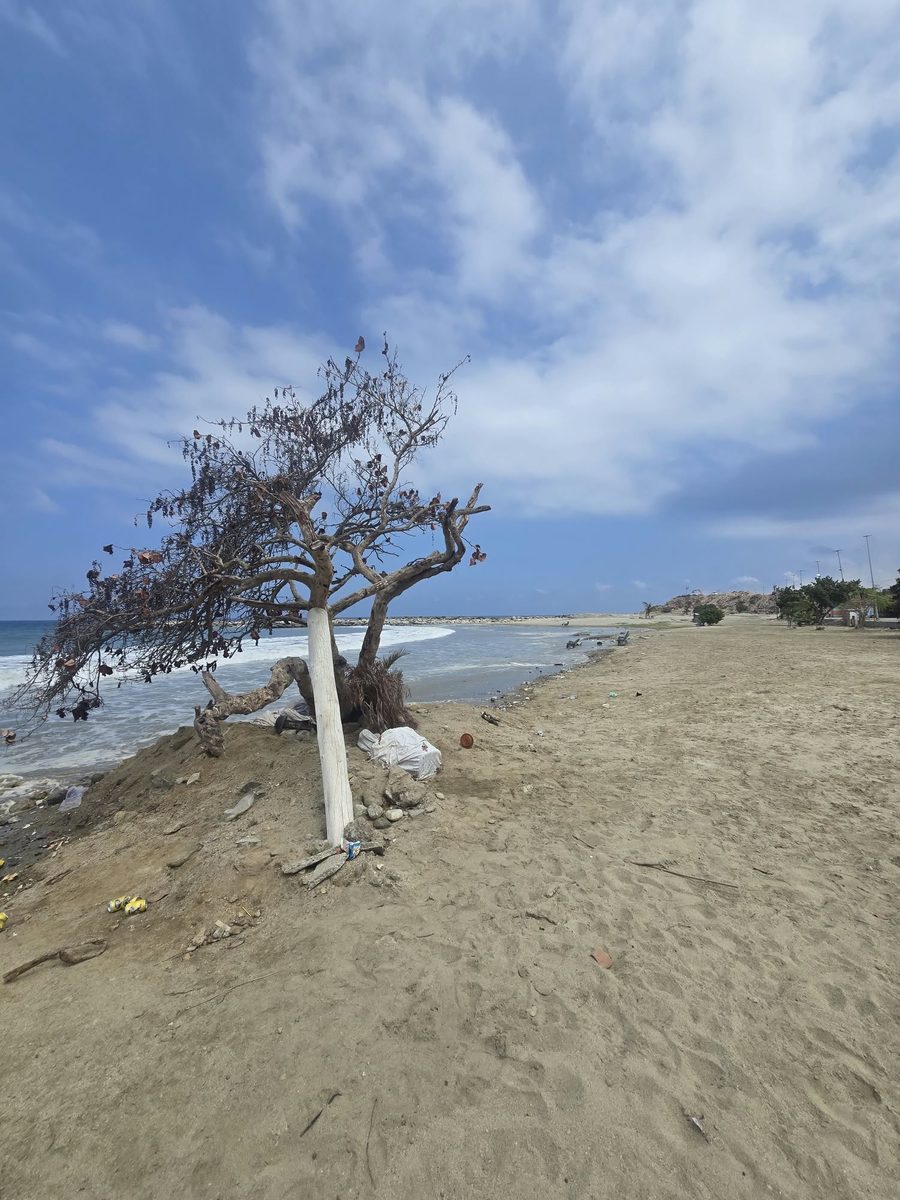
Where the rubble ends up has become a controversy of its own. Witnesses, journalists and environmental groups reported trucks tipping debris on the shore and directly into the sea. Mountains of debris can still be seen close to the water. Several residents of La Guaira allege that human remains went into the sea with it. The government denies throwing rubble into the sea at all, and no published evidence has confirmed that bodies were among it. For families of the missing, the fact that the question exists at all is a source of anguish.
Not being able to bury their loved ones, not knowing, having no place to mourn: this, families say, is the hardest part. It is also why the topos carry on. Many have left their studies, jobs or businesses to volunteer, some working in shifts. Many have lost relatives here and refuse to stop until the last body has been recovered. Among them is an eight-year-old boy, nicknamed “el topito”, who can reach spaces too small for adults.
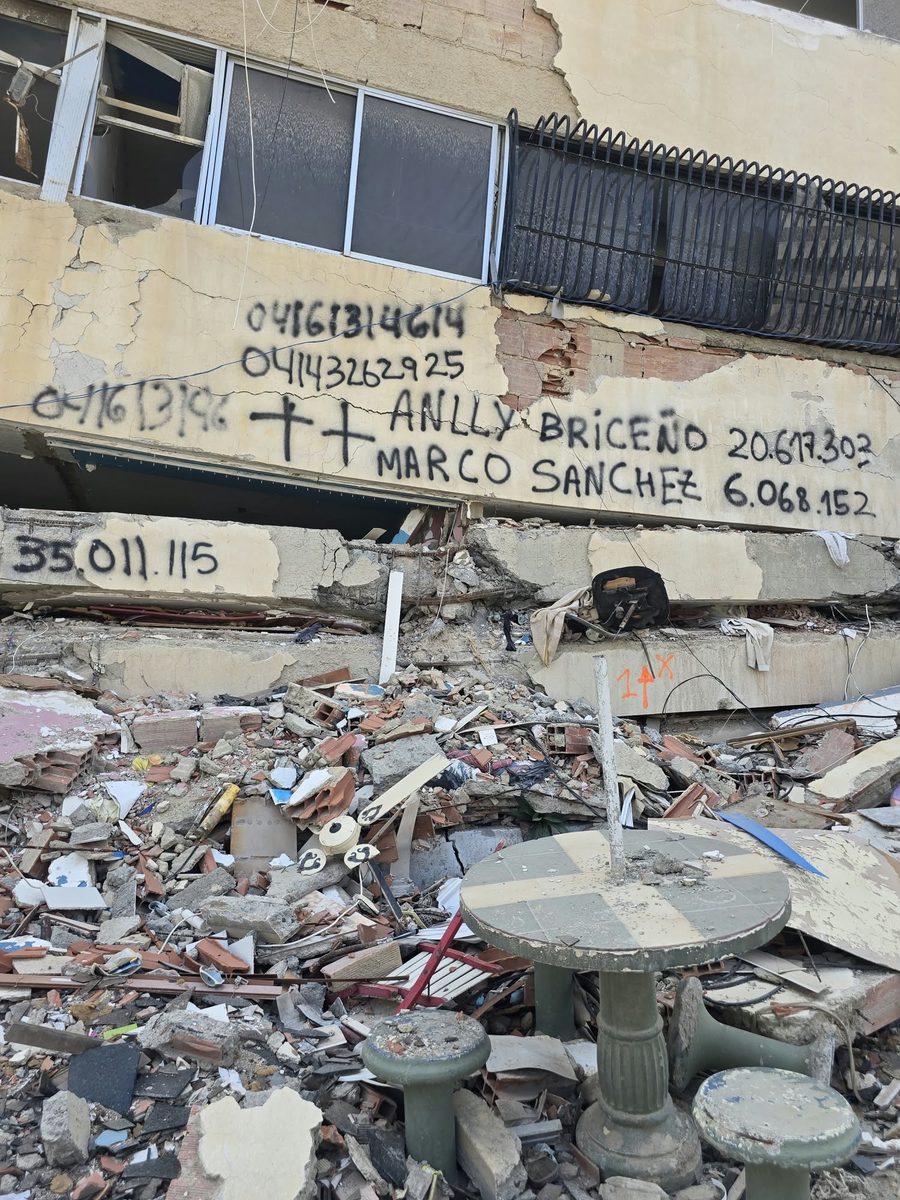
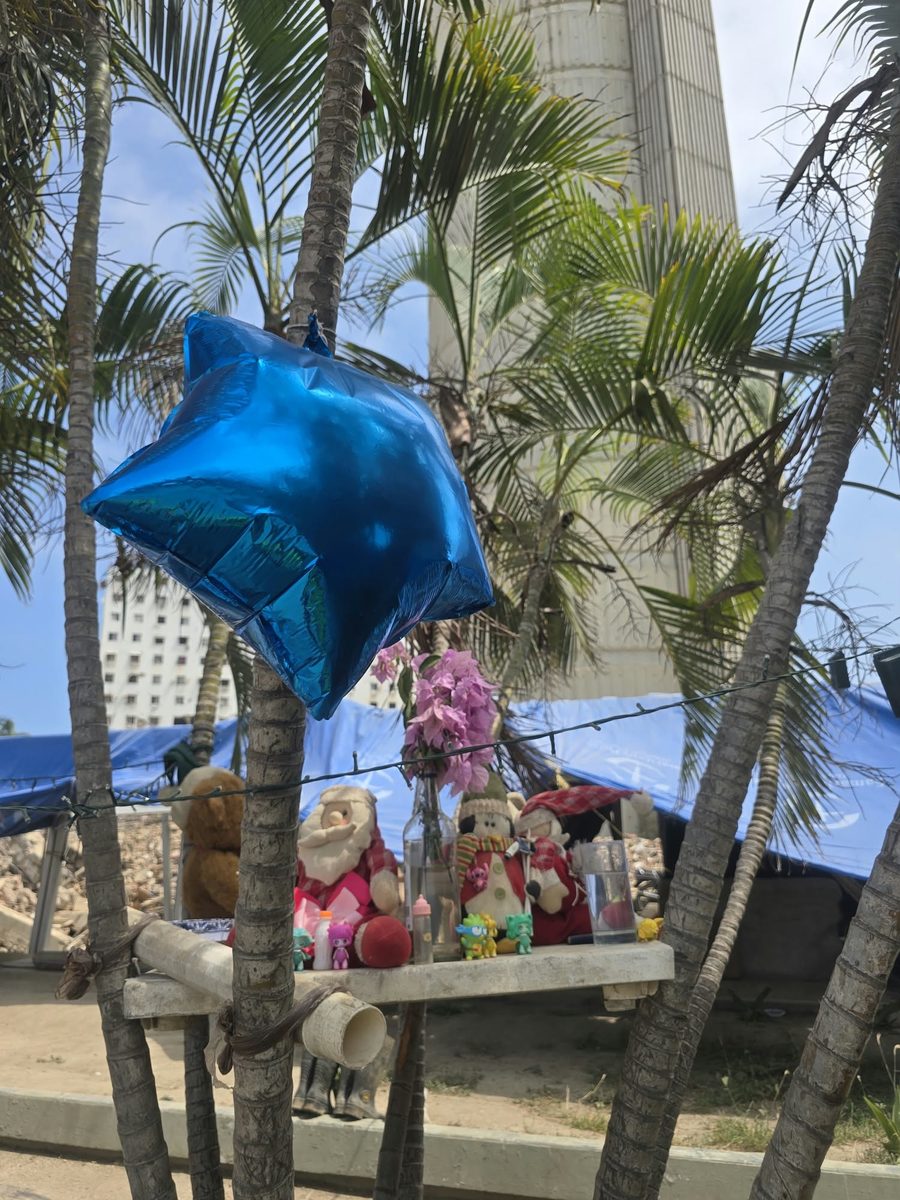
On the walls, relatives have painted the names of the missing next to phone numbers, so that the topos can contact them for DNA identification if remains are found. On other houses, “Estamos bien” – “We are fine” – is still visible, written in the first days when there was no internet or mobile coverage. Inspectors have since marked buildings with stickers: green for safe, yellow for repairs, red for demolition. Nearby, toys have been arranged like an altar, in memory of children who died, a substitute for a grave.
Rescuers’ experience on the ground has also challenged familiar safety advice. “We were always told to take shelter under a doorway or on the stairs,” says Donsanky González Guedez. “That is where most people died, because they fell like dominoes. The safest places, where we found survivors in the first days, were corners, ‘triangles’, for example next to a fridge, where oxygen remained and the walls had fallen on top of the appliances.”
Figures that do not add up
As long as bodies lie under the rubble, the true death toll remains unknown. The official count stands at 6,509 dead and has not been updated since 24 August, although recoveries continue. La Guaira’s governor has given a regional estimate of 7,265 dead, which has never been reconciled with the national figure. Residents interviewed in the area estimate between 8,000 and 11,000 deaths.
The authorities have not published an official figure for the missing. Citizen-run platforms list between 29,000 and 40,000 people as unaccounted for.
Estimates of the physical damage diverge just as widely. The government counts 190 buildings destroyed, while Copernicus satellite data shows about 700 that collapsed completely. A rapid NASA radar analysis estimated close to 59,000 buildings damaged or destroyed. A study by Venezuela’s National Academy of Engineering and Habitat found that in La Guaira, 5,490 of 17,264 buildings evaluated were red-tagged, almost one in three, meaning they are no longer inhabitable. In October, 18,055 people were still living in 86 camps nationwide, according to the latest national figures; local survivors’ networks say the real number is higher.
When citizens step in
The response in La Guaira follows a pattern seen after many natural disasters around the world. In the first hours and days, before official aid arrives, it is often neighbours, local volunteers and community groups who pull people from the rubble, share food and water, and open their homes to those who have lost everything. In La Guaira, as elsewhere, that self-organised solidarity filled the gap left by a state response widely criticised as slow.
In Venezuela, that solidarity took many forms. Jesús, who runs a foundation with a soup kitchen in San Juan de los Morros, two and a half hours from Caracas, travelled to the coast with friends straight after the earthquake to serve food and coffee to survivors and rescuers.
There were darker scenes, too. Authorities arrived days later. Videos circulated of police officers taking money from houses, and four investigative police officers were arrested and dismissed for stealing money found in the rubble of La Guaira. Pharmacies and supermarkets were looted. Some of the same places later became shelters for volunteers, many of whom camped on top of collapsed buildings, working around the clock to pull people out alive.
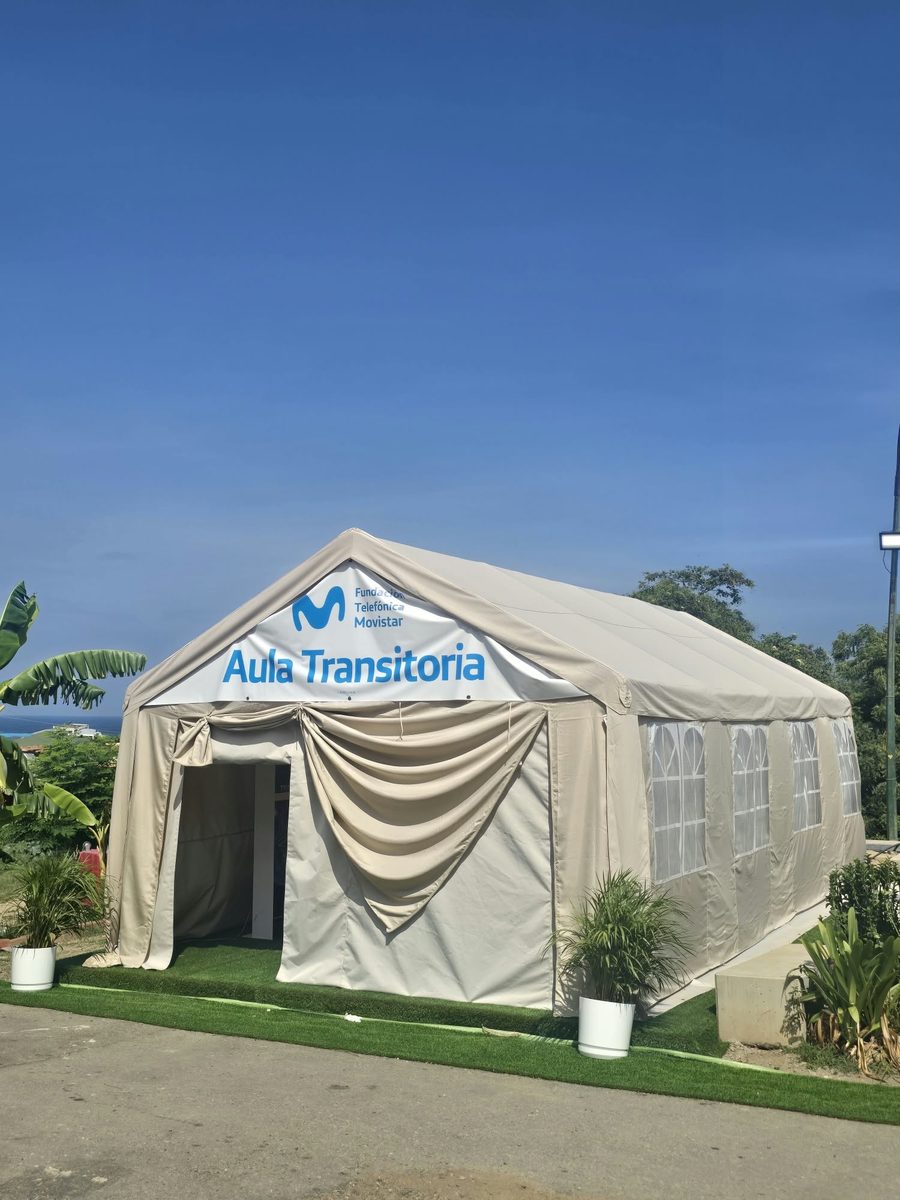
As in many disasters, international attention has also faded quickly. By late October, many organisations appeared to have left. A tent from an American NGO, water donated by private Venezuelan companies, IOM tents and the occasional military tent remained. Tents with doctors and basic services such as free water are still operating. Trust in state aid is low after the looting revelations of the first days. In some areas, residents are trying to recycle metal and other reusable materials from the rubble.
Some shops have reopened, but the beach bars were only allowed to reopen on 25 October, marking the official end of four months of mourning. Much of the beach remains covered in rubbish, with piles of rubble visible in the distance. Little remains of the recreational atmosphere that once drew visitors from the capital.
After twenty years of hardship
The earthquake struck a population already worn down by years of crisis. Residents describe life as increasingly hard since around 2015. Millions have emigrated. The years before and during the pandemic were marked by food shortages and empty supermarkets, forcing many to rely on food banks. Inflation remains a constant concern, and the US dollar became the unofficial currency after the great blackout of 2019. In many parts of the country, power and water cuts are part of daily life: some people report to have access to electricity for only a few hours a day and rush home from work to do their laundry, unsure when they will next have the chance.
What comes next?
A reconstruction plan has yet to be presented. Will the hundreds of collapsed buildings be rebuilt? Who will pay for it? Will people want to live here again? The State has begun to offer aid, but applying requires digital skills that many residents lack, Felipe Colmenarez explains, leaving them unable to access it.
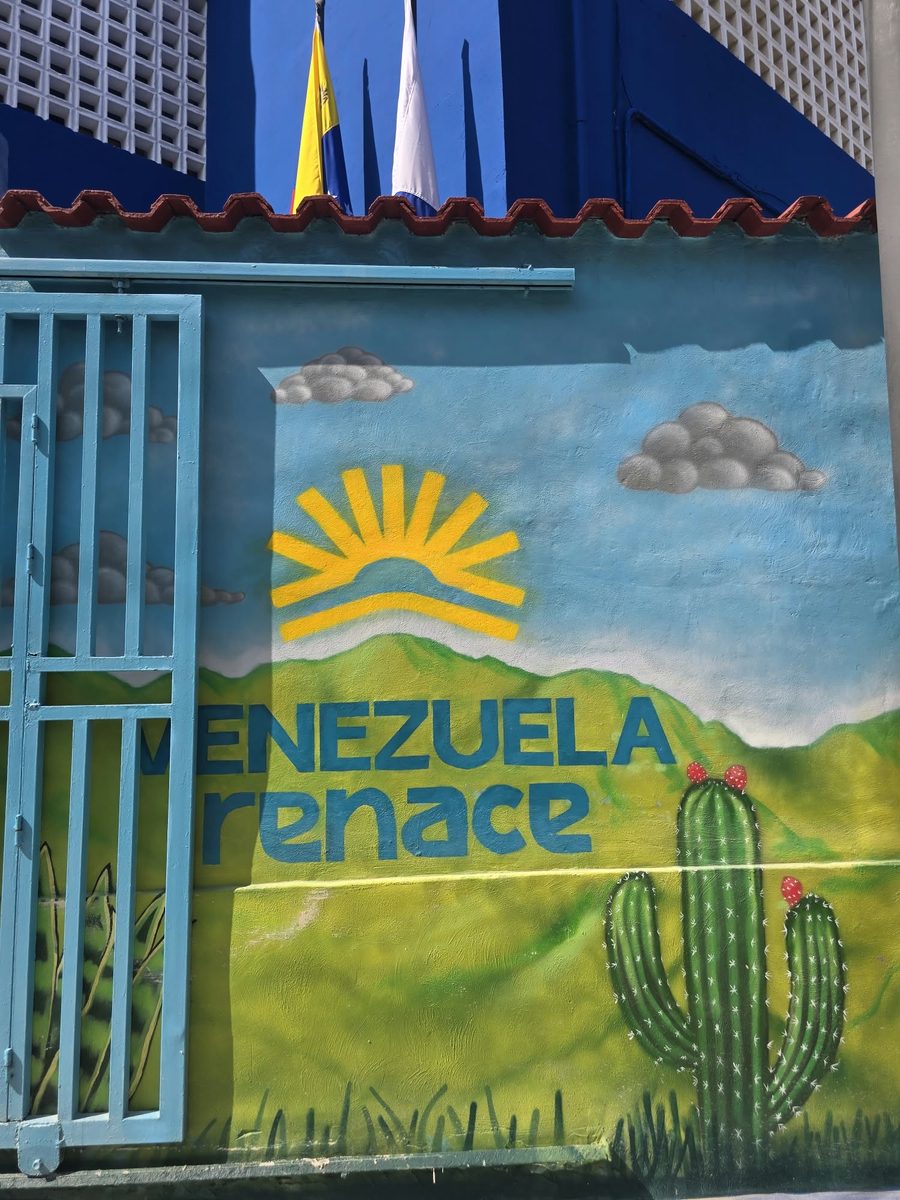
The government has adopted a motto, “Venezuela renace” – Venezuela is reborn – which appears on posters and walls throughout the region. On the ground, it is above all residents and volunteers who are moving the mountains of rubble.
“The people of La Guaira don’t give up,” says Katiuska Gutiérrez de Colmenarez. “We are resilient, we hold together. This earthquake has brought us even closer. Of course there have been bad people, robbing or only thinking of themselves. But these were the exceptions.”
Whether Venezuela will be reborn beyond the slogans, through elections and new opportunities, remains an open question. For the families of La Guaira, the first step is a simpler one: to be able to bury their dead.
How to help?
Sending money to Venezuela from abroad can be complicated and often requires specific apps. The platform Donar Seguro lists organisations working in the country, including IOM and Samaritan’s Purse, both present at Residencias Caribe. Jesús’s foundation, which supports people living in poverty, can be contacted directly on Instagram.
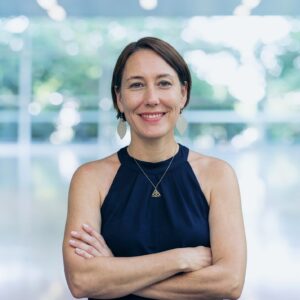
Dorothee Fischer is a journalist and communications expert based in Valencia, Spain, and CEO of Legado Sharpe & Fischer. She visited La Guaira in late October 2026.