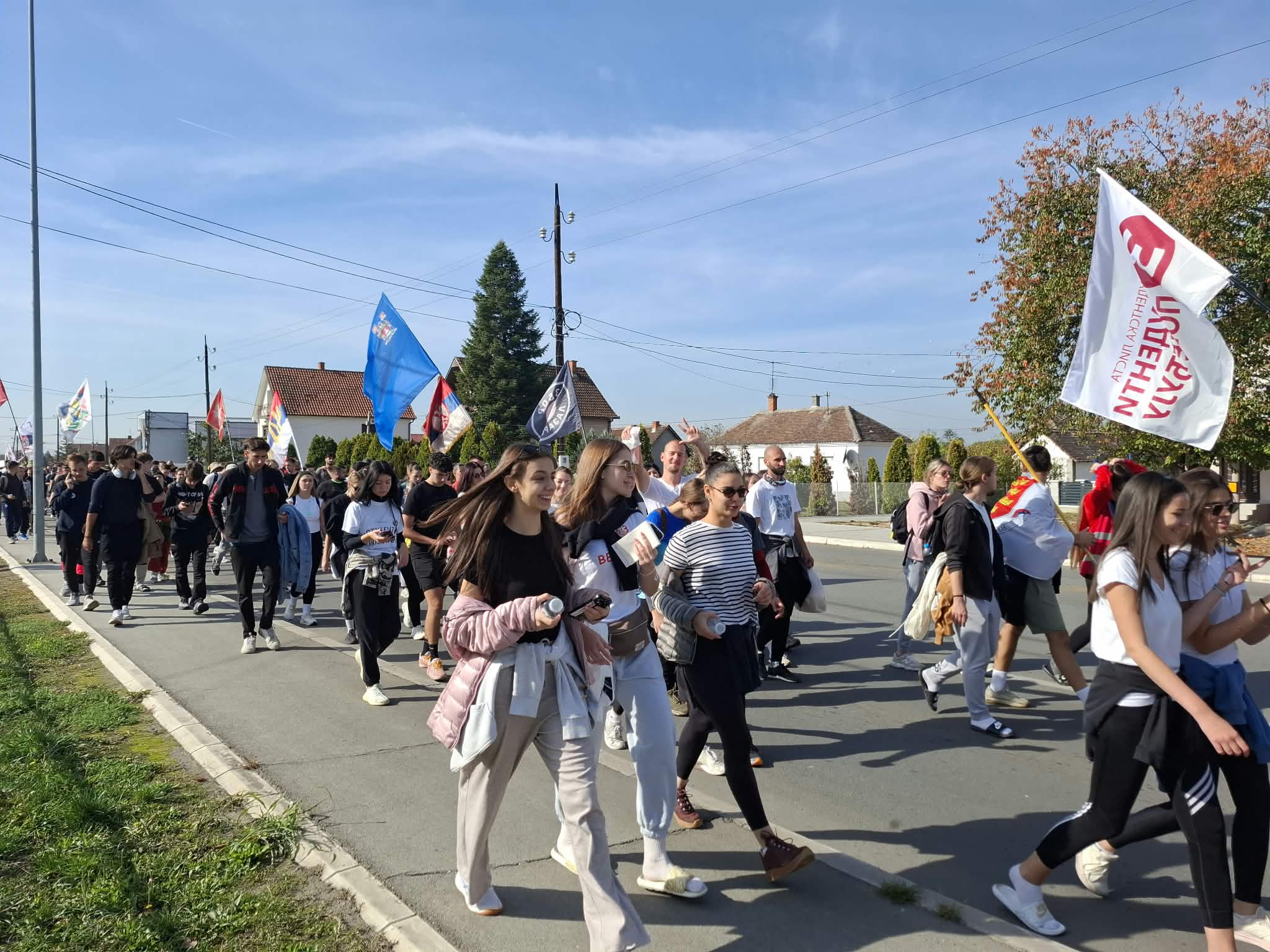









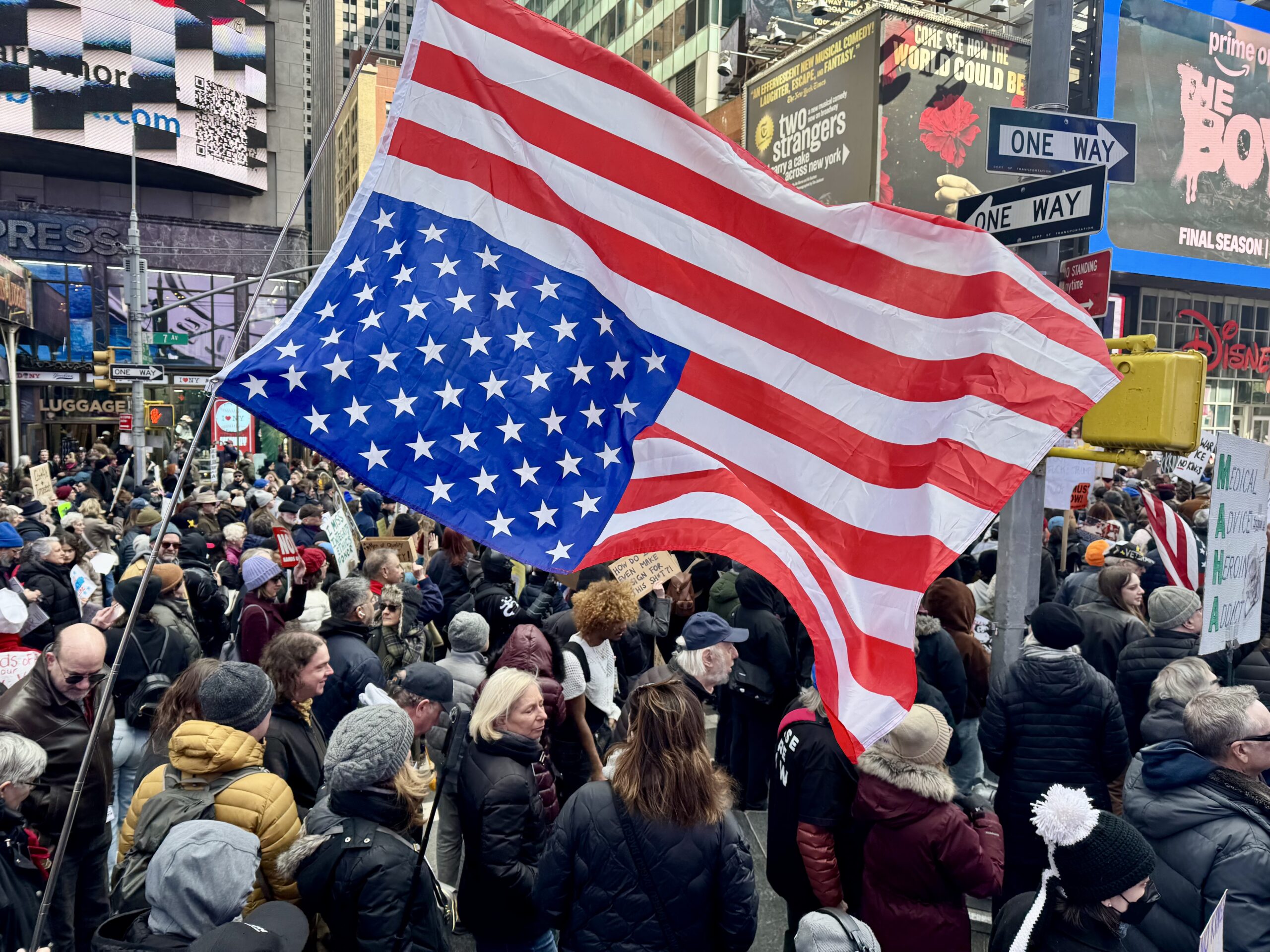
Millions of Americans gathered at thousands of rallies across all 50 states and the District of Columbia in March to protest the rule of U.S. President Donald Trump and his agenda. The nationwide day of organizing and demonstrating was the third iteration so far of the broad-umbrella activist movement, whose members call their cause, simply, “No Kings” since Trump’s inauguration in January 2025.
No Kings is only one of thousands of demonstrations since Trump’s election in November 2024. But the media is talking about something different this time: the protesters’ average age is skewing older.

A March poll from YouGov showed that respondents aged 65 and older are more likely to approve of protests against Trump and his policies than their younger counterparts. In the past eight months, The New York Times has run multiple op-eds lamenting the inverse—the lack of young people protesting compared to older adults. And in a somewhat ironic twist, the generally pro-Trump Fox News lashed out on air at all the “old white people” showing up to these anti-Trump demonstrations—a demographic they are traditionally seen to dominate.

But are older people really coming out in larger numbers? And if they are, what’s driving them?
“The situation now is, to me, pretty dire. I think a lot of Americans just kind of can’t get their head around what’s happening,” Richard Carpenter, 79, a retired psychologist in Tampa, Florida, said in a phone interview. “I think there are a lot of people that are just going, ‘Well, this is a bad dream. We’ll wake up and it’ll all be better.’ But I think it runs deeper than that.”
Carpenter said he has been motivated to take part in marches by his ideals and a decades-long shift in American government and society, where he says the stakes are existential. “We are at a kind of a watershed moment. I mean, we could conceivably lose our traditional democratic system,” he said.

Social scientists we spoke with said Carpenter is not alone. The rise of people in their 70s, 80s, and 90s who feel driven to protest is real. They said the movement is bigger than Trump, that it’s happening all over the world, and it is not even that new.
“We are seeing more older people present or taking an active part in public demonstrations of a political kind lately in many countries,” noted Daniel Blanche-Tarragó, a sociologist at the University of the Republic of Uruguay, who studies topics around aging in society. Daniel says this is happening in the rest of the world too, and that there is more than one framework to look at it through.
“I’d say in the case of the U.S., this is also related to the aging of the baby boomer generation,” he said. Daniel added that many people born in the 1940s and ’50s who participated in countercultural movements or hippie movements view their political mobilizing as simply a continuation of the values they have held their whole lives.

Leslie Cagan, 79, an activist in New York City, also said her participation in mobilizing comes from a place of generational identity, sharing the ideals of their era. “I personally have a very long history,” she said in a phone interview. “We came of age in the ’60s and were active in the civil rights, human rights, the anti-Vietnam war movement, the women’s movement, et cetera.”
Cagan is a founder of a group in New York City called Jewish Elders for Palestine. They have about 150 members who feel guided by their identities—not just as Jewish Americans. “The vast majority of the people in the Jewish elders group are actually Jewish elders. And by that, we mean people at least 60 or 65 and older.”
She and her fellows organize to fight what they describe as a U.S.-backed genocidal war on Palestinians and the broader “march toward fascism.”
“I’ve been quite engaged in some national networks and alliances of people trying to figure out how—not just how do we survive, but how do we build beyond this horrible moment that we’re living in?
Explore the exclusive photo gallery from this protest below.