








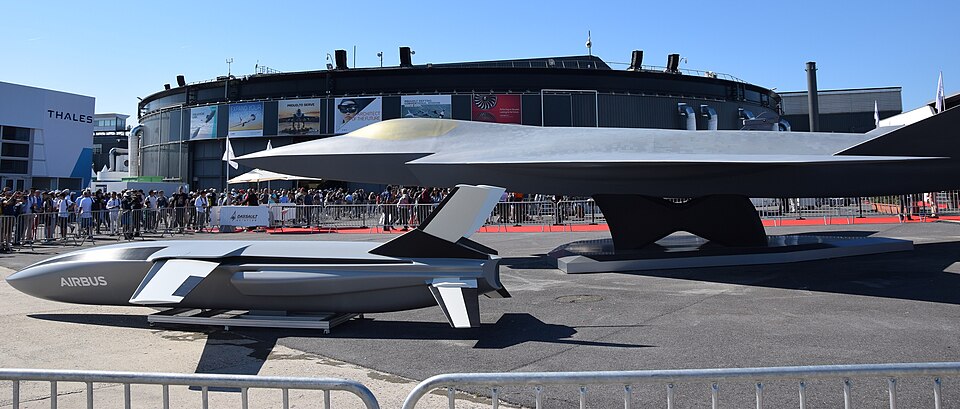

On 8 June 2026, France and Germany officially announced the cancellation of the Future Combat Air System (FCAS), bringing an end to what had long been presented as the most ambitious defence-industrial programme ever undertaken in Europe.
The decision followed months of increasingly public disagreements between industrial partners and came after Paris and Berlin concluded that the consortium could no longer reach a viable agreement on governance, intellectual property, industrial responsibilities and programme leadership.
With an estimated cost exceeding €80 billion, FCAS was intended to become the cornerstone of Europe’s future air power and one of the flagship projects of European strategic autonomy.
For many observers, the announcement represented a major setback for European defence cooperation. Yet few specialists were genuinely surprised. Long before its formal cancellation, FCAS had become synonymous with industrial disputes, political disagreements and repeated delays.
By 2026, the question was no longer whether the programme faced difficulties, but whether those difficulties could ever be overcome.
The history of FCAS suggests that these objectives may be considerably harder to reconcile than policymakers initially assumed.
A Project Born from Europe’s Strategic Awakening
The origins of FCAS lie in the profound deterioration of Europe’s security environment during the second half of the 2010s.
Although Russia’s full-scale invasion of Ukraine in 2022 profoundly shocked European public opinion and accelerated defence spending across the continent, the strategic warning signs had appeared much earlier. The Russian annexation of Crimea in 2014 and the outbreak of conflict in the Donbas challenged assumptions that warfare had disappeared from Europe. This was followed by a succession of geopolitical shocks, including Brexit and the election of Donald Trump in 2016, whilst military spending in Europe remained at its lowest level in the last two decades.
It was in this context that President Emmanuel Macron and Chancellor Angela Merkel launched FCAS and the Main Ground Combat System (MGCS) in 2017.
Together, the two programmes were intended to serve as industrial and military pillars of a more autonomous Europe. FCAS would develop a sixth-generation combat ecosystem centred around a Next Generation Fighter (NGF), accompanied by unmanned systems, advanced sensors and a secure combat cloud. MGCS, meanwhile, would produce a new generation of armoured combat vehicles designed to replace the French Leclerc and German Leopard 2.
The economic rationale was equally compelling. Developing next-generation combat systems increasingly requires investments measured in tens of billions of euros. No European state, with the partial exception of France, could comfortably finance such programmes alone while maintaining a full-spectrum defence industrial base.
Cooperation therefore appeared to offer an attractive solution: pooling research and development costs, combining technological expertise and creating larger production runs capable of improving competitiveness on global export markets.
On paper, the logic was difficult to contest.
Yet embedded within these programmes was a structural contradiction that would progressively undermine both FCAS and MGCS. The very states promoting European strategic autonomy remained fundamentally attached to preserving national control over their most sensitive industrial and military capabilities.
The seeds of future conflict were present from the beginning.
European Strategic Autonomy and National Sovereignty: A Fundamental Contradiction
At first glance, the rationale behind FCAS appeared both straightforward and strategically sound. In a post-Brexit Europe facing an increasingly unstable international environment, deeper defence-industrial cooperation promised multiple benefits. It would reduce duplication, spread the enormous costs associated with sixth-generation aircraft technologies, strengthen Europe’s strategic autonomy and potentially create a more integrated and competitive defence market.
Yet from its inception, FCAS was burdened by a tension that European policymakers have struggled to resolve for decades. The programme sought simultaneously to advance European strategic autonomy and preserve the national sovereignty of its participants. While these objectives are often presented as mutually reinforcing, they frequently point in opposite directions when translated into concrete industrial decisions.
Long before the programme was launched, European defence cooperation had already accumulated a substantial track record from which valuable lessons of the future difficulties awaiting the FCAS. Differences in national priorities, politically driven industrial arrangements and diverging strategic cultures repeatedly generated delays, cost overruns and governance crises.
Perhaps no programme better illustrates the limits of politically negotiated industrial cooperation than the Airbus A400M military transport aircraft. Launched in the 2000s, the programme quickly revealed the difficulties of reconciling industrial efficiency with political compromise.
Rather than allocating responsibilities exclusively according to industrial competence, production and development tasks were distributed among participating nations according to political considerations and national industrial interests, leading to fragmented decision-making and complicated programme management. Technical difficulties accumulated, schedules slipped repeatedly and costs rose dramatically. By the end of the decade, Airbus had absorbed billions of euros in additional expenses, while participating governments were forced to renegotiate contracts and funding arrangements.
The Franco-German Tiger attack helicopter revealed a different but equally important problem. Despite not being described as a technical failure, the programme struggled to deliver the economic advantages that had originally justified cooperation.
The reason lay in both the divergence of national requirements, leading to demand different variants of the aircraft, increasing complexity and reducing opportunities for standardisation as well as a drop in planned procurement volumes. As multinational cooperation often relies on large production runs to offset development costs. When procurement numbers fall, unit costs inevitably increase, eroding one of the principal economic justifications for cooperation.
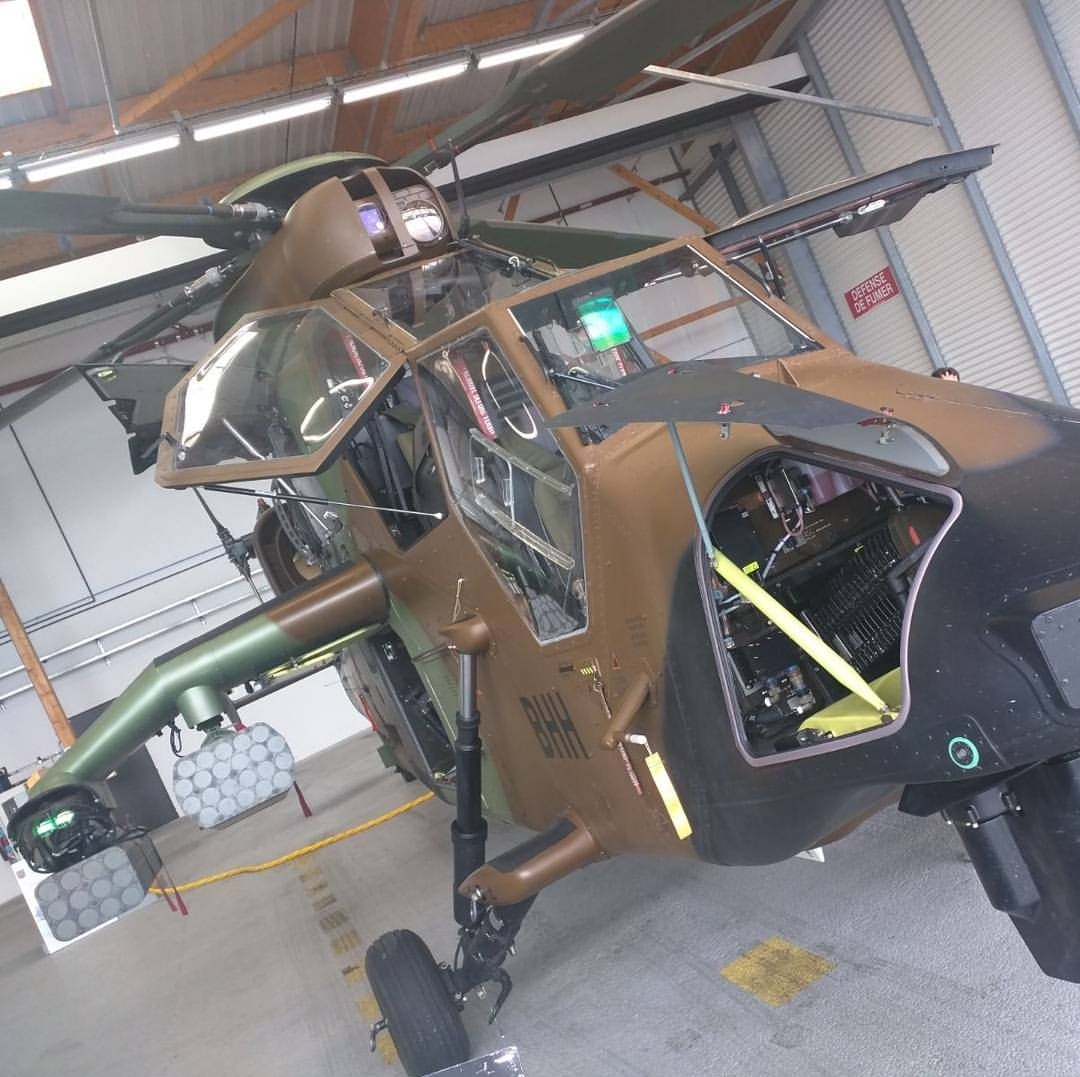
Tiger helicopter from the 5th Combat Helicopter Regiment. Photo by the author
The programme’s later history further highlighted the fragility of multinational arrangements. In 2024, Germany decided not to participate in the Tiger Mk III modernisation effort and instead moved towards the acquisition of American AH-64E Apache helicopters.
The Recurring Pattern
Taken individually, these programmes encountered different difficulties. Taken collectively, however, they reveal a remarkably consistent pattern.
First, multinational programmes tend to drift from industrial optimisation towards political balancing. The desire to satisfy national stakeholders frequently overrides the logic of assigning responsibilities according to competence alone.
Second, participating states rarely maintain identical operational requirements throughout a programme’s lifespan. Diverging strategic priorities often produce customised solutions, increasing costs and reducing commonality.
Third, economic assumptions frequently prove fragile. Cooperative programmes are often justified by anticipated economies of scale, yet those benefits can rapidly disappear when procurement volumes decline or development schedules slip.
Finally, questions of leadership remain persistently unresolved. The more technologically ambitious a programme becomes, the more sensitive issues of industrial authority, intellectual property and strategic know-how become.
By the time FCAS was launched in 2017, these dynamics were well documented. They had appeared repeatedly across decades of European defence cooperation.
The central question was therefore not whether FCAS would encounter similar tensions, but whether its architects had found a way to overcome them. As subsequent events demonstrated, they had not.
From “Best Athlete” to “Juste Retour”: The Progressive Politicisation of FCAS
If previous European programmes revealed the structural weaknesses of multinational defence cooperation, FCAS provides a particularly revealing case study of how those weaknesses unfold in practice.
At its inception, the programme was built upon a relatively simple and pragmatic principle. Industrial leadership would be assigned according to competence and experience. France, through Dassault Aviation, would lead the development of the Next Generation Fighter (NGF), reflecting its unique experience as Europe’s only nation to have independently designed, developed and exported a modern combat aircraft in recent decades. Germany, for its part, would exercise leadership over the future land combat system through MGCS, building upon the industrial strengths of KMV and the Leopard II.
Although never formally codified, this arrangement reflected what many participants described as a “best athlete” approach: responsibility would be allocated to the industrial actor possessing the most relevant expertise.
The principle would prove remarkably short-lived.
The Erosion of the Initial Balance
The first major rupture emerged within MGCS.
The programme initially rested upon the equilibrium established by the creation of KNDS in 2015, resulting from the merger between France’s Nexter and Germany’s Krauss-Maffei Wegmann (KMW). Politically, the arrangement embodied the idea of a balanced Franco-German partnership, with both sides exercising equal influence over the future of European land systems.
That equilibrium changed significantly when Rheinmetall entered the programme.
Under pressure from the Bundestag and influential industrial stakeholders, Germany’s largest defence company was integrated into MGCS despite not being part of the original framework. The consequences extended beyond simple industrial participation. By obtaining responsibility for three of the programme’s principal pillars alongside the three already held by KMW, Rheinmetall fundamentally altered the internal balance of the project.
From a French perspective, what had originally been conceived as a partnership between two industrial actors increasingly appeared as a framework within which two German firms collectively outweighed their French counterpart.
Whether intentional or not, the result was a growing perception in Paris that the original understanding underpinning the programme had been progressively reinterpreted.
Spain’s Entry and the Changing Dynamics of FCAS
A similar evolution occurred within FCAS itself following Spain’s accession to the programme in 2020.
Politically, Madrid’s participation made sense. Expanding the programme strengthened its European credentials, broadened the financial base and increased the potential production run. Yet integrating a third partner inevitably required a redistribution of industrial responsibilities.
The consequences proved significant.
One of the most contentious decisions concerned the allocation of the Sensors pillar to the Spanish company Indra. While the move reflected the political necessity of granting Spain a meaningful role, it also sidelined Thales from a leadership position despite its longstanding experience developing radar and electronic warfare systems for successive generations of French combat aircraft.
The decision reinforced concerns already present within French industrial circles. If participation was increasingly determined by political balance rather than technological competence, then the programme appeared to be drifting away from the very “best athlete” logic that had initially justified cooperation.
More broadly, Spain’s accession amplified the influence of Airbus Defence & Space within the programme. Because Airbus represented both German and Spanish interests, the company acquired an increasingly powerful position relative to Dassault Aviation, creating a growing asymmetry in the programme’s governance.
What had begun as a Franco-German partnership was gradually evolving into a more complex industrial coalition in which questions of leadership became increasingly contested.
The Intellectual Property Crisis
These tensions reached their most visible expression during the disputes over intellectual property and programme governance in 2021.
For Dassault Aviation, leadership of the Next Generation Fighter implied more than simply coordinating industrial activities. It meant retaining authority over the aircraft’s architecture and preserving control over technologies developed through decades of national investment. From the Mirage family to the Rafale, France had accumulated a body of knowledge that many within the company regarded as both commercially and strategically indispensable.
Other partners viewed the issue differently.
From the perspective of Airbus Defence & Space and its governmental supporters, meaningful cooperation required access to a far broader range of technologies and design information. A programme involving multiple nations could not, in their view, be organised around a single industrial actor acting essentially as a national prime contractor.
The resulting disagreements rapidly became existential.
Negotiations increasingly focused on access to background intellectual property, the sharing of technological know-how and the respective authority of Dassault and Airbus within the programme. Airbus also advocated for a greater role in the development of demonstrators and design activities, a position that Dassault interpreted as a challenge to its status as lead architect of the future fighter.
Behind these disputes lay a fundamental question: was FCAS a cooperative programme led by a prime contractor, or was it a partnership among equals in which leadership itself would be shared?
No durable answer ever emerged.
The Engine Question
The same tensions appeared within the propulsion pillar.
Safran entered the programme as Europe’s only company with recent experience designing and producing a modern fighter engine. Yet political considerations quickly pushed the programme towards a fifty-fifty arrangement with Germany’s MTU Aero Engines.
From a political perspective, the compromise was understandable. Given the programme’s scale, Berlin sought meaningful participation in all critical technological domains.
From an industrial perspective, however, the arrangement revived familiar concerns regarding the balance between competence and representation. Once again, a key responsibility was distributed according to the imperatives of partnership rather than the strict logic of prior expertise.
The issue was not whether MTU possessed valuable competencies. Rather, it reflected a broader pattern in which technological leadership became increasingly subordinated to political equilibrium.
The Triumph of Political Logic
By the early 2020s, FCAS had therefore become increasingly difficult to govern.
Nearly every major industrial decision generated disputes regarding leadership, workshare, intellectual property or technological authority. Each compromise reached to preserve political consensus often produced new disagreements elsewhere in the programme.
The irony is that FCAS’s difficulties did not stem from a lack of political commitment. On the contrary, participating governments remained strongly attached to the programme’s symbolic and strategic significance.
Its problems arose because each government simultaneously sought to maximise national industrial benefits while preserving the appearance of European integration.
As a result, the programme progressively drifted away from the industrial logic that had originally justified its creation. The objective was no longer simply to develop the best possible future combat system. It became equally important to preserve national influence, protect industrial champions and maintain political equilibrium among partners.
In many respects, FCAS was therefore not undermined by insufficient cooperation.
It was undermined by competing conceptions of what cooperation itself was supposed to mean.
The Export Question: An Unresolved Political Divide
The Export Question: The Most Dangerous Disagreement of All
While disputes over workshare and intellectual property received the greatest public attention, they were arguably not the most fundamental challenge facing FCAS.
Behind the industrial negotiations lay a far more sensitive question: who would ultimately control the export policy of the future aircraft?
For France, defence exports are not merely a source of revenue. They are an essential component of the country’s strategic model as maintaining a comprehensive Defence Industrial Base and critical competencies requires production volumes that the French armed forces alone cannot sustain.
Exports therefore perform a strategic function. They allow production lines to remain active, reduce unit costs for national procurement and generate the industrial scale necessary to preserve over time. Consequently, the ability to decide independently where and to whom weapons may be sold is often regarded in Paris as an extension of national sovereignty itself.
Germany approaches the issue from a markedly different political tradition, arms exports being held o a much higher degree of political scrutiny from public opinion and parliamentary oversight. If Germany remains one of the world’s largest arms exporter the political process governing those exports is considerably more exposed to domestic contestation than in France.
As a result, decisions that may be viewed in Paris primarily through an industrial or strategic lens often acquire a significant moral and political dimension in Berlin.
The divergence became particularly visible during the debates following the murder of journalist Jamal Khashoggi in 2018 and growing criticism of Saudi military operations in Yemen. As Germany imposed restrictions on defence exports linked to Riyadh, the decision generated significant tensions with France and other European partners whose industries were affected by German export controls.
The episode became a defining moment for many French defence officials and industrial leaders as political decision taken in Berlin had direct consequences for programmes involving foreign partners.
For sceptics of the project, the episode illustrated a more fundamental reality: export policy ultimately remains a sovereign political decision and no contractual arrangement can entirely eliminate that fact.
The Calendar Crisis: Missing the Market Before Entering It
Even if FCAS had successfully overcome its disputes over governance, industrial leadership and export policy, the programme faced another challenge that received comparatively less attention but was potentially just as threatening: time.
Defence markets operate according to procurement cycles that cannot be indefinitely postponed. Armed forces must replace ageing equipment when operational requirements demand it, not when multinational programmes are finally ready. An aircraft entering service in 2030 must remain in service until 2070
By the mid-2020s, an increasingly uncomfortable question began to emerge: would FCAS still have a market by the time it entered service?
When FCAS was launched in 2017, the objective was to replace the Rafale and Eurofighter around 2040. At the time, such a timeline appeared ambitious but manageable. As delays accumulated, however, operational entry increasingly drifted towards the mid-2040s.
This shift carried significant commercial consequences as most of the potential customers for future European combat aircraft were already making procurement decisions during the 2020s and early 2030s. Many had either acquired the F-35 or committed themselves to long-term modernisation plans centred around fifth-generation capabilities.
At the same time, a new generation of competitors was entering the market such as South Korea’s KF-21 Boramae, China’s J-35 and Russia’s export variants of the Su-57. By the time FCAS could realistically become available, a substantial portion of the global fighter market would already have been renewed.
This was particularly problematic for France as the export success of the Rafale was built upon the argument for numerous clients of an advanced combat aircraft without excessive dependence on either the United States or Russia. Whether similar opportunities would still exist in the 2040s remained highly uncertain.
Conclusion
The collapse of FCAS should not be interpreted simply as the failure of a single weapons programme. Rather, it exposes a deeper tension at the heart of European defence integration.
European states increasingly recognise the need for greater strategic autonomy in an uncertain international environment. Yet they remain reluctant to subordinate national industrial interests, export policies and sovereign technological capabilities to genuinely supranational frameworks.
FCAS was conceived as a symbol of European ambition. Its failure demonstrates that Europe’s defence challenge is not primarily technological or financial. It is political.
Until European governments resolve the contradiction between the pursuit of collective strategic autonomy and the preservation of national sovereignty, future flagship programmes are likely to encounter the same obstacles that ultimately brought FCAS to an end.