







Originally published in Tribun Verte by the same author.
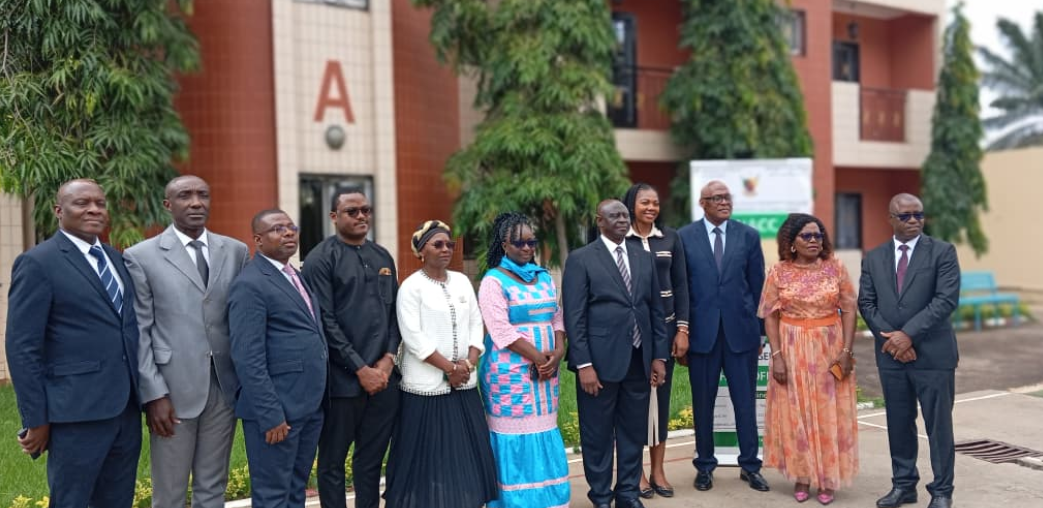
The 21st ordinary session of the Board of Directors of the National Observatory on Climate Change (ONACC), held on June 30, 2026 in Yaoundé, recalled the importance of scientific data to understand and anticipate impacts, in order to limit losses caused by climate in Cameroon. With a budget adjusted to 1.568 billion CFA francs in 2025, ONACC directed its activities towards the production of agricultural calendars, climate bulletins and vulnerability analyses, confirming its role as a nerve center of climate governance.
The data produced by ONACC reveal a direct correlation between climate variability and agricultural losses. The spatialization of risks shows that coastal and mountain cities (Douala, Limbe, Bafoussam) are particularly exposed to floods and landslides. Carbon balances confirm that the energy and waste sectors remain major contributors to national emissions. These results highlight the need to integrate climate data into public policies, particularly for agriculture, urban planning and natural resource management.
In his opening remarks, the Chairman of the Board of Directors of ONACC, Mr. Enoh Peter Ayuk, recalled that: “climate change is no longer the preserve of scientists in laboratories, or ecological activists: heatwaves in Europe, floods in Africa, ice blocks drifting in North America. So many phenomena that President Paul Biya anticipated in 2009, by decreeing the creation of ONACC. But beyond visible disasters, climate disruptions also lead to the resurgence of pathologies still unknown to the scientific world, whose treatments are slow to be found. These upheavals have a direct consequence on the global economy: destruction of infrastructure, pollution of resources, and exposure of populations to improper substances.”
Data and achievements in 2025
- Agricultural calendars: 4 calendars were developed for the five agro‑ecological zones, allowing producers to adapt their sowing to new climatic realities.
- Climate bulletins: 4 seasonal bulletins and 36 ten‑day bulletins were disseminated, integrating forecasts, risks and sectoral impacts.
- Spatialization of risk zones: Douala, Limbe and Bafoussam were mapped to identify vulnerable areas to climate disasters.
- Assessment of economic losses: The main agricultural crops of the five agro‑ecological zones were analyzed to quantify losses due to climatic hazards.
- National carbon balance: Validation and publication of balances for the waste, energy and industrial process sectors (2010‑2023).
The data produced by ONACC reveal a direct correlation between climate variability and agricultural losses. The spatialization of risks shows that coastal and mountain cities (Douala, Limbe, Bafoussam) are particularly exposed to floods and landslides. Carbon balances confirm that the energy and waste sectors remain major contributors to national emissions. These results highlight the need to integrate climate data into public policies, particularly for agriculture, urban planning and natural resource management.
ONACC, as a public scientific institution, plays a key role in producing reliable data and disseminating them to decision‑makers and communities. But the effectiveness of these tools will depend on their appropriation by local actors and the implementation of robust adaptation policies.
Towards a multi‑stakeholder resilience committee
For Mr. Ayuk, observation should not be limited to noting: ONACC experts and technicians must use the allocated budget to propose adaptation and mitigation solutions. He insisted on the creation of a multi‑stakeholder resilience committee, bringing together ministries, institutions and civil society organizations, so that all sectors are at the same level of information as ONACC experts. This committee would make it possible to better map vulnerabilities, integrate data into resilience mechanisms, and develop eco‑responsible techniques adapted to local realities.
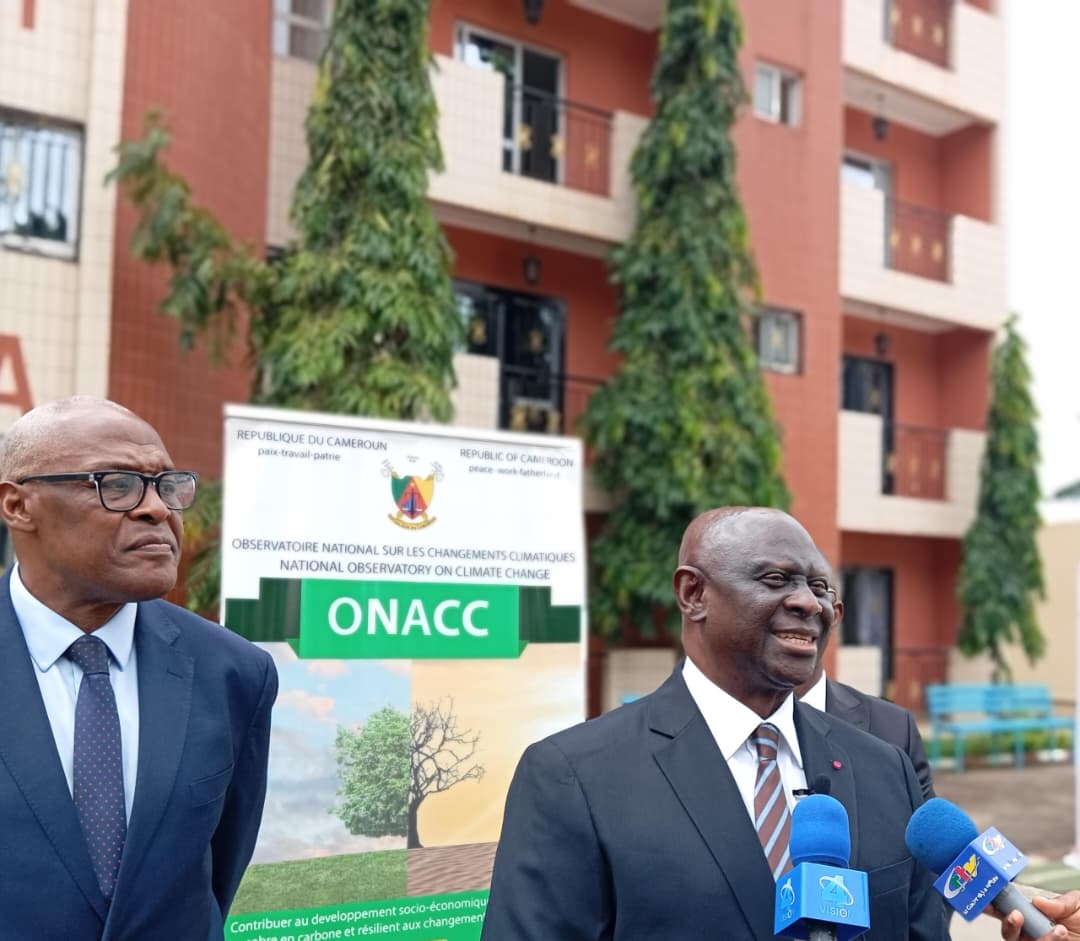
By welcoming the efforts already made, Mr. Ayuk acknowledged that much remains to be done for Cameroon to become a scientific model in terms of climate resilience. This requires the use of the country’s own resources, effective circulation of information, and close collaboration between public and private actors. ONACC’s data‑driven approach, enriched by participatory governance, constitutes a solid basis for anticipating, preventing and protecting Cameroonian populations against climate and health risks.
An accounts session in full transparency
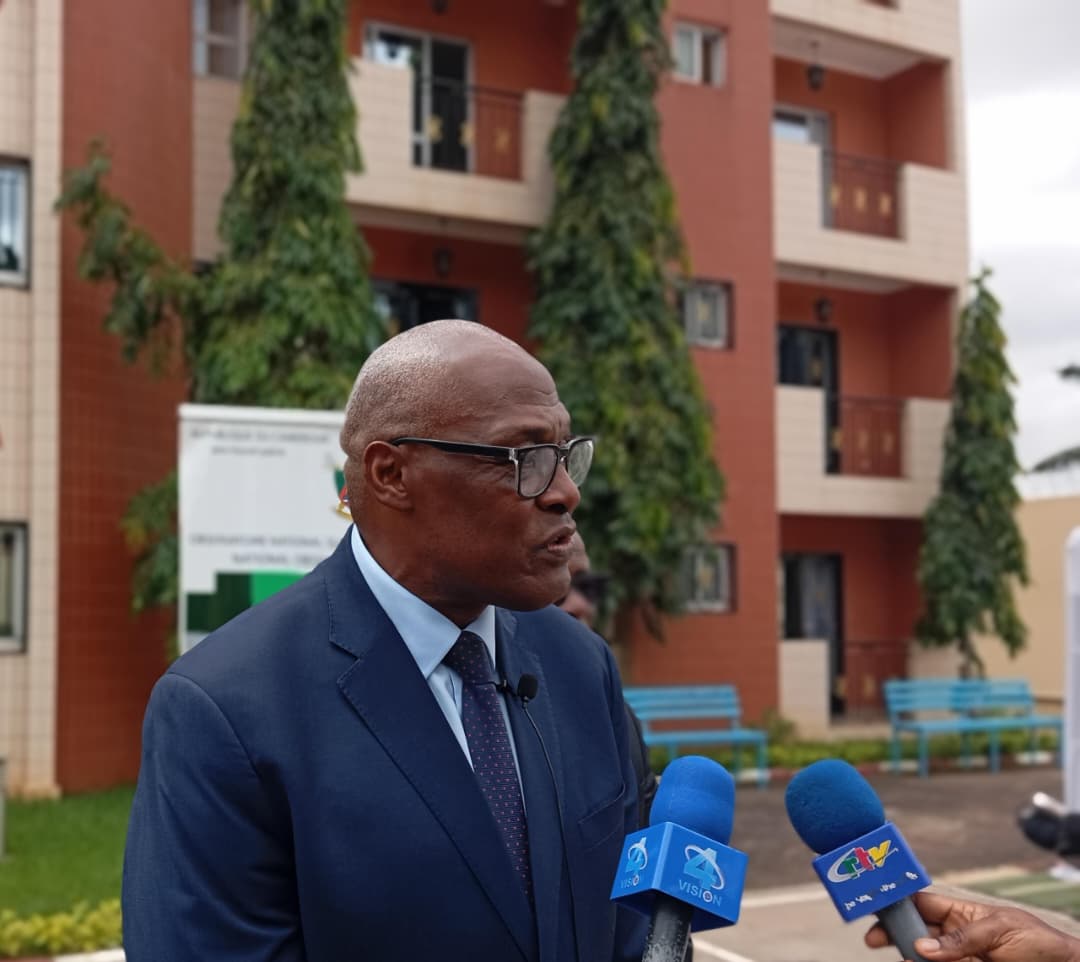
For the Director General of ONACC, Prof. Dr Ing. Amougou Joseph Armathé, this 21st session of the Board of Directors aimed to report on the use of financial resources made available in 2025. Two highlights marked the meeting: the presentation of administrative accounts by himself and that of management accounts by the accounting officer. The projected budget was 2.072 billion CFA francs, but the actual revenues mobilized amounted to 1.568 billion CFA francs, with a remarkable execution rate of 98%.
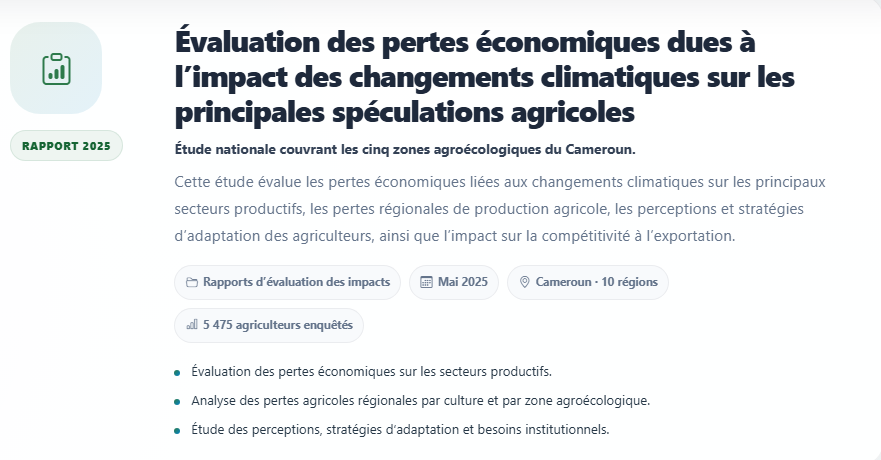
In terms of mitigation, ONACC carried out an assessment of greenhouse gas emissions in three key sectors: energy, waste and industry. These carbon balances constitute a scientific basis for guiding emission reduction policies. The institution also produced intellectual services, notably the assessment of the costs of climate change impacts on different development sectors. These works reflect ONACC’s desire not only to observe, but to provide data and concrete solutions to strengthen national resilience.
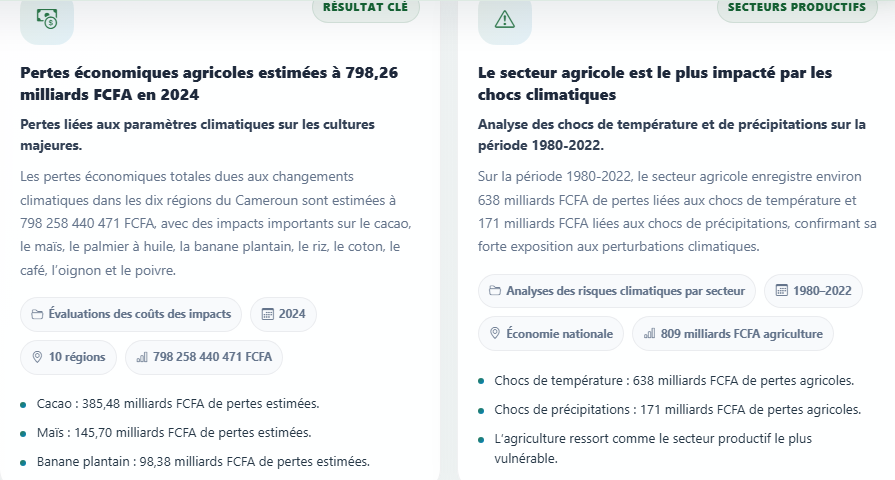
The rural sector on the front line The rural sector remains a priority, as the survival of its populations depends mainly on agricultural production. This is all the more urgent as the assessment of the costs of climate impacts between 1980 and 2024 reveals that Cameroon lost nearly 6,710 billion CFA francs due to climate shocks. Agricultural losses targeted at five key crops (cocoa, maize, oil palm, plantain, rice), evaluated at nearly 798.26 billion CFA francs in 2024 alone. These figures (available here: https://www.onacc.cm/fr/analysis) reflect the urgency of robust adaptation and better anticipation of risks.
Cooperation and innovation for better projections To meet these challenges, ONACC signed agreements with institutions such as the CDC (Cameroon Development Corporation), SODECOTON and several development partners, in order to open new financing avenues. It should be noted that CDC and SODECOTON are two large Cameroonian agro‑industrial companies, each specialized in a strategic sector: CDC in tropical crops (banana, oil palm, rubber) and SODECOTON in cotton and its derivatives. They play a major role in the national economy and rural development. The institution is also exploring the monetization of scientific results, by promoting its work to economic and political actors. A major innovation is the establishment of a digital platform accessible by mobile phone, allowing farmers and breeders to directly obtain the climate information produced. In addition, ONACC carried out evaluation and spatialization work on risk zones in cities such as Douala, Limbe, Bafoussam, Tiko, Maroua, Kribi, Kai‑Kai, Yagoua and Maga, offering communities tools to anticipate floods and other disasters.
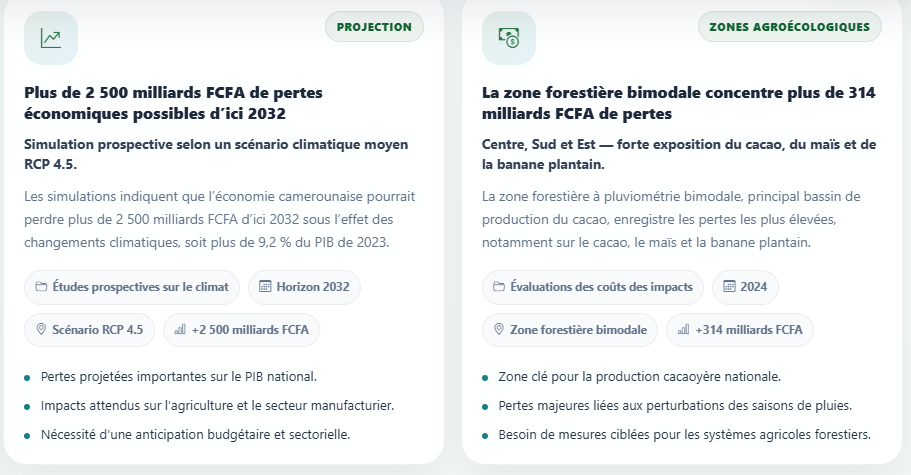
Despite these advances, a major challenge remains: getting information to end users. Because to adjust and adopt good practices, one must first have reliable knowledge. Farmers and breeders depend on climate, but ancestral habits are no longer sufficient in the face of current disruptions. Adaptation and resilience require effective dissemination of data. The Director General also mentioned the importance of evaluating other climate‑sensitive sectors: energy, water, health, public works and security. Moreover, ONACC wishes to support the government in evaluating political externalities, by integrating climate change into national budgets. The objective is to measure the positive or negative consequences of adaptation and mitigation policies, in order to give real socio‑economic value to public decisions.