












Digital Investigative Journalist – Kenya
Salary delays, newsroom layoffs, shrinking advertising revenues and collapsing regional bureaus are forcing journalists across Kenya, Uganda and Tanzania to abandon reporting for boda boda businesses, public relations contracts, digital freelancing and casual labour, raising urgent questions about the future of independent journalism in East Africa.
A profession fighting for survival
By 6 a.m., Samuel Odongo has already completed three boda boda trips through the dusty streets of Lodwar in Turkana County. By 9 a.m., he will attend a county assembly session as a correspondent for a national media outlet. By noon, he will be editing photographs for a local NGO. Later that evening, he will file two news stories and hope that at least one gets published.
If both stories are accepted, he could earn KSh2,000.
If they are rejected, he earns nothing.
For Samuel and thousands of journalists across East Africa, journalism has become a profession they subsidize rather than a profession that sustains them.
A growing body of evidence from media organizations, labour studies, journalism unions and press freedom advocates indicates that East Africa is experiencing a profound transformation in its media workforce. Once regarded as stable middle-class employment, journalism is increasingly becoming casualized, forcing reporters, correspondents, photographers and editors into the informal economy to survive.
The shift is particularly visible in Kenya, Uganda and Tanzania, where shrinking newsroom budgets, mass redundancies, delayed salaries, declining advertising revenues and inadequate reporting resources have fundamentally altered the economics of journalism.
The consequences extend beyond individual livelihoods. Media experts warn that the erosion of stable journalism jobs threatens investigative reporting, weakens public accountability and risks turning independent reporters into economic dependents of the very institutions they are meant to scrutinize. According to labour estimates cited by regional economists, between 85 and 91 percent of employment across much of Africa already exists within the informal economy. Increasingly, journalists are becoming part of that statistic.
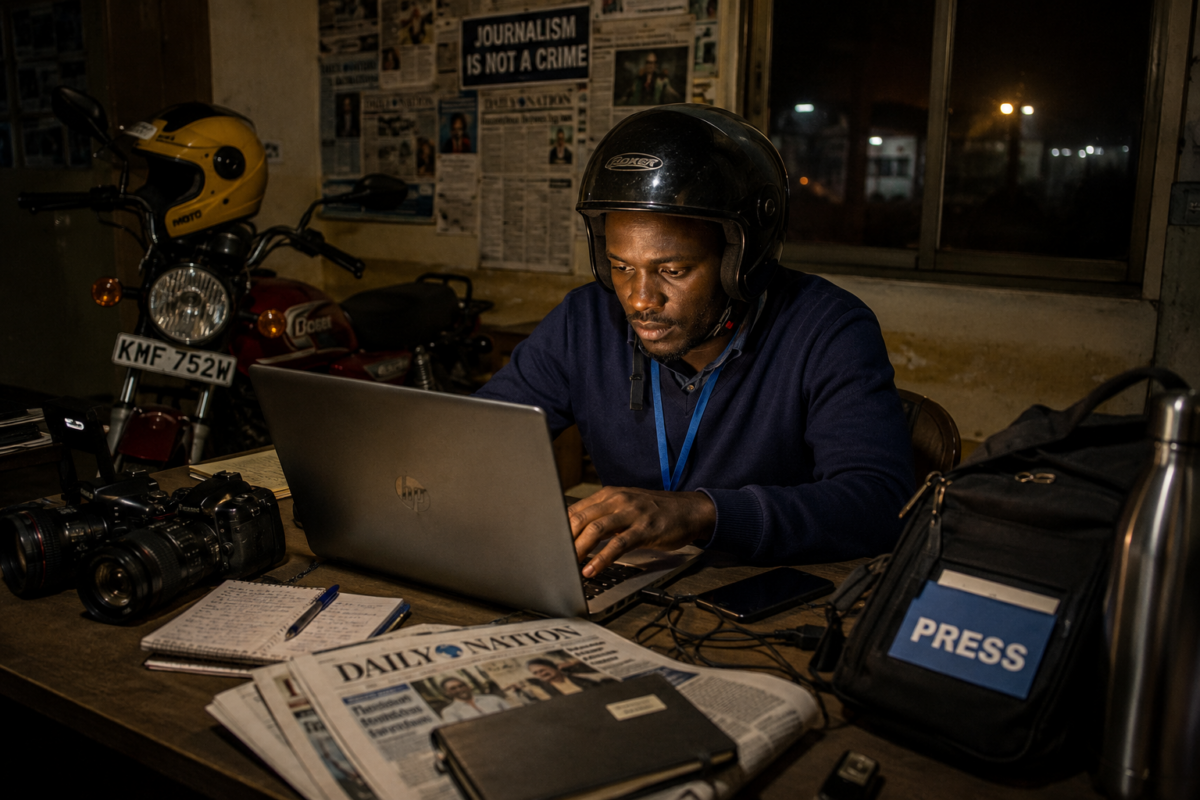
The collapse of the traditional newsroom model
The crisis facing journalists cannot be separated from the financial challenges confronting media houses themselves.
Across East Africa, traditional business models that once sustained newspapers, radio stations and television networks have weakened significantly over the past decade. Print circulation has declined, digital advertising revenues remain insufficient to replace traditional income streams, and social media platforms increasingly capture audiences that once relied on mainstream news outlets.
In Kenya, major media companies have undergone repeated restructuring exercises.
Nation Media Group, East Africa’s largest independent media company, has implemented multiple rounds of cost-cutting measures and redundancies in recent years as profitability pressures intensified. Mediamax Network Limited, owner of K24 TV and People Daily, has also undertaken major workforce reductions affecting journalists, producers and support staff.
The problem extends beyond individual companies.
The Federation of Kenya Employers has repeatedly warned that delayed government payments to private sector suppliers have created significant liquidity challenges. Estimates indicate that pending government bills have reached approximately KSh1 trillion, affecting businesses across multiple sectors, including media organizations that depend heavily on government advertising and communication contracts.
When revenues decline, payroll is often among the first casualties.
The Media Council of Kenya has repeatedly criticized media owners for delayed salaries, poor working conditions and inadequate welfare support for journalists. Reports from journalists’ unions indicate that some media workers have gone months without receiving full salaries, forcing them to seek alternative sources of income.
A 2026 study examining the state of Kenyan journalism identified declining pay, burnout and job insecurity as some of the most significant challenges facing media professionals today.
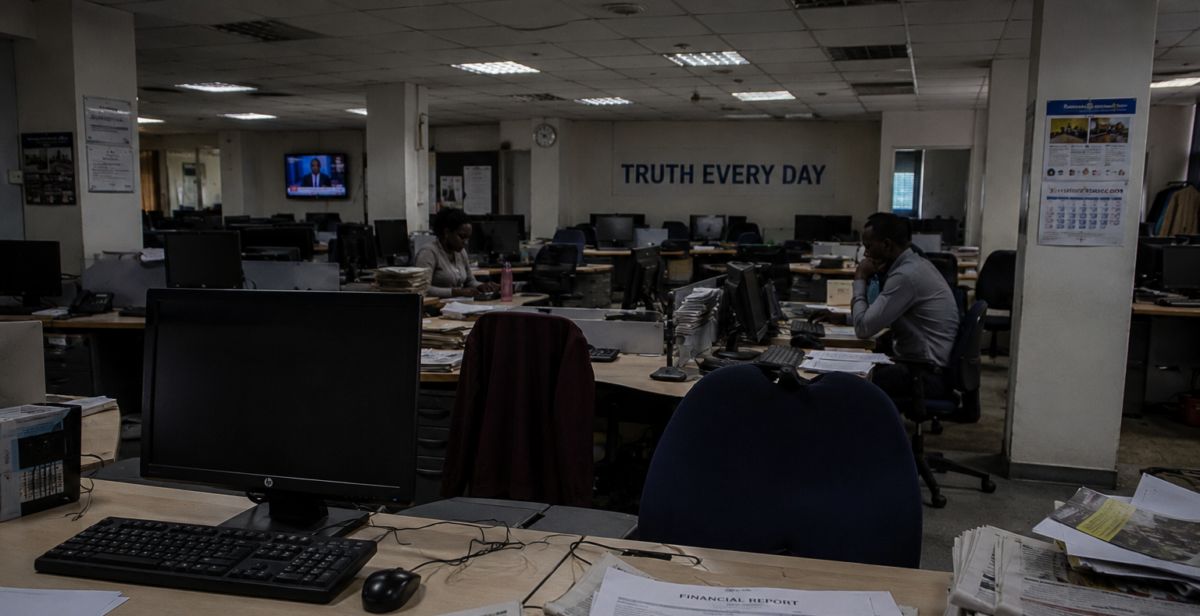
County correspondents abandoned by shrinking media houses
While newsroom layoffs attract headlines, the situation facing county correspondents is often even more severe.
Across counties such as Turkana, Garissa, Kilifi, Tana River, West Pokot and Kakamega, many media houses have significantly reduced regional operations or closed bureaus entirely.
Instead of maintaining permanent staff, organizations increasingly rely on correspondents who are paid only when stories are published or broadcast.
Research involving more than 1,000 journalists across Kenya’s 47 counties found that many correspondents operate under highly precarious conditions. Payments typically range between KSh300 and KSh1,000 per story, regardless of the amount of time, travel or resources required to gather information.
If a story is delayed, edited out or rejected altogether, the journalist often receives nothing.
The reporter still pays for transport.
The reporter still buys internet bundles.
The reporter still funds phone calls and field research.
The media house bears little risk.
The journalist bears almost all of it.
In Garissa County, one correspondent who covers security, governance and humanitarian issues says he routinely travels hundreds of kilometres each month without reimbursement.
“The cost of gathering the news is now higher than the value of the story,” he explains. “Most of us continue because we love journalism, but love does not pay school fees.”
The closure of regional bureaus has also reduced mentorship opportunities for younger journalists, weakened local reporting networks and limited coverage of issues affecting marginalized communities. Stories from remote counties increasingly depend on a shrinking pool of under-resourced freelancers.
Uganda’s journalists turn to boda bodas and event hosting
Uganda’s media environment reflects a different but equally troubling pattern.
Although major organizations such as Vision Group and Next Media continue to employ journalists on formal contracts, much of the country’s media sector remains fragmented across hundreds of local radio stations, community broadcasters and digital platforms operating on limited budgets.
Industry assessments indicate that many entry-level journalists earn between USh370,000 and USh925,000 per month, equivalent to roughly $100–$250.
Outside Kampala, compensation often falls further.
According to regional media studies and journalism support organizations, many rural journalists receive little more than allowances and commissions rather than formal salaries.
The result is a growing dependence on side jobs.
In Mbale, one radio journalist now spends weekends serving as a master of ceremonies at weddings and corporate events.
In Gulu, another supplements his income by operating a boda boda motorcycle.
Others work as political mobilizers, social media managers, church communications officers and public relations consultants.
Research cited by media development organizations suggests that up to 75 percent of journalists working in some rural Ugandan regions engage in secondary income-generating activities. For many, journalism remains a passion rather than a financially sustainable career.
Tanzania’s delayed salary crisis
In Tanzania, the challenge is often linked to the financial structure of the media sector itself.
Many media organizations remain heavily dependent on state advertising and government communication budgets.
When public-sector spending slows or payments are delayed, the consequences ripple quickly through newsrooms.
Journalists interviewed by regional media organizations have reported salary delays ranging from three to six months.
Faced with such uncertainty, many reporters have diversified their income streams.
In Mwanza, a journalist who once worked exclusively in media now manages a small agricultural enterprise while freelancing for digital news platforms.
In Arusha, another supplements reporting income through retail trade and tourism-related communications work.
Labour studies suggest that nearly 60 percent of regional correspondents in some parts of Tanzania now rely on alternative economic activities, including farming, digital content creation and small-scale business operations.
The pattern is becoming increasingly normalized. Rather than asking whether journalists have side jobs, many newsroom managers now assume they do.
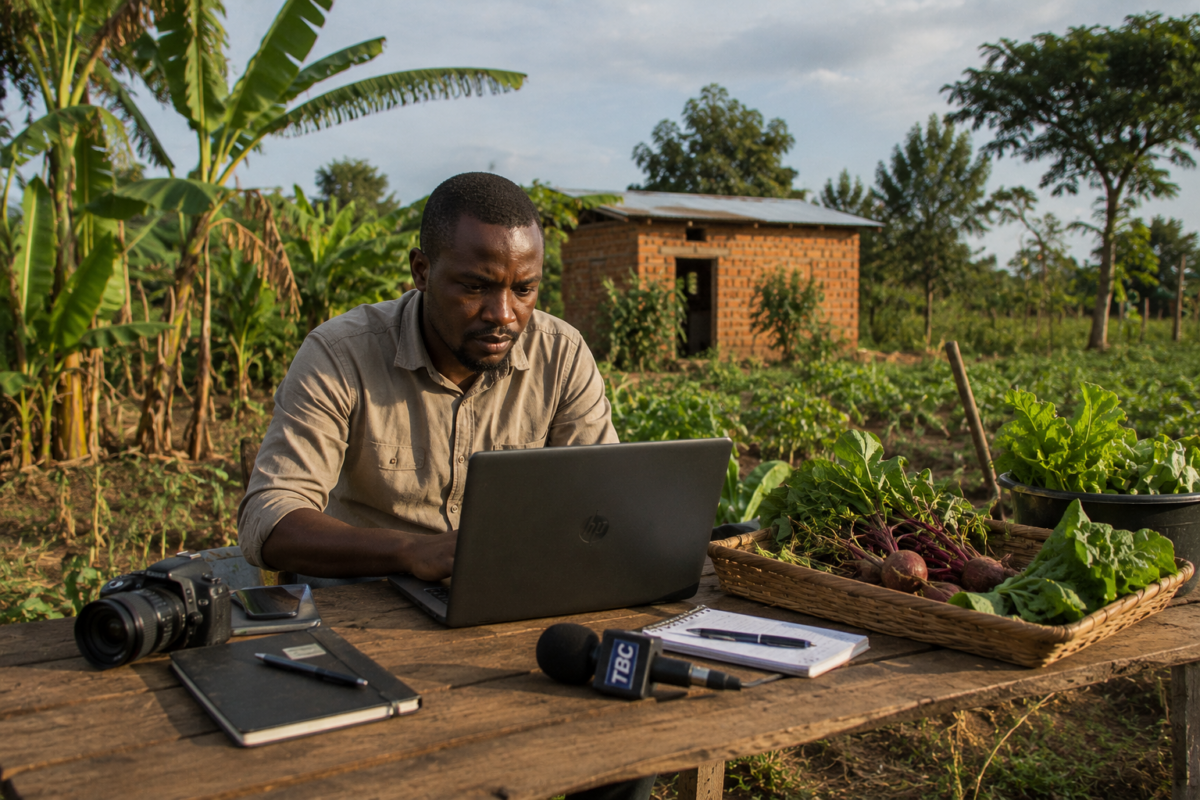
The digital gig economy becomes journalism’s safety net
The rapid growth of digital work platforms has created both an opportunity and a warning.
Across East Africa, journalists are increasingly leveraging their skills in writing, editing, research, verification and communication to secure work from international clients.
Content writing.
Search engine optimization.
Corporate blogging.
Social media management.
Translation.
Transcription.
Public relations.
These sectors often pay significantly more than traditional journalism.
Industry observers note that corporate communications assignments frequently generate day rates ranging from $50 to $150, substantially higher than what many journalists earn from newsroom assignments.
For a correspondent earning KSh500 per story, a single corporate contract can equal weeks of journalism income.
Organizations such as KICTANet have documented the rapid expansion of Kenya’s gig economy, driven by digital platforms and remote work opportunities that connect local professionals with global clients.
Journalists are particularly well-positioned to benefit because they already possess valuable communication skills.
However, the shift comes at a cost.
Every hour spent writing marketing copy is an hour not spent investigating corruption, covering public health issues or reporting on governance failures.
The profession is losing some of its most experienced practitioners to sectors that simply pay better.
When government communication budgets replace newsroom salaries
Perhaps the most troubling trend emerging from East Africa’s journalism crisis involves the growing influence of local government communication budgets.
As media houses reduce travel allowances, transport support and reporting resources, county and district governments have increasingly become alternative sources of income for struggling journalists.
Across Kenya’s 47 counties, correspondents covering county assemblies, governors’ briefings and official events frequently receive transport reimbursements, facilitation fees or sitting allowances ranging from KSh2,000 to KSh5,000.
For journalists earning less than KSh1,000 per published story, such payments can represent a substantial portion of their monthly income.
Media analysts warn that this arrangement creates significant ethical challenges.
Research examining local news ecosystems suggests that more than 70 percent of news content originating from some rural counties consists largely of official statements, government announcements and ceremonial activities.
Investigative reporting has declined.
Protocol journalism has expanded.
The distinction between independent journalism and government communication is becoming increasingly blurred. Media freedom advocates argue that this trend threatens one of journalism’s most important functions: holding power accountable.

Women journalists face a different burden
The casualization of journalism affects women differently.
According to the Association of Media Women in Kenya (AMWIK), women continue entering journalism in significant numbers but remain underrepresented in leadership positions and disproportionately concentrated in lower-paying roles.
AMWIK’s 2026 findings indicate that female journalists frequently earn approximately 80 percent of what male colleagues receive for comparable work.
When newsroom positions become unstable, women often transition into freelance communications, digital content creation and public relations consulting.
While these sectors offer income opportunities, they also expose women to heightened risks.
Independent female journalists frequently operate without institutional support structures, making them more vulnerable to workplace harassment, financial exploitation and professional isolation.
Many eventually leave public-interest journalism altogether.
For an industry already struggling with diversity and representation, the loss is substantial.
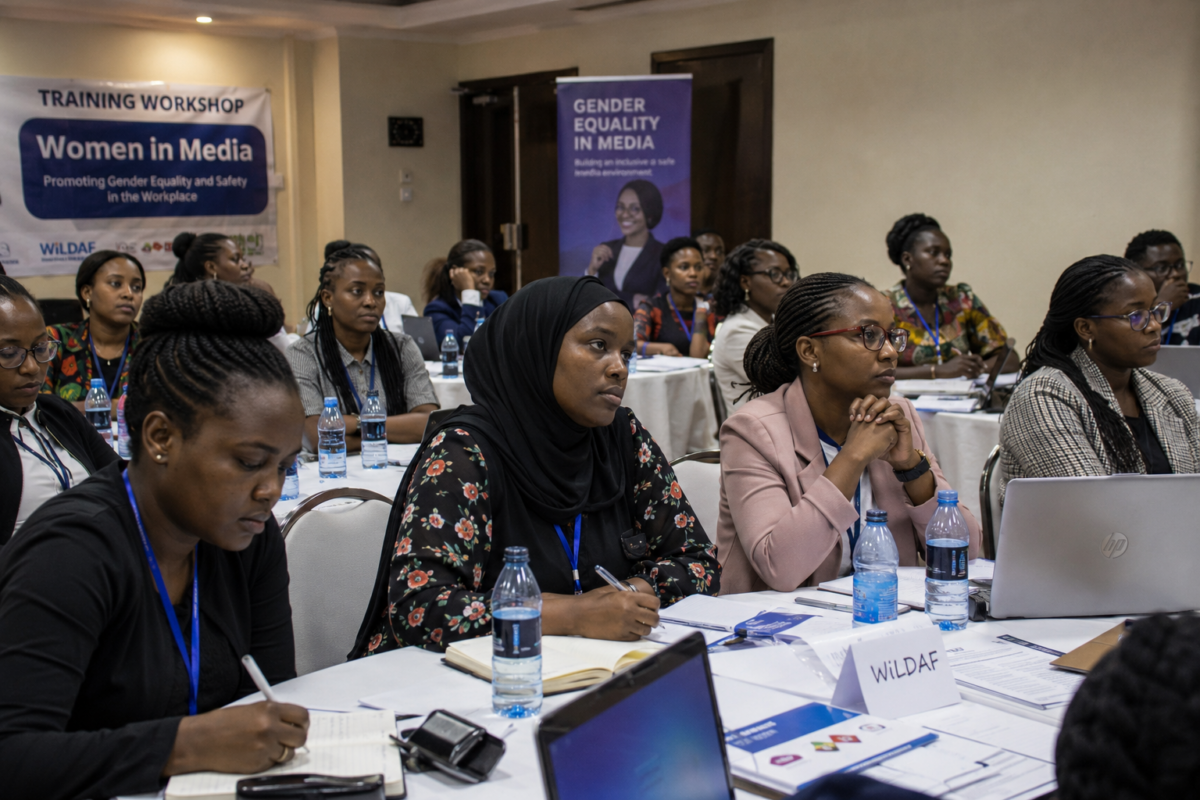
The cost to democracy
The decline of stable journalism employment is not merely a labour issue.
It is a democratic issue.
Organizations including UNESCO, the Reuters Institute for the Study of Journalism, the Africa Editors Forum and regional press freedom groups have repeatedly emphasized that independent journalism requires financial sustainability.
Investigations take time.
Accountability reporting requires travel.
Fact-checking demands resources.
None of these functions can be performed effectively when journalists are forced to spend most of their energy searching for alternative income.
The impact is already visible.
Media organizations increasingly prioritize fast, low-cost content over long-term investigative projects.
Specialized beats such as climate change, economic policy, public procurement and corruption investigations receive less investment because they generate limited immediate advertising returns.
As a result, communities receive less scrutiny of public institutions and fewer investigations into how public resources are used.
The public loses information.
Officials face less oversight.
Democracy becomes weaker.
A profession at a crossroads
Across East Africa, journalism remains filled with talented professionals committed to informing the public and holding power accountable. Yet commitment alone cannot sustain an industry.
The evidence emerging from Kenya, Uganda and Tanzania points to a profession undergoing profound economic restructuring. Journalists are not abandoning newsrooms because they no longer believe in journalism. They are leaving because journalism increasingly struggles to provide a living wage.
Without reforms that address delayed salaries, declining newsroom investment, shrinking employment opportunities and the growing casualization of media work, the region risks losing an entire generation of experienced reporters.
The consequences will extend far beyond individual careers.
When journalists spend their mornings driving boda bodas, their afternoons managing social media accounts and their evenings chasing stories that may never be paid for, society loses something essential. The watchdogs responsible for scrutinizing power become preoccupied with survival, and public-interest reporting gradually gives way to economic necessity.
For East Africa’s media industry, the challenge is no longer simply preserving journalism. It is ensuring that journalism remains a profession people can afford to practice.

















Comments (1)
Adama Juldeh Munu June 24, 2026
Thank you for this incredibly insightful and well-articulated piece on the state of journalism in East Africa. So many of the trends discussed here are sadly the norm in other places. There were many standout lines in this report for me. But the word that kept coming up again and again is ‘cost’. There is a cost to decline, removal, delays and decay. Journalism is a necessity. And if, like all necessities, it is not met, there is suffering that takes place on the individual and communal level, as Daisy so aptly puts it.